Public Beta · Reference parameters captured Nov 2026. Train composition, time saving and vehicle volumes are from People's Daily-platform reporting citing Nanning Railway Logistics Center. Freight rates are planning context, not quotes — verify at booking. Spotted a discrepancy? Tell us — this page exists to be challenged.
Key Numbers (South Asia Valve Ledger)#
| Metric | Reference value |
|---|---|
| Debut run | 6 Nov 2026: first Liuzhou Railway Port → Qinzhou → South Asia rail-sea special; 12×40-ft auto-parts containers; transship to ocean vessel for India |
| Time saving | ~3 days door-to-door vs fragmented PRD collection-and-sail (railway statement) |
| Scheduled base | Weekly "passenger-ized" auto-parts trains Liuzhou → Qinzhou, "train + liner" seamless connection |
| Vehicle run-rate | 294,000+ finished vehicles railed by Nanning bureau YTD to 5 Nov 2026, +8% y/y |
| Node stack | Liuzhou Railway Port (in-city customs site, "arrive-and-load-direct") → Qinzhou Port East Station → Beibu Gulf ocean sailings |
| Liuzhou credentials | National auto-parts production base; national auto & parts export base |
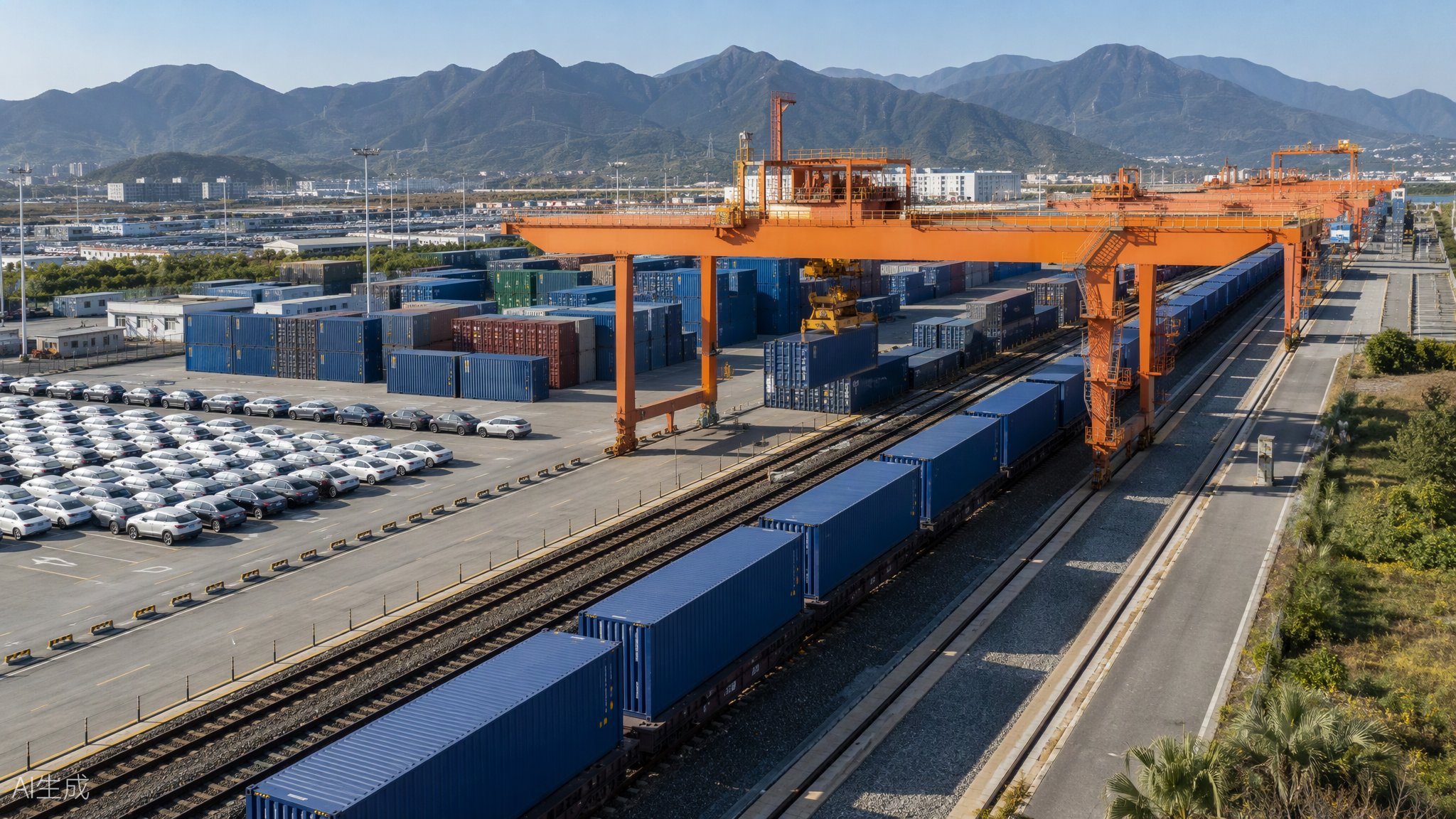
The valve: fixed-schedule container trains from Liuzhou Railway Port to Qinzhou. The 6 November special put an Indian flag on the departure board for the first time.
1. What Actually Launched#
Strip away the ceremony and the 6 November run is a product announcement: the same Liuzhou Railway Port machinery that already feeds Qinzhou weekly now sells one product — a named South-Asia-bound special with twelve 40-foot auto-parts boxes, drayed under one plan, customs-cleared in-city, and transshipped at Qinzhou to an ocean vessel for India. The operator's own comparison is the useful one: the incumbent pattern (scatter-truck to the Pearl River Delta, collect, then sail) loses about three days against the "scheduled train + liner" chain, with lower comprehensive cross-border logistics cost on top.
Three days matters for auto parts because the industry's clock is the production line, not the voyage: a delayed stamping or harness shipment stops an assembly cell that costs far more per hour than the freight saving. This is the same logic the Liuzhou belt already runs domestically — and the EV-belt playbook documents how that cluster scales export cadence.
2. Why Liuzhou Can Absorb a South Asia Leg#
The export geography is already built. Liuzhou is a designated national auto-parts production base and national auto & parts export base; its rail port has an in-city customs supervision site operating "arrive-and-load-direct" clearance; and the railway bureau runs weekly passenger-ized auto-parts trains — fixed timetables, train numbers, cut-offs — into Qinzhou Port East Station where liner sailings connect. The scale check: 294,000+ finished vehicles railed by the Nanning bureau in the first ten months of 2026, +8% y/y, which means the corridor's heavy lifting is routine before any "first" is declared. The India special plugs a destination flag into a machine that was already turning.
Two structural points follow. First, the Qinzhou node is shared infrastructure: the same estuary berths and rail-sea yard that serve this train also serve the canal corridor and the Liuzhou–Thailand ro-ro lane — capacity spent on India is capacity proven for the rest. Second, South Asia demand diversifies the cluster's order book away from single-region exposure — the same reason the battery-belt analysis argues for multi-market anchoring of upstream suppliers.
3. The Practical Differences: India Is Not ASEAN#
Buyers familiar with the Vietnam/Thailand lanes should budget for friction differences, not just nautical miles:
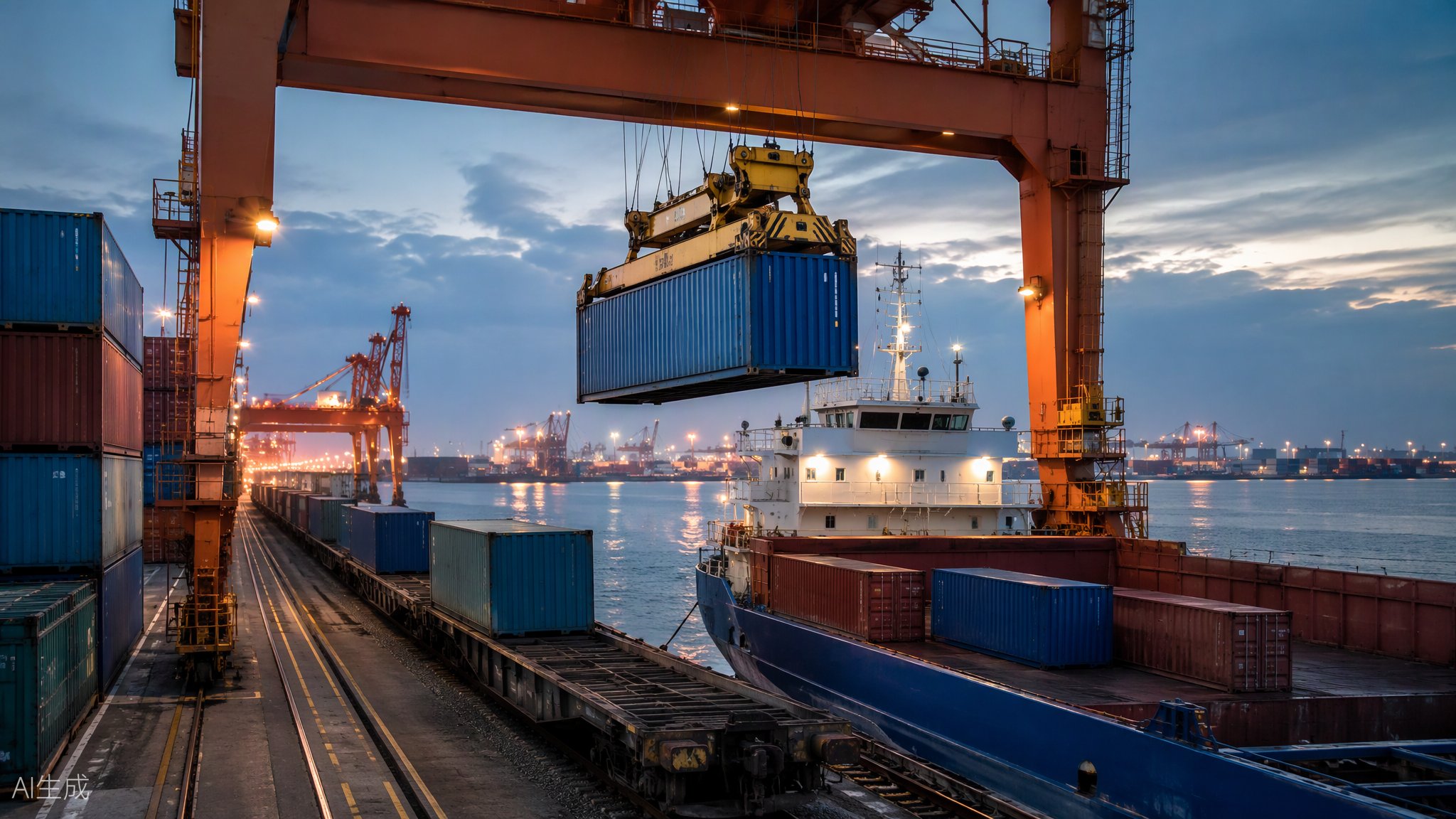
The "train + liner" promise in one frame: container moves crane-to-crane from rail flatcar to feeder vessel at Qinzhou. Hold that transship window and the three days are real.
- Documentation: India entries run heavier on certificate-of-origin and product-compliance paperwork; the corridor's documented-cargo model (single declaration at river/rail origin) helps but does not replace importer-side readiness.
- Payments: LC-heavy settlement norms and longer reconciliation cycles change working-capital math against open-account ASEAN trade.
- Schedule sensitivity: the 3-day saving only survives if the Qinzhou transship window is held; book train and sailing as one product, which is precisely the "train + liner" bundle the railway now sells.
- Seasonality: festival-season peaks (Diwali shipping crunches, CNY) stack in Q4–Q1 — the same weeks the 30-day audit flags as the corridor's tightest.
4. What to Watch Next#
The one-year question is frequency. A special-train "first" becomes a corridor when it turns weekly; watch whether Nanning bureau publishes a fixed India-bound departure in the coming timetable cycles, and whether private forwarders start booking blocks on it. The second signal is backhaul: auto parts southbound pair naturally with Indian bulk or components northbound — a loaded both-ways train is where rates get interesting. Third, the canal connection: heavy or schedule-insensitive Liuzhou cargo will increasingly choose between rail and water by price — the cost simulator already prices the Liuzhou origin for both.
FAQ#
Is this a new railway line?#
No. The physical route (Liuzhou → Qinzhou) is established; the 6 November run is a new product — a named, through-planned South Asia rail-sea special with liner connection, versus generic wagon-load forwarding.
What does the 3-day saving consist of?#
The railway's stated figure compares the through chain against fragmented trucking to the Pearl River Delta, collection, and sailing — the elimination of cross-docking and multiple handoffs, not higher speed on any single leg.
Can non-automotive cargo use the train?#
The corridor's design is general containerized cargo; auto parts dominate because Liuzhou's cluster supplies them at scheduled volume. Other Guangxi manufacturing is the natural follow-on market.
How does this interact with the Pinglu Canal?#
Complementary, not competitive: rail owns time-sensitive high-frequency flows; the canal owns cost-sensitive bulk and containers — and both feed the same Qinzhou node. The rail–canal intermodal review covers the node design.
Methodology & Data Sources#
Train composition (12×40-ft auto-parts containers), the 6 November 2026 departure, the ~3-day saving statement, weekly passenger-ized auto-parts trains, and the 294,000-vehicle YTD figure are from People's Daily-platform reporting (金台资讯) citing Nanning Railway Logistics Center and the Liuzhou South operations office, 6–8 Nov 2026. Liuzhou cluster credentials are from the same reporting. Corridor context cross-links to prior site coverage. No unsourced freight rates are published per this site's sourcing rules.
- First South Asia special train: 6 Nov 2026, Liuzhou Railway Port → Qinzhou → India; 12×40-ft auto parts; ~3 days saved vs PRD collection (railway statement) — 金台资讯/People's Daily platform, 6 Nov 2026
- Weekly passenger-ized auto-parts trains; "train + liner" product; 294,000+ vehicles railed YTD to 5 Nov, +8% — same reporting
- Liuzhou credentials (national auto-parts production/export base) — same reporting
- Corridor context: canal corridor capacity — first-month ledger; Liuzhou export belt — EV-belt playbook; node design — rail–canal intermodal review
Get a Tailored Logistics Assessment#
Price the Liuzhou → Qinzhou → India chain against the canal alternative in the cost simulator — rail and water both modeled, 2027 lockage included — or apply to be listed in the verified supplier directory. Reference values only; not a formal quote.