Public Beta · Reference ranges calibrated Oct 2026, consistent with the Sep 2026 Pinglu Canal trial navigation. These are planning estimates, not a formal quote. Spotted a discrepancy? Tell us — this page exists to be challenged.
Key Numbers#
| Metric | Reference value |
|---|---|
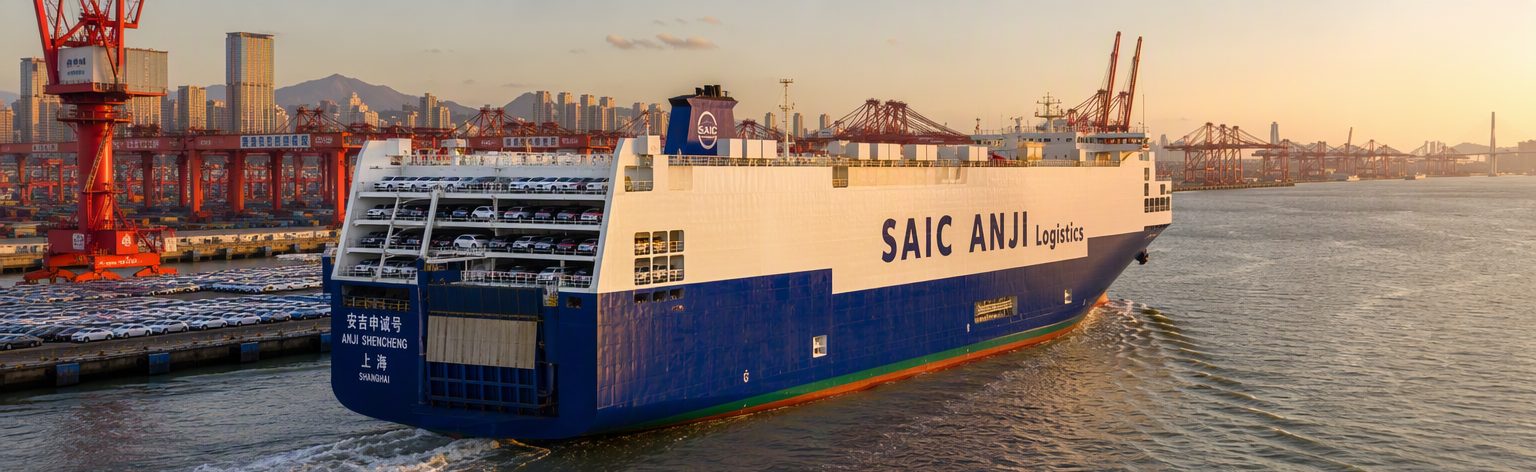
| Ro-ro record | 2,727 vehicles, Changrongkou, Qinzhou → Duqm (Oman), 8 Oct 2026 — largest single sailing since ro-ro began Apr 2025 (≈1,500 vehicles then) |
| Ro-ro run-rate | 10+ sailings since Apr 2025; 11,000+ vehicles & machines exported by end-Sep 2026; Jul 2026 sailing ≈2,600; Aug 2,661; Oct 2,727 |
| Ro-ro economics | Direct Middle East ro-ro: transit 10–15% faster, logistics cost −8%+ vs traditional routing; port ro-ro capacity 372,000 vehicles/yr |
| Berth consolidation | Dalantun berths 1–3 (2×70,000 t + 1×50,000 t, in service Dec 2023) to be injected into the listed port company; berth + yard unified operation |
| Canal inland leg | Pinglu Canal opened to navigation 16 Sep 2026; Nanning-basin cargo routes via the canal are 560+ km shorter than the traditional Guangzhou-port detour |
| Liuzhou export base | Jan–Apr 2026: exports ¥14.64 bn, +15.9% y/y; EVs +485%; lithium batteries +274.6%; ASEAN +50.5% |
| Thailand lane | Qinzhou–Laem Chabang direct container service since Apr 2024, ≈5 days (Jinjiang/COSCO network); RCEP top-4 corridor partner |
| ASEAN river-sea proof | Nanning Port–Can Tho (Vietnam) direct container route maiden voyage 24 Sep 2026; Beibu Gulf Port runs 39 Vietnam routes, 129k TEU Jan–Aug 2026 (+52% y/y) |
1. Two Signals in One Week#
Two pieces of news in early October 2026, read together, describe the moment Liuzhou's vehicle and machinery exporters get a genuine factory-to-berth lane.
Signal one — the record. On 8 October, the ro-ro vessel Changrongkou (常荣口) left Qinzhou's Dalantun terminal with 2,727 vehicles bound for Duqm, Oman — the largest single sailing since the port's first ro-ro route opened in April 2025 with ~1,500 vehicles. Growth has been steep: 10+ sailings and 11,000+ vehicles/machines by end-September, with single-sailing volumes climbing 2,600 (Jul) → 2,661 (Aug) → 2,727 (Oct). Notably, the cargo is no longer only Southwest-China Changan vehicles from Chongqing: FAW Bestune and Hongqi vehicles from northeast China reached Qinzhou by long-haul road for the first time, joining brands from Fujian, Anhui and Zhejiang.
Signal two — the consolidation. On 9 October, Beibu Gulf Port's listed company approved a plan to acquire 100% of Henggang Terminal — owner of Dalantun berths 1–3 and their yard land — from the port group. The stated goal is to unify berth and yard operations, and the plan explicitly frames the berths as sitting at the sea mouth of the Pinglu Canal, positioned to absorb the river-sea transshipment growth the canal unlocks.
Separately, each story is incremental. Together they say: Qinzhou is building the "factory–port–overseas" closed loop for finished vehicles and machinery at industrial scale — and the canal is the inland half of that loop.
2. Why Liuzhou Cargo Belongs on This Lane#
Liuzhou is Guangxi's heavy-industry base and one of China's vehicle-export clusters — SGMW (Wuling), Liugong (construction machinery) and Dongfeng Liuzhou all ship from there. The Jan–Apr 2026 export print shows the slope: ¥14.64 bn of exports (+15.9% y/y), with EVs up 485%, lithium batteries up 274.6%, and ASEAN-bound exports up 50.5%. The pinglusea daily log even recorded SGMW KD auto parts moving via the "Liuzhou–Pinglu Canal–Vietnam" lane into Nanning port in September 2026.
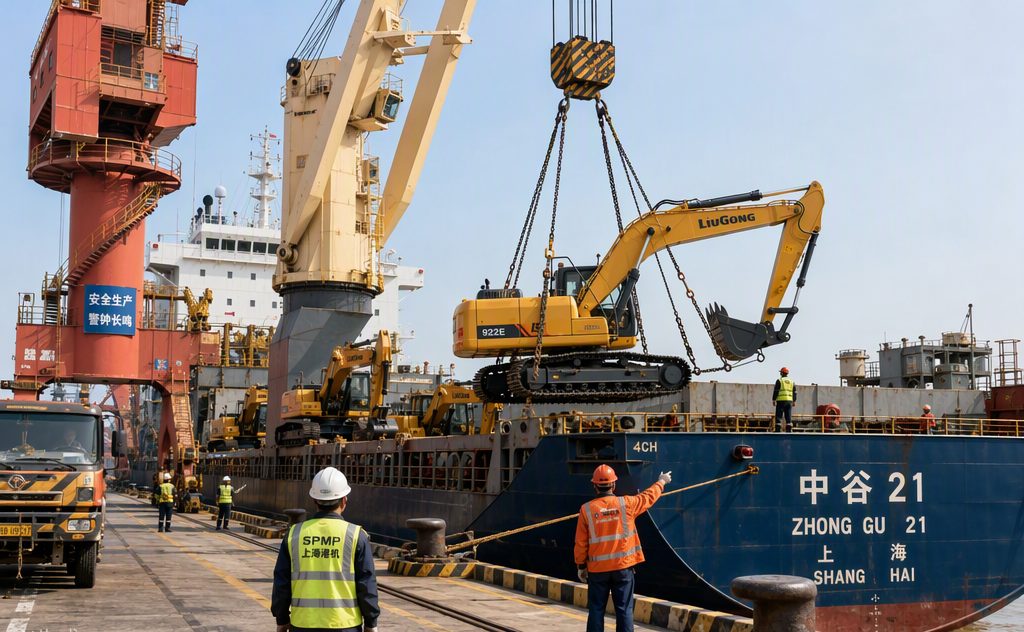
Liugong excavators already move via Qinzhou — 113 units shipped to Indonesia in a single batch in May 2026.
Thailand is the strategic ASEAN anchor for this cargo: it is RCEP's largest vehicle market in mainland Southeast Asia, Laem Chabang is its dedicated deep-sea gateway with ro-ro terminals for vehicles and machinery, and Qinzhou has run a direct container service to Laem Chabang since April 2024 (≈5 days, no transshipment). Thailand-bound vehicles and machines from Liuzhou currently travel either by long-haul road through Vietnam or by rail/road to coastal ports with a transshipment — both add handling steps that a canal-basin direct berth removes.
And the canal's ASEAN half is already moving: on 24 September the Nanning Port–Can Tho (Vietnam) direct river-sea container route made its maiden voyage through the canal, and Beibu Gulf Port now runs 39 Vietnam routes — 129k TEU moved Jan–Aug 2026, up 52% y/y.
3. The Lane, Door to Port#
The new lane is best understood as three segments, each with its own cost logic:
Segment 1 — Liuzhou factory → Qinzhou berth (inland, ≈230–300 km). Two modes, mirroring the patterns the port already runs: rail cage-car or container-block trains straight from the factory (the Changan model), or long-haul truck delivery (the northeast-FAW model). The "一港装" (one-port-loading) model then completes storage, inspection and loading entirely inside the Qinzhou port zone — no intermediate port, no extra handling. Pre-declaration, arrive-and-load and appointment clearance keep the port dwell measured in hours.
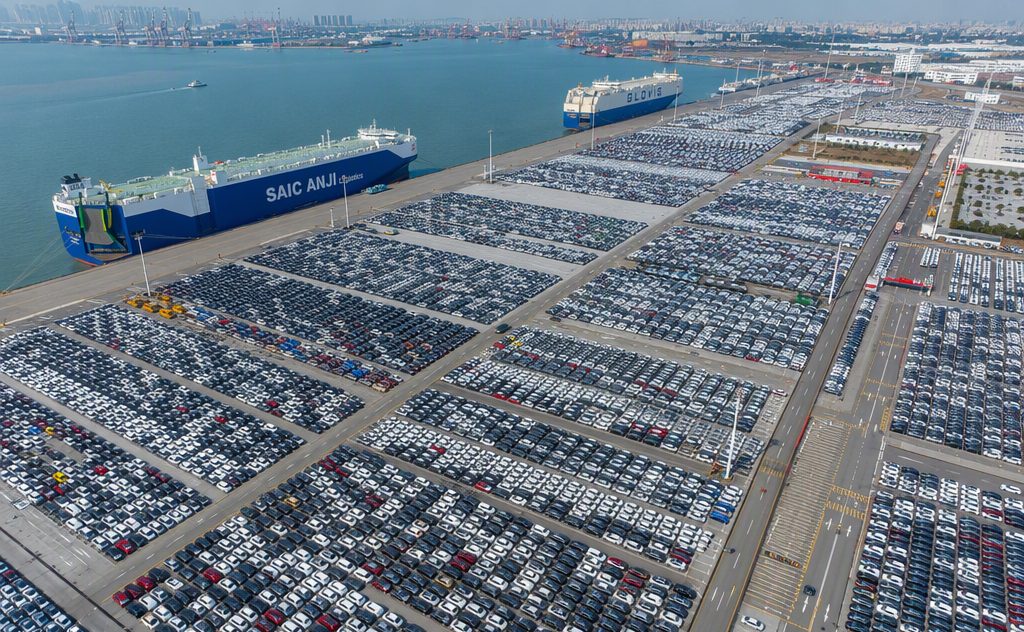
Qinzhou's vehicle terminal yard: in-zone storage, inspection and loading — the "one-port loading" closed loop.
Segment 2 — Qinzhou berth → vessel. This is where the berth consolidation matters. Dalantun berths 1–3 were built for general cargo and ro-ro-scale units, commissioned in December 2023; folding them and their yard into the listed port operator removes the split between berth owner and operator. For exporters the practical read: direct berthing for foreign-trade cargo, in-zone storage/inspection/loading, and port dwell in hours rather than days.
Segment 3 — Qinzhou → Laem Chabang (sea, ≈5 days direct). The direct COSCO/Jinjiang-linked service has run since April 2024. Door-to-port, shippers skip the two extra handling layers of the Vietnam-road option and the hub transshipment — the same direct-versus-transshipped economics that the ro-ro data already prices at 10–15% faster and 8%+ cheaper.
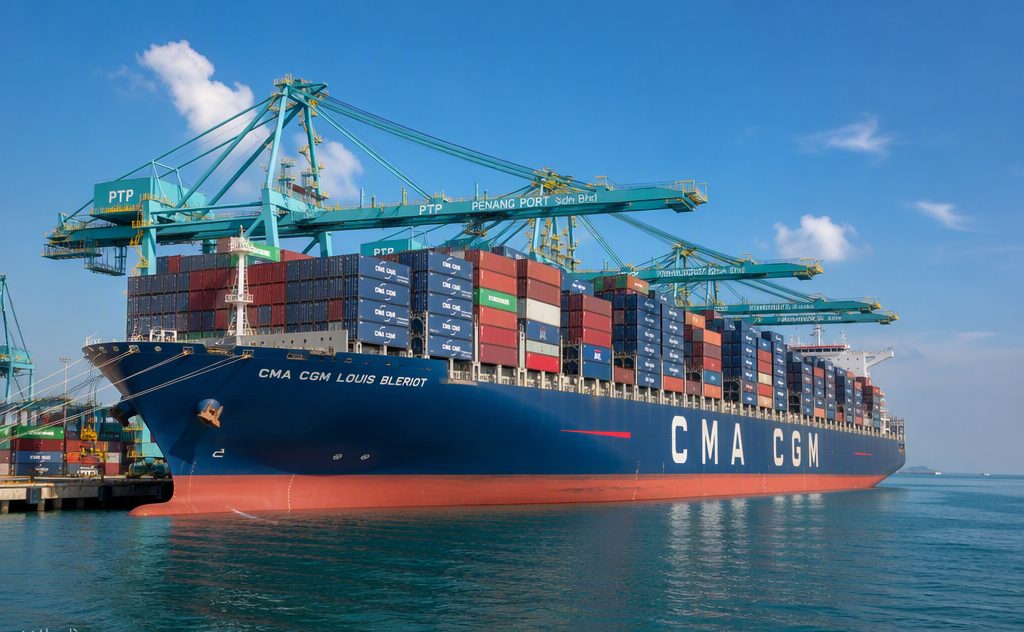
Laem Chabang: Thailand's deep-sea gateway, with dedicated ro-ro and breakbulk capacity for vehicles and machinery.
4. The Cost Stack, Per Unit (Reference Model)#
Putting the segments together for a Liuzhou-built vehicle or compact machine bound for Thailand (reference bands, not quotes; verify at booking):
| Component | Traditional (road via Vietnam / transshipped) | Canal + direct-berth lane | Basis |
|---|---|---|---|
| Inland Liuzhou → port | Long-haul road or rail to coastal hub + hub handling | Factory → Qinzhou direct, "one-port loading" | No intermediate hub; verified ro-ro routing saves 8%+ logistics cost |
| Port handling & storage | Multiple handling steps at intermediate hub | Direct-berth, in-zone storage/inspection/loading | Berth + yard unified operation (Henggang acquisition plan) |
| Ocean leg | Via hub, often +2–5 days | Qinzhou→Laem Chabang direct ≈5 days | COSCO direct service since Apr 2024 |
| Port dwell | Days (hub queue) | Hours (pre-declaration, arrive-and-load) | Qinzhou customs facilitation, "smart bay" digital tracking |
| Canal segment (for Nanning-basin cargo) | — | Free through 2026; ≈< $15/slot from 1 Jan 2027 | 桂发改价费规〔2026〕533号; 7 Sep 2026 presser |
Directionally, the pattern matches what the ro-ro data already proves on the Middle East lane: direct routing is 10–15% faster and 8%+ cheaper — and that is before the canal removes the Guangzhou-detour inland leg for Nanning-basin cargo entirely (560+ km shorter).
5. What to Watch Before Booking#
- Berth deal completion: the Henggang acquisition still needs audit, valuation, shareholder votes, and exchange/CSRC review — the unified berth-yard operation it promises is a plan, not yet a fact.
- Sailing frequency: the Laem Chabang direct service frequency and the ro-ro schedule to Thailand still trail the Thai fruit express (5–6/week); expect capacity to follow cargo.
- Reefer/ro-ro equipment: peak-season slots book out; for vehicles, confirm deck space or container slots 3–4 weeks out.
- Toll headlines: lockage resumes 1 Jan 2027 at RMB 1.0/GT/lockage — ≈¥25–75 per container slot. For a vehicle's logistics stack this is a rounding error; watch equipment and bunker charges instead.
- Form E / RCEP origin: Thailand is a top-4 RCEP corridor partner for Qinzhou; keep origin documentation clean for 0% tariff claims.
Methodology & Data Sources#
Per-unit figures are reference bands assembled from port operator disclosures, official media reporting and industry pricing guides; ranges are not quotes. Vehicle prices are set by the market — this page prices the lane, not the vehicle. FX: USD 1 ≈ CNY 6.733 (SAFE, 9 Oct 2026).
- Ro-ro record — 2,727 vehicles on Changrongkou, Qinzhou→Duqm, 8 Oct 2026; 10+ sailings, 11,000+ vehicles since Apr 2025; ro-ro capacity 372,000/yr — Tencent News, 10 Oct 2026 (news.qq.com)
- "One-port loading" (一港装) model; rail cage-car + ro-ro intermodal; NE brands trucking in — Tencent News, 10 Oct 2026
- Henggang Terminal acquisition (Dalantun berths 1–3, 2×70,000 t + 1×50,000 t, commissioned Dec 2023; berth+yard integration; canal sea-mouth positioning; canal 560+ km shorter than the Guangzhou detour) — Daily Economic News via Toutiao, Oct 2026
- First ro-ro route Qinzhou–Jebel Ali (≈4,700 nm, transit −4–10 days, −8%+ cost) — XinhuaA, 9 Apr 2025
- Qinzhou–Laem Chabang direct container service — COSCO/Beibu Gulf Port, since 27 Apr 2024 (≈5 days, direct)
- Liuzhou Jan–Apr 2026 exports ¥14.64 bn (+15.9%), EV +485%, batteries +274.6%, ASEAN +50.5% — Caixinwire via Sina Finance, 10 Jun 2026
- SGMW KD parts via "Liuzhou–Pinglu Canal–Vietnam" lane; 113 Liugong excavators via Qinzhou — Pinglusea daily log / SohuB, Sep–May 2026
- Nanning Port–Can Tho (Vietnam) direct river-sea route maiden voyage 24 Sep 2026; canal opened to navigation 16 Sep 2026; Nanning Port river-sea volume 105,500 t / 2,800 TEU since opening — People's Weekly ( People's Daily) via Sohu; 10jqka, Oct 2026
- Beibu Gulf Port runs 39 Vietnam routes; Jan–Aug 2026 Vietnam cargo 5.2 Mt, container 129k TEU (+52% y/y); Guangxi–Vietnam trade topped ¥300 bn in 2025 — People's Weekly via Sohu, Oct 2026
- 桂发改价费规S〔2026〕533号 — lockage trial rate from 1 Jan 2027; toll-free trial through 31 Dec 2026 per Guangxi government press conferenceS, 7 Sep 2026
Get a Tailored Logistics Assessment#
Run your own numbers in the cost simulator — or apply to be listed in the verified supplier directory. Reference values only; not a formal quote.