Public Beta · Corridor data as of 24 Oct 2026. Reference figures from port-operator and customs statements; not quotes. Spotted a discrepancy? Tell us — this page exists to be challenged.
The Corridor in Numbers#
| Node | Metric | Value |
|---|---|---|
| Friendship Pass | Trade value, Jan–Aug 2026 | ¥513.6 bn, +31.2% y/y |
| Friendship Pass | Vehicle inspections | >1 million in 2025, third consecutive year of six-figure growth |
| Smart port (trial) | Design capacity | 2,880 truck-bays/day; overall pass target >4,000 vehicles/day |
| Smart port | Service promise | 24-hour clearance; Nanning → Hanoi in 24 h; per-truck inspection <15 s |
| Nanning rail port | Cumulative since 2017 | 7.8 Mt sent / 2.98 Mt received; China's largest rail export consolidation hub for Vietnam |
| Nanning rail port | Supervision mode | "One declaration, one box to destination" — logistics cost −20%+, transit clearance −60%+ |
| Liuzhou rail port | Jan–Sep 2026 | 1.9456 Mt sent (1.88× all-2025); 17,000 TEU (22× all-2025) |
| Liuzhou rail port | Nansha express | Block trains to Guangzhou Nansha in 26.5 hours |
| Context | Guangxi–ASEAN trade | ASEAN Guangxi's top partner for 26 straight years; Jan–Aug trade ¥284.7 bn |
1. Why This Corridor, Why Now#
Two infrastructure waves are converging at Guangxi's Vietnam border. The first is digital: the China–Vietnam Friendship–Friendship Cargo Channel Smart Port — the first of its kind on the China–Vietnam border — is in trial operation, built around "three reductions, one cost cut, one improvement" (fewer documents, fewer steps, less manual handling; lower clearance cost; higher efficiency) and "two 24-hours" (round-the-clock operation, Nanning–Hanoi next-day delivery). When fully connected, the pass's daily clearance capacity roughly doubles to over 4,000 vehicles.
The second is physical: the Pinglu Canal opened in September, giving Southwest-China cargo a straight waterline to the Gulf of Tonkin. The pass and the canal are complementary halves of one map — urgent, high-value electronics flow by road and rail through Friendship Pass; heavy, cost-sensitive cargo flows by barge through the canal. Shippers increasingly price both.
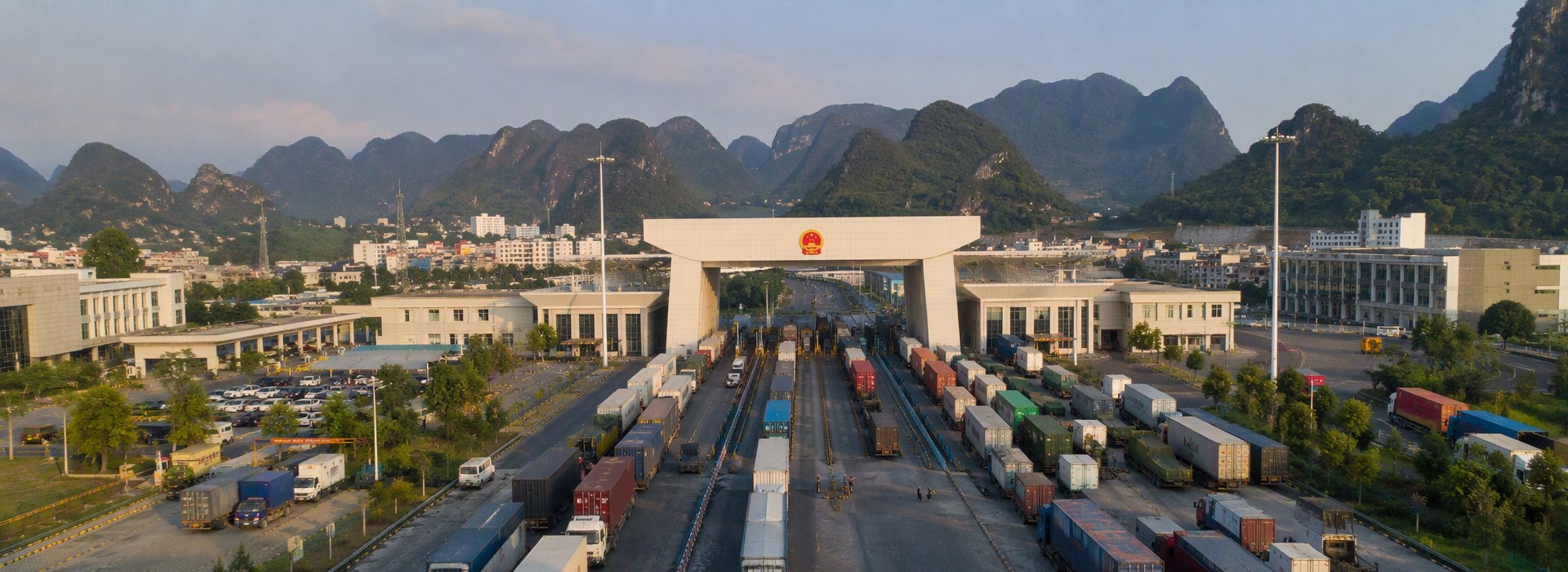
Friendship Pass, ~180 km from both Nanning and Hanoi: China's busiest land gateway to ASEAN, now going 24-hour smart.
2. The Smart Port, in Operating Detail#
The pass's leverage is speed. Vietnamese drivers — historically the bottleneck of cross-border trucking — are now inside the fast-clearance regime: swipe documents, press fingerprint, face-scan, done in under 15 seconds per truck. For a supply chain where components cross the border multiple times per product lifecycle, 15 seconds versus hours is not convenience; it is inventory working capital recovered.
Upstream of the gate, Nanning's rail port industrializes the same idea. Under the rail-sea supervision mode, export boxes are declared once and ride sealed to destination — no repeated inspections mid-route, backed by smart-lock and satellite tracking for "senseless clearance." The operator-reported results: logistics costs down more than 20%, transit clearance time compressed by more than 60%. The adjacent bonded zone (comprehensive bonded zone phase II) logged ¥9.98 bn of foreign trade in the first eight months of 2026, +128.9% y/y, with bonded logistics up over 3× — cargo that once transited is now staging, kitting and adding value inland.
3. The Rail Ports: Where the Canal Meets the Trains#
Nanning rail port is the corridor's consolidator — since 2017 it has become China's largest rail export hub for Vietnam-bound cargo, with 7.8 Mt sent cumulatively. Liuzhou rail port, opened in June 2026, is the industrial variant: it sits beside a major marshalling yard, so finished-vehicle cage cars and container blocks push straight from factory siding into scheduled trains. Its first four months showed the slope: 1.9456 Mt sent and 17,000 TEU — 22 times all of last year's container volume. SGMW's KD pre-warehouse (16,000 m²) at the port alone is planned for 8,000+ TEU a year of knock-down kits, with packing costs estimated 20%+ lower than factory-away packing.
The two ports divide labor deliberately: Nanning aggregates and clears, Liuzhou builds and loads. And both point the same way — the Pinglu Canal basin. Rail and road feed the border (fast), rail and barge feed the sea (cheap); shippers choose per shipment, or split them.
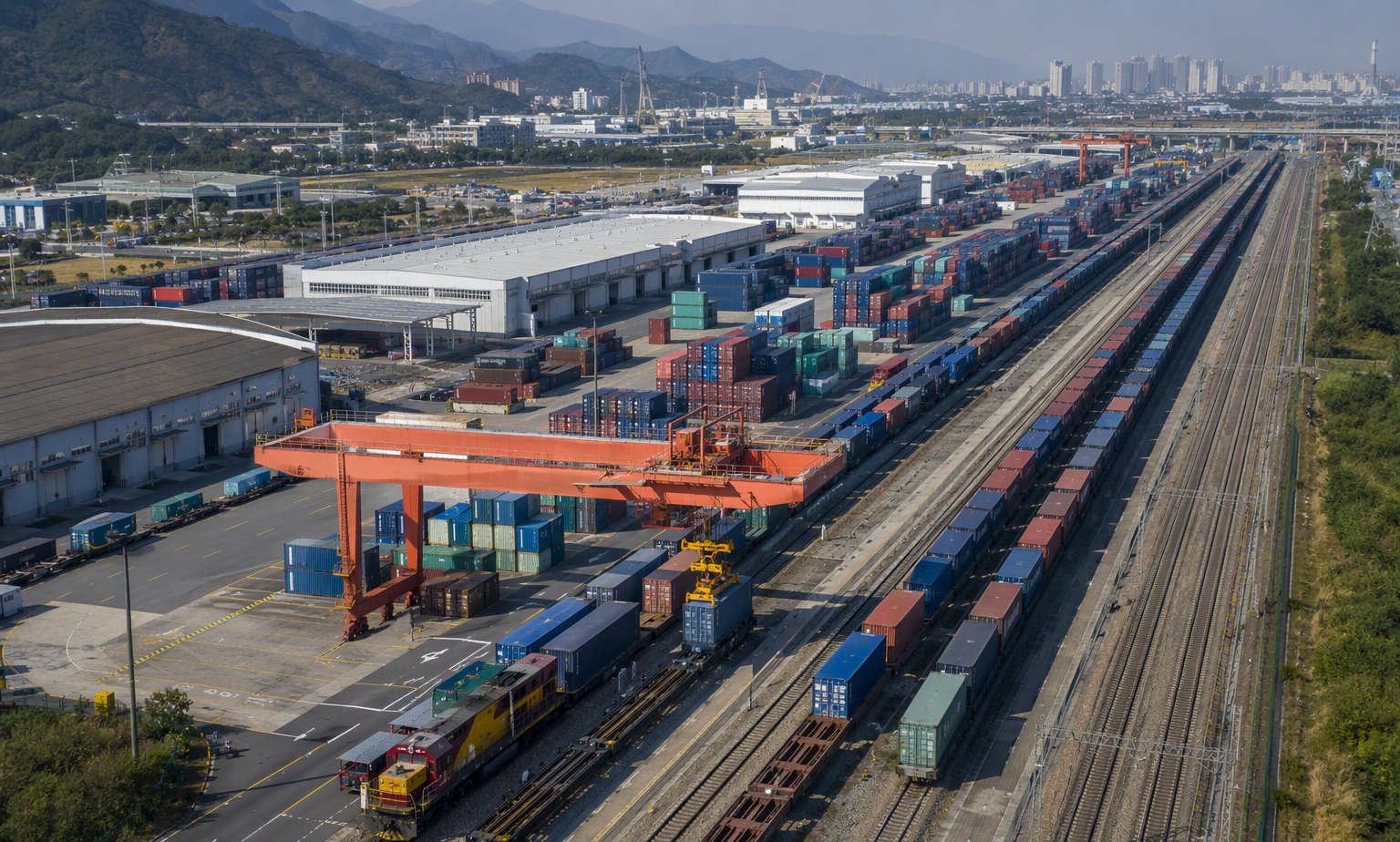
Nanning rail port: "one declaration, one box to destination" — sealed boxes ride from inland to Vietnam without repeated inspection.
4. Why Buyers of the Electronics Chain Should Care#
The pass is the physical spine of the "China components → North Vietnam assembly → global shipment" model. Around 70% of export value crossing the border is electronic intermediate goods; the Bắc Ninh–Bắc Giang corridor hosts one of the world's densest electronics-manufacturing clusters, where suppliers run "N+1" programs — the northern-Vietnam factory orders today, the Chinese component arrives tomorrow. Every hour cut at the border directly compresses that cycle.
Three planning notes for buyers and forwarders:
- Route split by value density: high-value, time-critical electronics — Friendship Pass road/rail; bulk and heavy inputs — canal barge to Qinzhou then ocean. The same supplier can serve both.
- Next-day Nanning–Hanoi is a design target, not yet a guarantee — during the smart-port trial window, confirm actual door times with your forwarder before committing customer SLAs.
- Documentation wins: the corridor rewards clean e-documentation (sealed-box regimes, advance declarations). Sloppy papers now cost hours, not just fees.
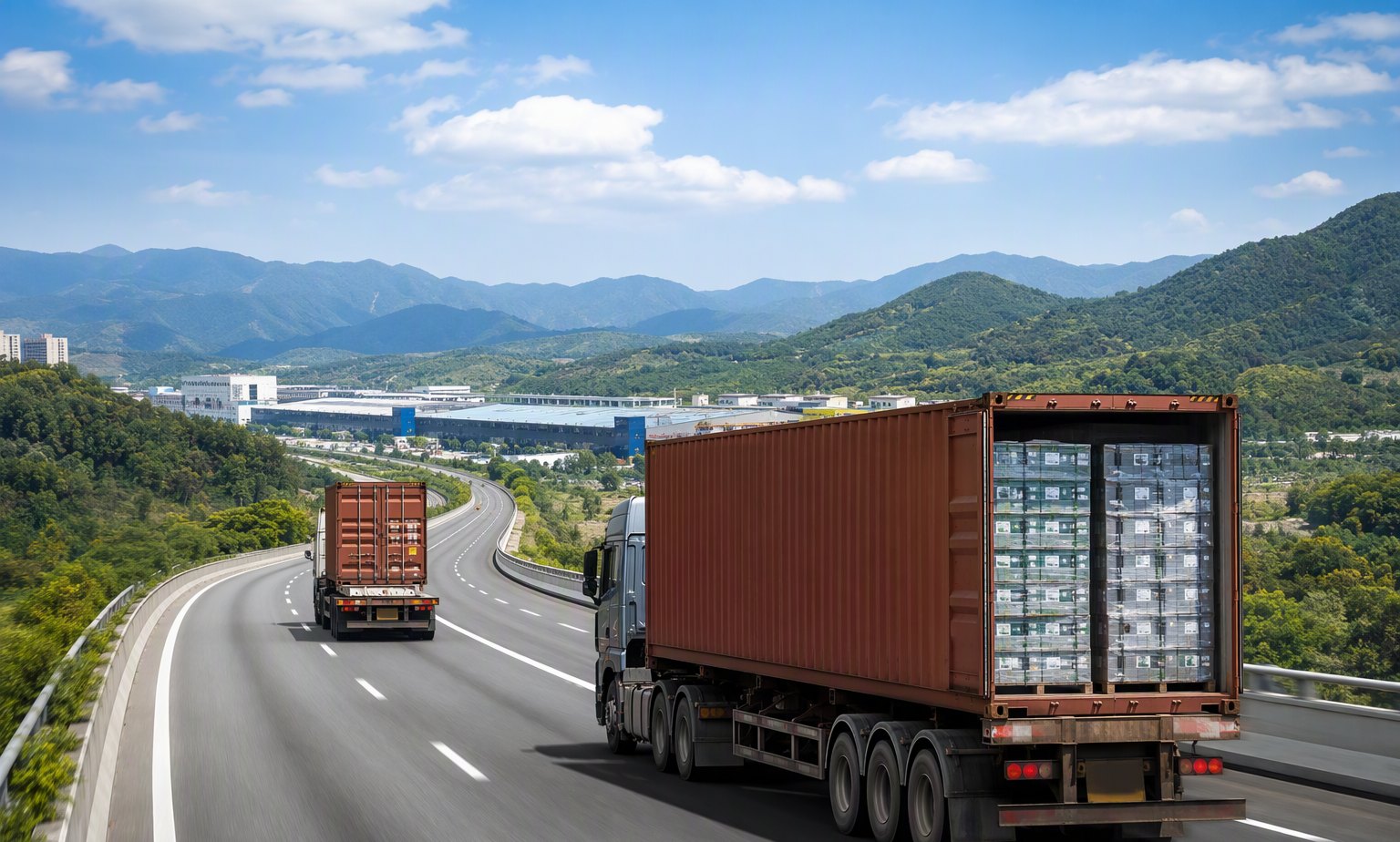
The electronics artery: components cross at Friendship Pass in seconds, factories in Bắc Ninh receive next day.
5. What to Watch#
- Smart-port full operation: the 2,880-bays/day design capacity comes online in phases — watch the trial-to-full cutover before booking peak-season volume.
- Liuzhou–Huaihua–Guiyang linkage: Liuzhou rail port plans to link with Huaihua and Guiyang international land ports, extending the corridor's catchment into Hunan and Guizhou.
- Canal feeder integration: as canal sailing frequencies thicken, expect rail-canal through-tariffs from the Liuzhou/Nanning nodes — the pricing moment to re-tender contracts.
- Origin documentation: China–ASEAN FTA and RCEP origin rules compound with border speed — keep Form E/RCEP claims airtight to bank the full benefit.
Methodology & Data Sources#
Corridor figures are drawn from field reporting on the October 2026 "Vibrant China" press tour and operator/customs statements. Time and cost reductions are operator-reported, not independently audited. FX: USD 1 ≈ CNY 6.7 (late Oct 2026).
- Friendship Pass Jan–Aug 2026 trade ¥513.6 bn (+31.2%); 2025 vehicle inspections >1 million; 15-second fast clearance incl. Vietnamese drivers; smart-port "two 24-hours", 2,880 bays/day design, >4,000 vehicles/day overall target — 21st Century Business HeraldA field report, Oct 2026
- ~70% of pass export value = electronic intermediates; Bắc Ninh–Bắc Giang cluster "N+1" next-day supply — 21st Century Business Herald field report, Oct 2026
- Nanning rail port: 7.8 Mt sent / 2.98 Mt received since 2017; "one declaration, one box to destination"; logistics cost −20%+, transit clearance −60%+; bonded zone Jan–Aug ¥9.98 bn (+128.9%) — 21st Century Business Herald, Oct 2026
- Liuzhou rail port: phase I opened Jun 2026; Jan–Sep 194,560 t (1.88× 2025), 17,000 TEU (22×); SGMW KD pre-warehouse 16,000 m² / 8,000+ TEU planned; packing cost −20%+; Nansha block train 26.5 h — 21st Century Business Herald, Oct 2026
- Guangxi–ASEAN trade ¥284.7 bn Jan–Aug 2026; ASEAN Guangxi's top partner 26 consecutive years; 65 regional corridors, 323 berths (39 ≥100,000 t) — 21st Century Business Herald, Oct 2026
- Pinglu Canal context (opened 16 Sep 2026; 560+ km shorter; lockage free through 2026) — see our first-30-day operations review
Get a Tailored Logistics Assessment#
Run your own numbers in the cost simulator — or apply to be listed in the verified supplier directory. Reference values only; not a formal quote.