Public Beta · Reference parameters captured Nov 2026. Route economics are operator-calculated figures as reported by China News Service. Freight rates are planning context, not quotes — verify at booking. Spotted a discrepancy? Tell us — this page exists to be challenged.
Key Numbers (East-Xijiang Route Ledger)#
| Metric | Reference value |
|---|---|
| Route opening | 6 Nov 2026: Hua Hang 900 departs Chishui Port (Wuzhou), canal transit, destination Ho Chi Minh City |
| Cost delta | ~10% lower comprehensive logistics cost per container vs PRD detour (operator calculation) |
| Transhipment | "大幅精简" — materially fewer links; single customs declaration at origin |
| Port role | Chishui: Beibu Gulf Xijiang Port's open terminal on the Xijiang trunk; east-Guangxi's key node facing the canal |
| Hinterland | Wuzhou, Hezhou, southern Hunan — previously routed east via the delta by default |
| First-month context | Canal's first month moved 1M+ t with 6 sourcing teams visiting 200+ enterprises — route now extends that recruitment east |
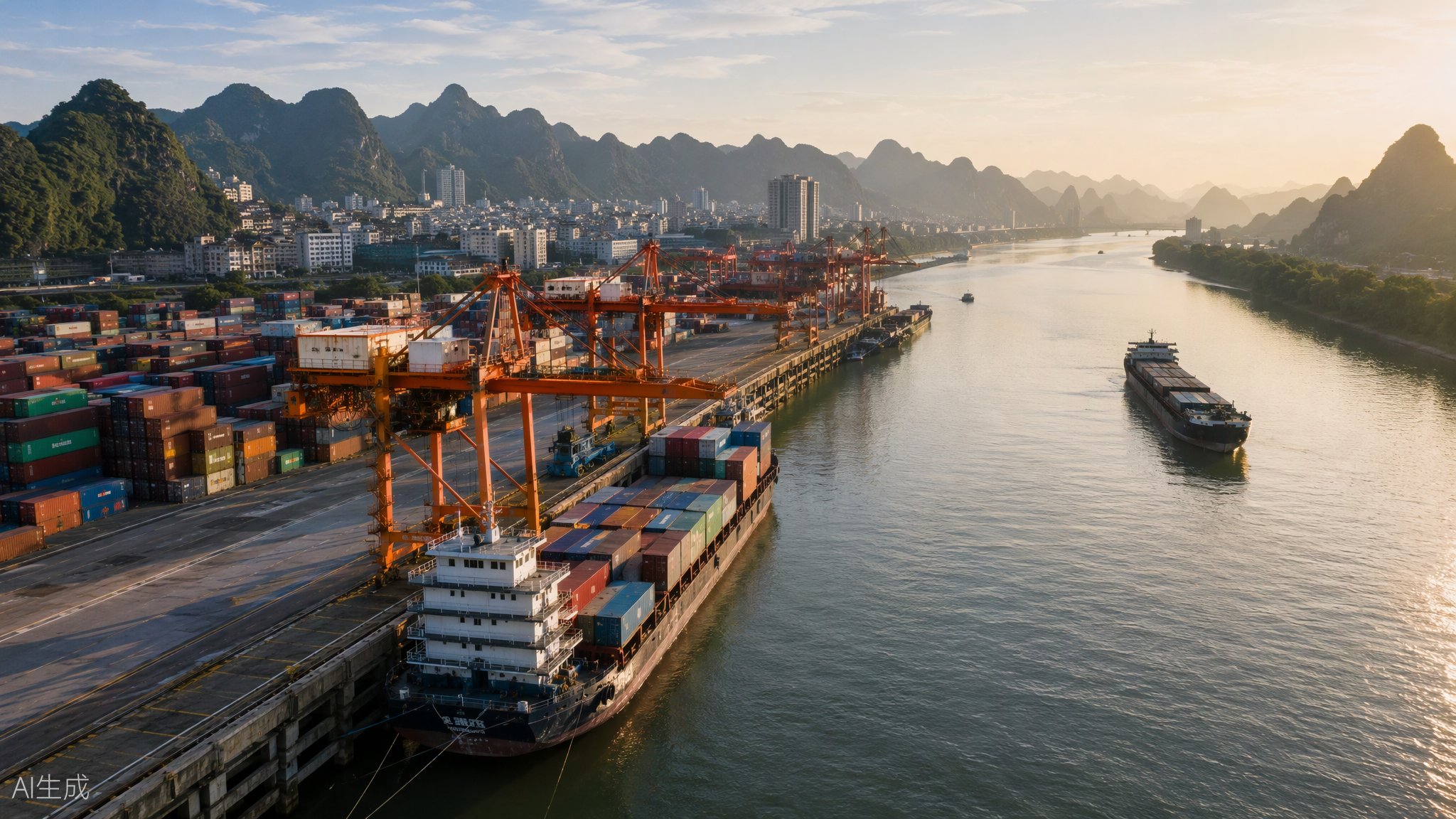
East Xijiang's sea gate: Chishui terminal loads the Ho Chi Minh-bound box. The eastern hinterland stops sailing away from the canal and starts sailing through it.
1. Why a New Route Out of Wuzhou Matters#
Every route launch since the canal opened has widened a corridor that previously narrowed to a single exit. Wuzhou sits on the Xijiang trunk — the waterway that already carried Guangxi's building materials, Hezhou's ground calcium carbonate, and southern Hunan's export produce eastward through the delta. That east-only habit was not preference; it was topology: until September 2026, the Xijiang had no southbound sea gate. The Chishui–Ho Chi Minh route is the topology fix arriving at the eastern end: cargo now consolidates at Chishui, transits the canal south, and meets Vietnam's largest consumer market without touching the Pearl River Delta.
The ~10% per-box figure is an operator calculation, not an academic estimate — and its composition is the interesting part: fewer transhipment links, single-declaration customs at origin, and the canal's 134-km shortcut doing on the east axis what it has already done for the Youjiang (Baise) and Yongjiang (Nanning) axes.
2. The Network Effect: Ho Chi Minh Joins Cần Thơ#
For Vietnam coverage this matters as much as the origin side. The site's Cần Thơ feeder analysis documented the Mekong Delta lane (Nanning Port–Cần Thơ, opened at commissioning); Ho Chi Minh City is the commercial-capital counterpart on the same delta system. Together they give buyers on both ends a two-port Vietnam menu: southern consolidation via Cần Thơ, metro-market and transshipment depth via Ho Chi Minh — both reachable from Xijiang-trunk origins without a delta transit. Route-level context and the full corridor map sit in the route & map logistics analysis.
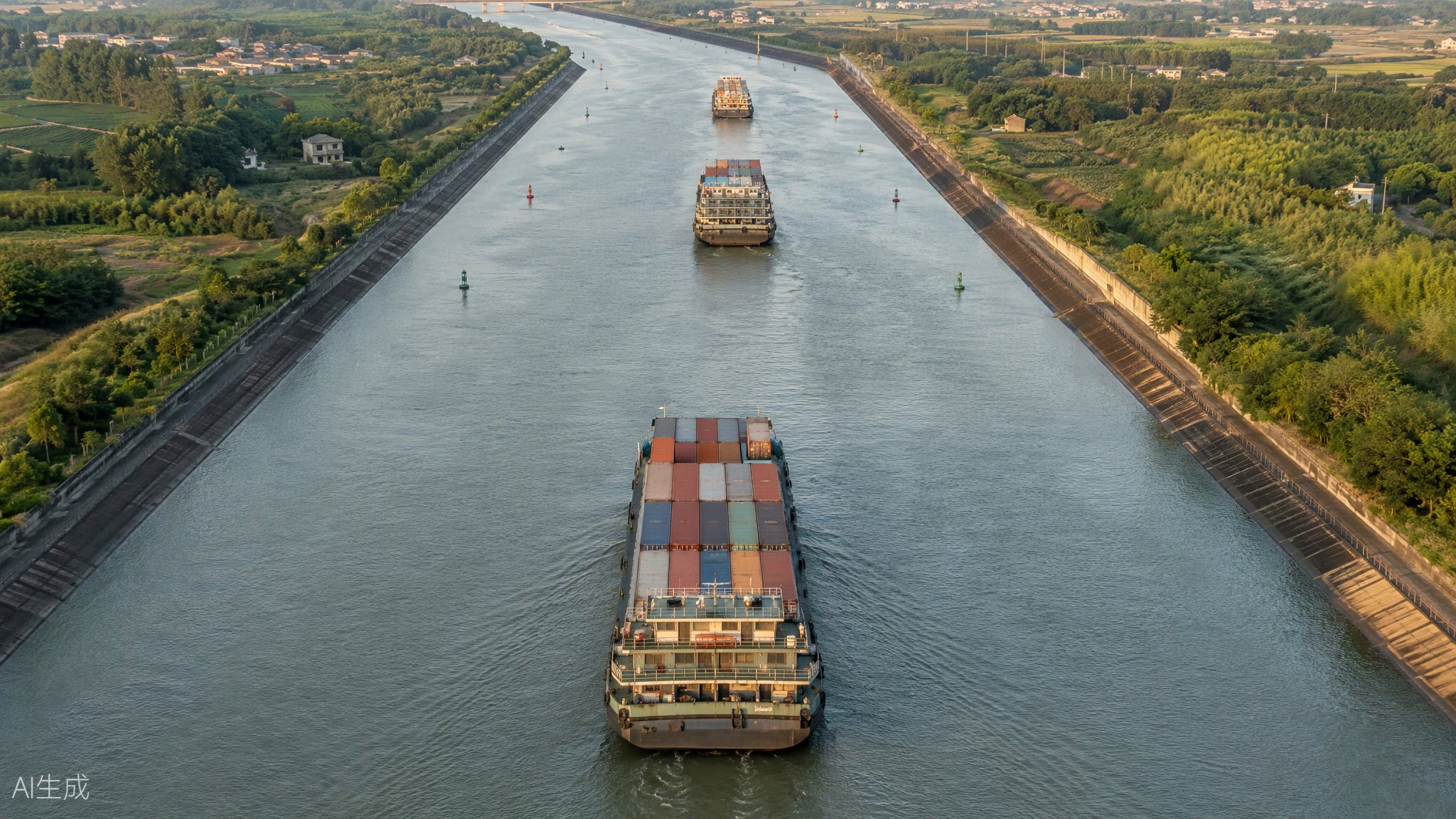
The 134-km shortcut doing its work: an east-Xijiang convoy in canal transit. The Ho Chi Minh call is reachable without a single delta transit.
3. Chishui's Consolidation Play#
Chishui's role deserves precision. It is not a transshipment valve like Nanning (which switches 5,000-t sea-river convoys into 1,000–2,000-t Youjiang vessels); it is a consolidation port: eastern-hinterland cargo gathers here by short barge and truck feed, boxes are customs-cleared once, and the canal convoy does the rest. The port operator has publicly committed to deepening the customs–carrier–shipper linkage and building origin cargo — language that matches the province-wide campaign documented in the first-month ledger (six teams, 200+ enterprises recruited before opening). If that recruitment lands in Wuzhou, the east-Xijiang cargo base is the corridor's next growth pool.
4. Who Should Book This First#
- Wuzhou building-material exporters: boards, profiles and fabricated fittings where the 10% box saving lands directly on thin-margin products.
- Hezhou calcium-carbonate shippers: bulk-to-box conversions (散改集) already tested elsewhere on the corridor pair well with a fixed Vietnam sailing.
- Southern-Hunan produce and light-manufacture shippers: the route shortens their distance-to-sea by removing the entire delta leg.
- Vietnamese importers of Guangxi specialties: the Ho Chi Minh call gives metro-market delivery without a northern-port tranship.
Seasonality note: with CNY in late January 2027, Q4 sailings on this route are the last uncongested window before peak — the 30-day audit pattern of holiday ×21 throughput says book early.
FAQ#
Is the 10% saving guaranteed?#
It is the operator's calculated comprehensive per-box figure versus the PRD detour. Your saving depends on origin feed cost, box type and season — verify per booking in the simulator.
How does this differ from the Nanning–Cần Thơ route?#
Different origin axis (east Xijiang vs Yong-You), different Vietnam call (metro Ho Chi Minh vs Delta Cần Thơ). Complementary, not competing — a shipper can now choose Vietnam port by market, not by geography.
Does Chishui handle bulk as well as boxes?#
The terminal is a Xijiang trunk port with multi-cargo capability; the announced route is container-focused. Bulk enquiries should go through the port's operator directly or via the directory.
What documentation model applies?#
Origin single-declaration customs at Chishui, mirroring the "one declaration, one box through" models now live at Guigang and Nanning (see the first-month ledger).
Methodology & Data Sources#
Route opening (6 Nov 2026, Hua Hang 900), the ~10% per-box comprehensive cost figure, transhipment reduction, Chishui's port positioning and the operator's development commitments are from China News Service's Wuzhou dispatch (7 Nov 2026). First-month corridor context is from Guangxi Daily's operations review (Oct 2026). No unsourced freight rates are published per this site's sourcing rules.
- Route launch: Hua Hang 900, Chishui Port → canal → Ho Chi Minh City, 6 Nov 2026; ~10% per-box comprehensive saving (operator calculation); single-declaration customs — China News ServiceA, 7 Nov 2026
- East-hinterland context (Wuzhou/Hezhou/southern Hunan default-east pattern) — same dispatch
- Corridor benchmarks: first-month 1M+ t, 6 sourcing teams / 200+ enterprises — first-month ledger (Guangxi DailyA, Oct 2026)
- Vietnam network: Cần Thơ feeder — feeder analysis; corridor map — route & map analysis
Get a Tailored Logistics Assessment#
Price a Wuzhou/Chishui origin against the Nanning and Qinzhou alternatives in the cost simulator, or apply to be listed in the verified supplier directory. Reference values only; not a formal quote.