TÓM TẮT TIẾNG VIỆT · 越南语摘要
Sau 30 ngày vận hành đầu tiên, Kênh đào Bình Lục đã vận chuyển hơn 950 nghìn tấn hàng, rút ngắn hành trình nội địa hơn 560 km và giúp giảm 18–30% chi phí logistics (ước tính chính thức) so với tuyến đi vòng qua châu thổ sông Châu. Cảng Khâm Châu đã cải tạo 11 bến giang-hải, cho phép tàu sông 5.000 tấn đỗ cạnh tàu biển. Xem bảng so sánh chi phí bên dưới và gửi yêu cầu báo giá (RFQ).
1. Auditing the First Month — With Sources, Not Adjectives#
When the 134.2 km Pinglu Canal opened on 16 Sep 2026, supply-chain planners asked two fair questions: would the three lock flights (Madadao, Qishi, Qingnian) choke transit, and would estuary handlings eat the barge savings? One month in, the field data — gathered during the official "Vibrant China" press tour and cross-checked across outlets — gives a sourced answer:
| Metric | Verified first-month benchmark | Source |
|---|---|---|
| Canal total transit | 950,000+ t (16 Sep–15 Oct) | CLS.cn field report |
| Lock performance | 7–8 cycles/day (up from 3–4); ≤6 × 5,000-t vessels per chamber; 70–80 min end-to-end; wait target ≤3 h | Canal operator (CLS.cn) |
| Nanning Port September | 668,400 t, +145% y/y; National Day week +21× | CCTV-sourced / operator |
| Liujing terminal | 266,600 t by 11 Oct; new crane: 300 → 800 t/h over-side transfer, ¥15–20/t saved | People's Daily Guangxi / Economic Observer |
| Cost band | Comprehensive logistics cost −18–30% (official projection); 560+ km shorter inland leg | China News Service |
| Qinzhou river-sea berths | 11 berths retrofitted for river-sea intermodal; "equivalent-A waters" direct berthing | Guangxi official estimates, Sep 2026 |
Two honest caveats before you build a budget on this table: the 18–30% band is a government projection, not an audited shipper average; and wait times are a stated target (≤3 h), which implies current peaks can exceed it. We flag both because a sourcing decision built on quiet caveats fails loudly.
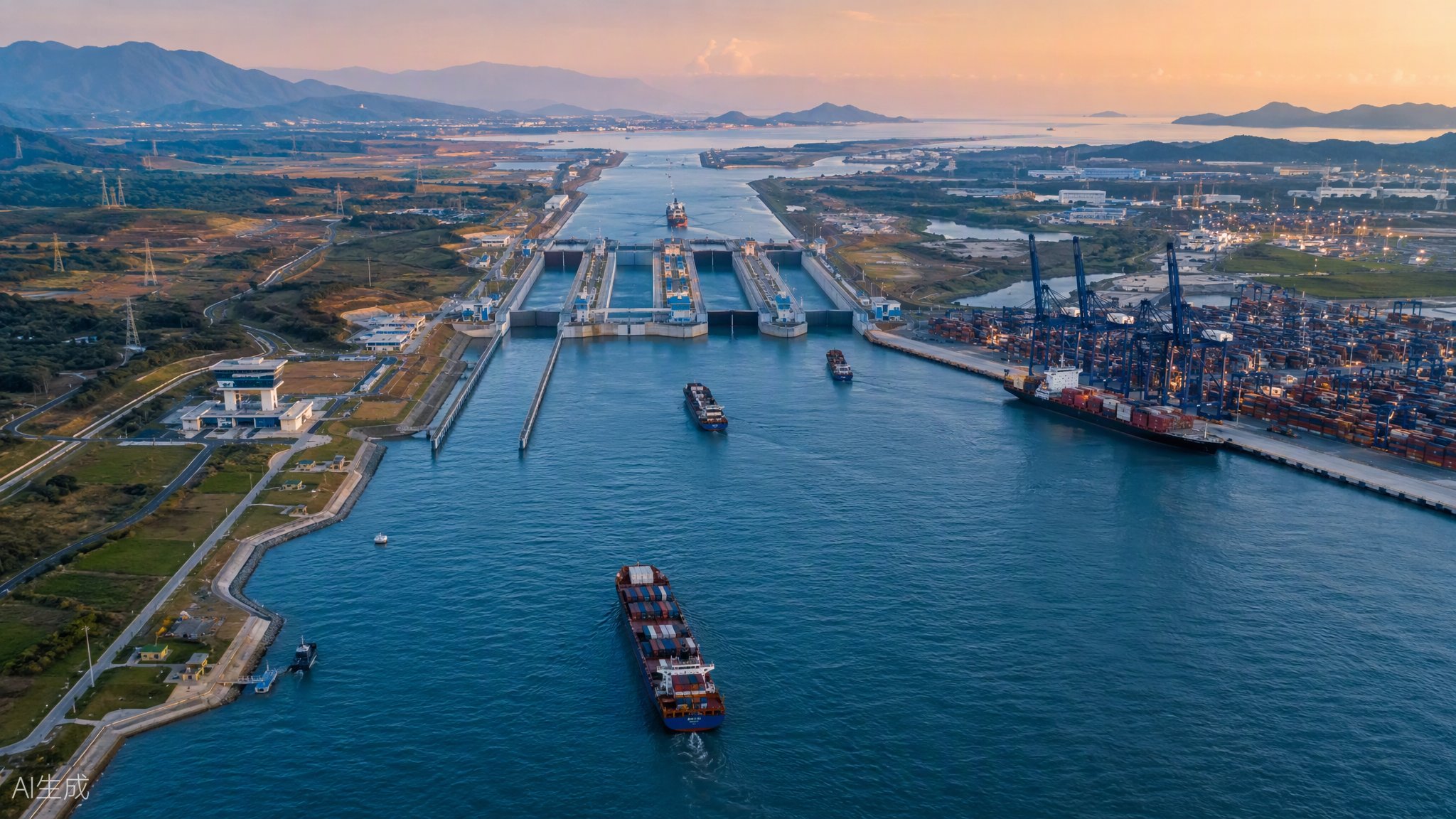
The 134.2 km waterway drops 65 m through three lock flights into the Beibu Gulf. First-month data says the system is scaling — read it together with the caveats.
2. Head-to-Head: Route Economics Toward Northern Vietnam#
For buyers moving containerized parts toward Hải Phòng, Bắc Ninh and Vĩnh Phúc, three routing families compete. We show the verified parameters; exact dollar rates depend on cargo and contract — request live quotes via the RFQ card below.
| Parameter | A: Cross-border trucking (via Friendship Pass) | B: Traditional river-sea (via PRD/HK) | C: Canal corridor (via Qinzhou) |
|---|---|---|---|
| Verified time bands | Nanning–Hanoi 24 h target at the smart port (design); 15-second truck clearance | Baise-to-sea 12–15 days pre-canal | Baise-to-sea 5–7 days; Sichuan/Chongqing chemicals −7–10 days |
| Cost evidence | Rail-port "one-declaration" regime: logistics cost −20%+, transit clearance −60%+ | PRD detour: 560+ km extra inland leg | Official projection: −18–30% door-to-port; lockage free through 2026 |
| Handling layers | Single border crossing; smart-port ramp-up | 1–2 transshipment handlings | 11 retrofitted river-sea berths; direct berthing for certified vessels; inland clearance at Nanning |
| Best for | Urgent electronics, high-value density | Legacy contracts | Cost-sensitive bulk, chemicals, machinery, batteries |
| Current caveat | Smart port in trial; confirm live door times | Slowest | Sailing frequency still ramping; book 2–3 weeks ahead |
3. How the Estuary Bottleneck Was Unblocked#
The canal's sea mouth got three upgrades during the launch window. First, berth retrofitting: 11 Qinzhou berths converted for river-sea intermodal working, in the zone China designated its first "equivalent-A waters" area — certified inland vessels berth directly at seaport terminals instead of unloading to shore cranes first. Second, inland clearance: export declaration can complete at Nanning Port's supervision site, boxes ride sealed to the ocean terminal without re-inspection. Third, network depth: Qinzhou's automated terminal counts 43 scheduled routes — 29 foreign-trade, 23 ASEAN — with group-wide 39 Vietnam routes, and the first direct river-sea service to Cần Thơ (Mekong Delta) made its maiden round trips in September.
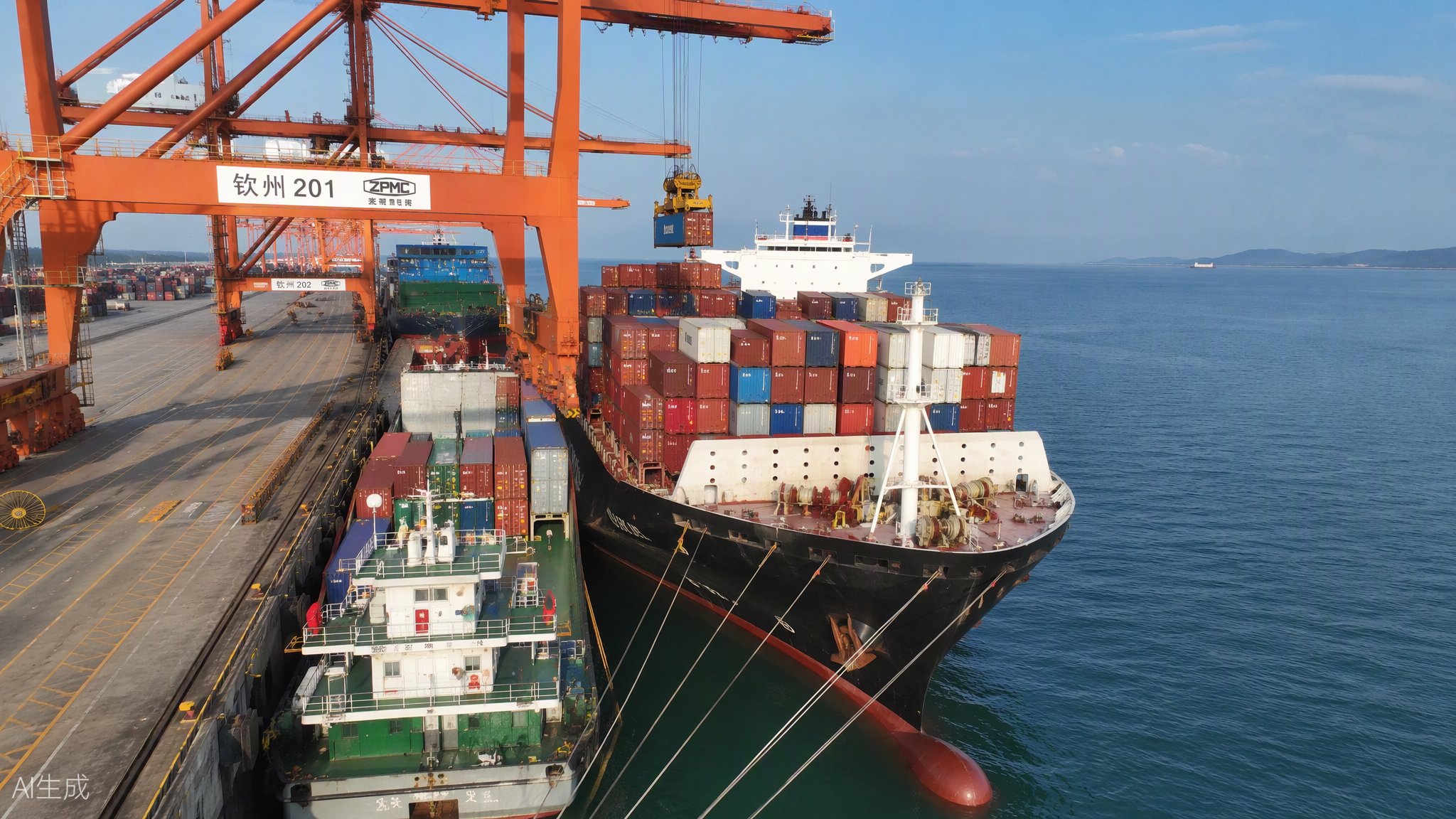
"Equivalent-A waters" direct berthing: the river vessel and the mother ship share one berth, eliminating the barge-to-shore-yard-reload layers.
4. Sourcing in the Canal Hinterland: Three Belts, Verified#
Logistics only pays when the supplier is real. Three industrial belts along the corridor are open for introduction through our verified directory:
- Liuzhou belt: construction machinery (a maker with 200+ ASEAN service outlets and 40,000+ machines in the field), micro-vehicle CKD kits shipped from rail-port pre-warehouses, auto parts.
- Baise / Nanning basin: aluminum products fed by bauxite now barging inbound through the canal; chemicals and building materials; Class-9 lithium-battery cargo cleared via Guangxi's first inland dangerous-goods licence.
- New-energy materials: the region's first 4.2 m lithium/sodium separator line in production beside the canal, inside a ~150 GWh battery cluster.
Every listed supplier is screened for direct export licensing, RCEP Form E eligibility, and export track record — the screening criteria are published, and the directory is open for applications.
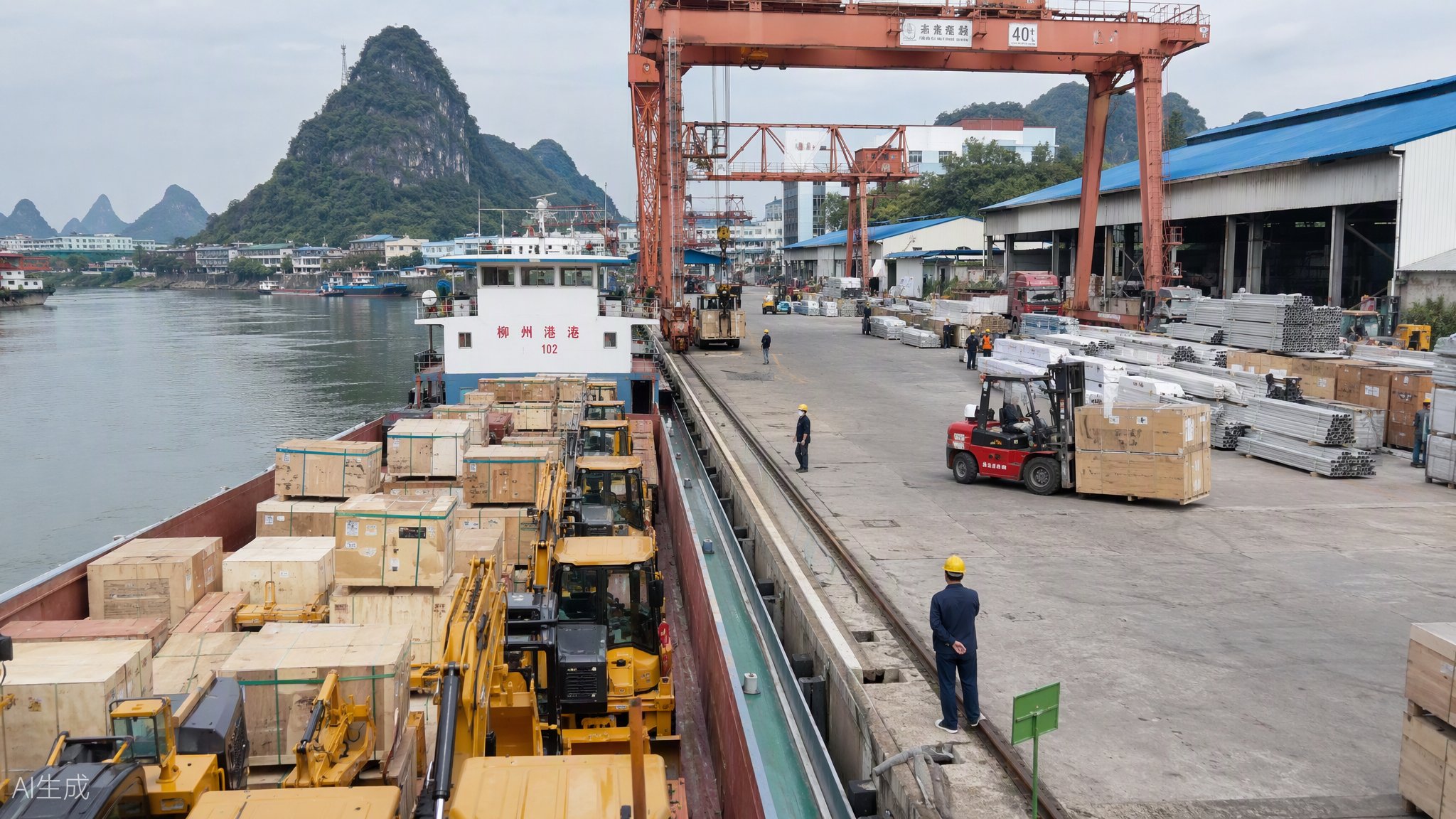
Hinterland freight is switching from "trucks feeding ports" to "the canal feeding factories": raw materials inbound, finished goods outbound.
● DIRECT SOURCING & FREIGHT PROCUREMENT
Need a Live Shipping Quote or a Verified Factory Introduction?
Benchmark freight rates from Guangxi to ASEAN ports, or get verified introductions for machinery, aluminum, battery-materials and auto-parts suppliers. Neutral matching, zero procurement markup.
5. Frequently Asked Questions by Freight Forwarders#
What vessel class can transit the canal?#
The design working ship is the 5,000-ton-class river-sea vessel; up to six such vessels pass in a single lock chamber cycle. Within the estuary's equivalent-A waters zone, certified vessels of this class berth directly at seaport terminals.
Can inland factories issue RCEP Form E directly?#
Yes. Exporters clearing at Nanning's supervision site (or Liuzhou/Baise offices) receive digitally certified RCEP / China–ASEAN Form E documentation, supporting preferential-tariff claims across ASEAN — keep origin paperwork clean to bank the benefit.
How are wait times managed at the three locks?#
Scheduling is appointment-based: the integrated dispatch platform groups vessels arriving in the same window into one lock cycle. Current throughput is 7–8 cycles/day against a design headroom of ~20 per lock; the operator's wait-time commitment is ≤3 hours.
What does 2027 pricing look like?#
Lockage resumes 1 Jan 2027 at RMB 1.0/gross ton/lockage — roughly ¥25–75 per container slot, noise beside vehicle- or machinery-level freight. The meaningful line items to negotiate are equipment, bunker and feeder frequency.
Methodology & Data Sources#
Every figure above traces to a named source below. Projections are labeled as projections; operator statements as operator statements. We do not publish unaudited "average rates" as if they were benchmarks.
- Canal transit >950,000 t (to 15 Oct); lock cycles 3–4 → 7–8/day; ≤6 × 5,000-t vessels; 70–80 min end-to-end; ≤3 h wait target — CLS.cnA field report, 16 Oct 2026
- Nanning Port Sep 668,400 t (+145%); National Day +21×; Liujing 266,600 t; crane 300→800 t/h, ¥15–20/t — CCTVA-sourced reports; People's Daily Guangxi; Economic ObserverA, 12–16 Oct 2026
- Logistics cost −18–30% (official projection); 560+ km shorter; >¥5 bn/yr societal saving — China News ServiceA / United Front Work Dept site, 14 Oct 2026
- 11 Qinzhou river-sea berths retrofitted; "equivalent-A waters" zone; Funing Port interconnection plan — Guangxi University compiled official estimates, Sep 2026
- Qinzhou 43 routes (29 foreign-trade, 23 ASEAN); 39 Vietnam routes; 129k TEU Jan–Aug (+52%) — CLS.cn 16 Oct 2026; People's Weekly via SohuB, Oct 2026
- Friendship Pass smart-port figures; Nanning rail-port −20%+ cost / −60%+ clearance — 21st Century Business HeraldA field report, Oct 2026; see our corridor analysis
- Baise 5–7 days vs 12–15; Sichuan/Chongqing chemicals −7–10 days — CLS.cn 16 Oct 2026; Beibu Gulf Port GroupB via Sina, 22 Sep 2026
- Lockage free through 31 Dec 2026; RMB 1.0/GT/lockage from 1 Jan 2027 — 桂发改价费规S〔2026〕533号; Guangxi press conference, 7 Sep 2026
- Can Thö route maiden voyages (16/24 Sep 2026) — CCTV / China DailyA, 13 Oct 2026; see our Cần Thơ feeder analysis
Get a Tailored Logistics Assessment#
Run your own numbers in the cost simulator — or apply to be listed in the verified supplier directory. Reference values only; not a formal quote.