Public Beta · Reference parameters captured Oct–Nov 2026. Port and throughput figures are from Guangxi Daily (via Sohu republication) and China News Service reporting; the per-container saving is a shipper statement. Freight rates are planning context, not quotes — verify at booking. Spotted a discrepancy? Tell us — this page exists to be challenged.
Key Numbers (First-Month Industrial Ledger)#
| Metric | Reference value |
|---|---|
| First-month canal lockage | >1,000,000 t (crossed 17 Oct, one month after opening) |
| Beibu Gulf Port Group share | >970,000 t of canal-related cargo |
| Xijiang-port group throughput (to 15 Oct) | >940,000 t of canal-related cargo; National-Day-holiday throughput ×21 y/y |
| Estuary berth retrofit | 13 berths complete; ≈32M t added river-sea transshipment capacity |
| Nanning Liujing | 10 berths; 6.48M t/yr capacity; new 40-t crane: transshipment 300 → 800 t/h |
| Scheduled river-sea routes | Nanning–Yangpu; Nanning Port–Cần Thơ (Vietnam) |
| Qinzhou ops best day | 68,700 t single-day river-vessel cargo (National Day holiday); 97%+ direct-berthing rate, avg port stay 5 h |
| Sourcing campaign | 6 teams, 200+ enterprises in Guizhou/Yunnan/Sichuan; "one enterprise, one plan" |
| Baise staging yard | 70 mu, 116,700 t storage; >300,000 t dispatched by 16 Oct |
| First bonded water-water transit | 30 Oct, Guigang → canal → Qinzhou → Vietnam; shipper: ~10% saving per box (statement) |
| Provincial policy frame | "十五五" Pinglu Canal economic belt; "overseas raw materials + Guangxi processing + domestic & export markets" model |
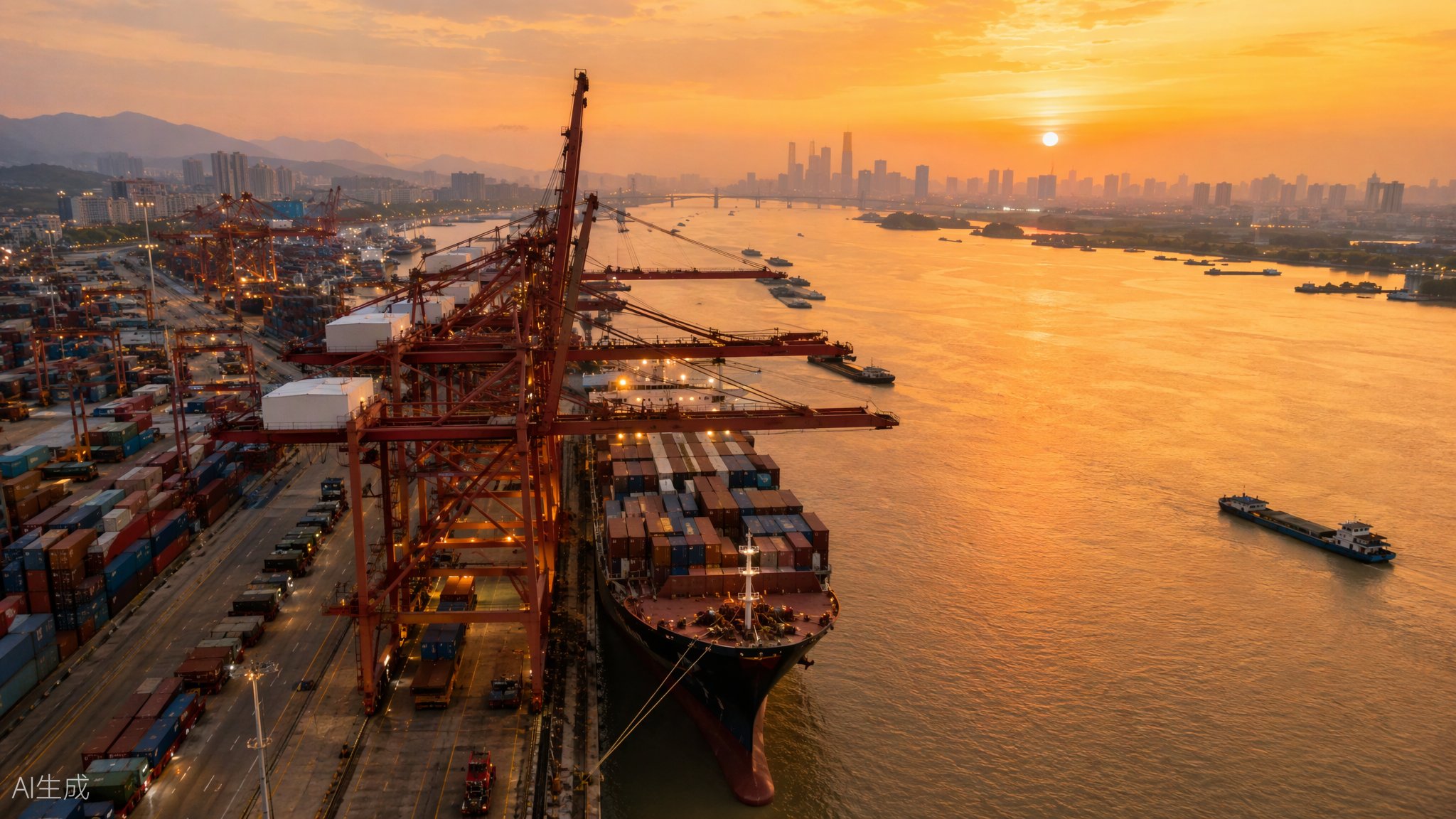
The industrial ledger in one frame: a 40-t gantry crane at Nanning Liujing transships cargo river-to-sea at 800 tonnes per hour. The first million tonnes was recruited enterprise by enterprise, not waited for.
1. From Waypoint to Origin Port: Nanning Liujing's Flip#
The most instructive single change in the first month happened at Nanning Port's Liujing operating area. Historically a Xijiang-waterway node whose exports detoured east through the Pearl River Delta, Liujing is now, in port GM Wang Fukun's phrase, "no longer a waypoint on someone else's corridor, but the origin port on our own doorstep" — 5,000-t vessels load here and run south through the canal directly to the Beibu Gulf.
The hardware behind the phrase: a newly commissioned 40-tonne gantry crane performing direct ship-to-ship transshipment at 800 t/h, up from 300 t/h. Ten berths now give the port 6.48M tonnes/year of capacity, and two scheduled river-sea services anchor the sailing calendar: Nanning–Yangpu (Hainan) and Nanning Port–Cần Thơ in Vietnam's Mekong Delta — the water-side counterpart of the corridor coverage mapped in the Cần Thơ feeder analysis. A smart dispatch center now ties river port, shipping, locks and sea port into one data chain, so vessels berth into work on arrival.
2. The Estuary Question, Answered: 13 Berths, 32 Million Tonnes#
The standard international-forwarder objection to river-sea corridors is estuary congestion: river fleets queuing for sea berths. The first-month data addresses it directly. On the Qinzhou sea side, all 13 adaptive-retrofit berths are complete, adding approximately 32 million tonnes of dedicated river-sea transshipment capacity, and scheduled 5,000-t canal vessels now berth there as routine. Holiday-peak operations show the slack: a single-day record of 68,700 t of river-vessel cargo, a 97%+ direct-berthing rate and 100% schedule fulfillment at the Honggang terminal, with average port stay of five hours.
Supporting works continue down the coast — Beihai Tieshangang's Berths 7–10 (south) commissioned, Qinzhou Dalanping Berths 4–5 handed over — while on the river side, Nanning Hesun Berth 5 has broken ground. The physical chain from Xijiang trunk to Beibu Gulf quay is closing link by link (operations detail in the 30-day audit).
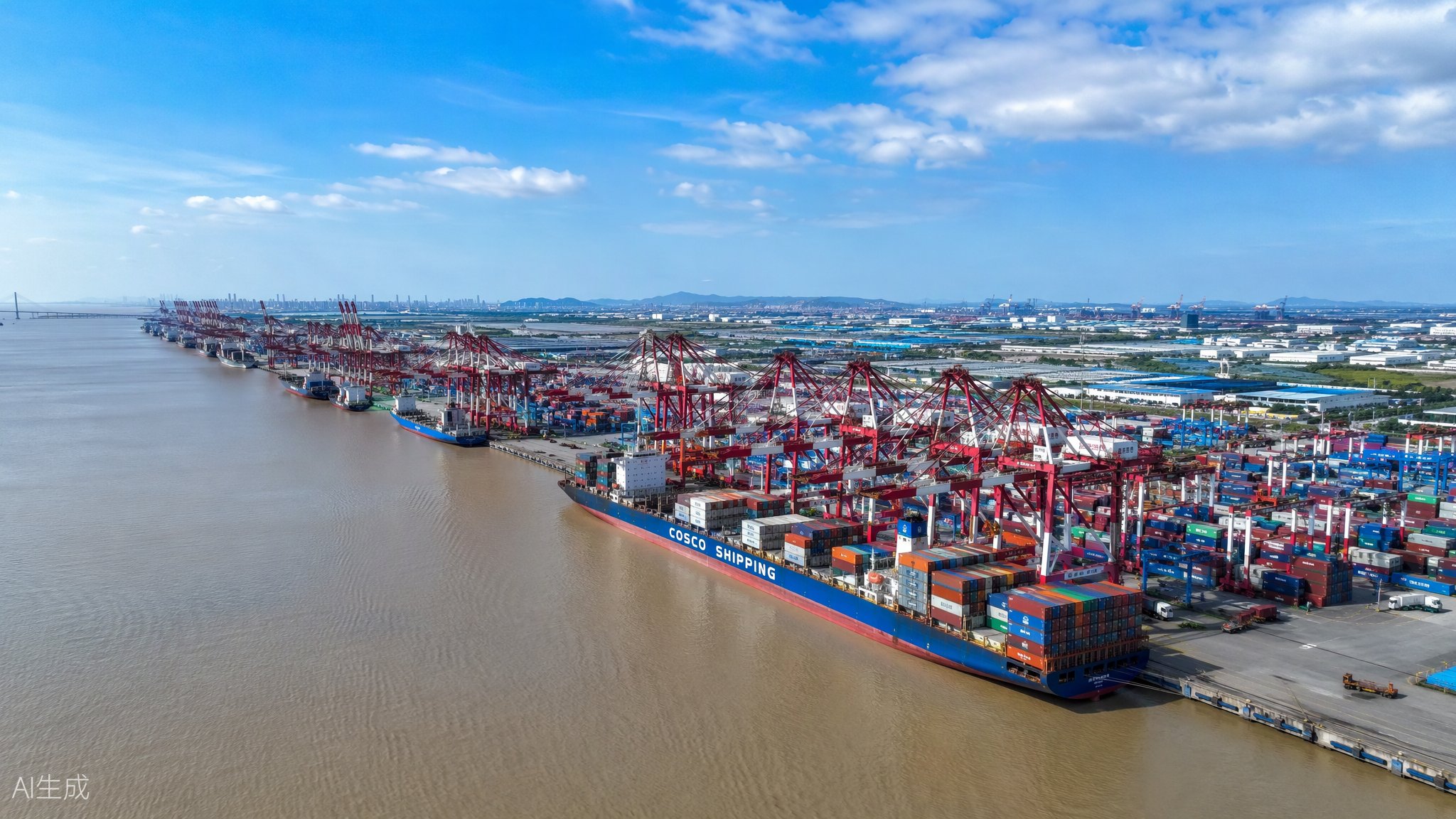
The estuary answer: 13 retrofitted berths on the Qinzhou sea side, ~32M tonnes of added river-sea capacity. River vessels and sea feeders now berth alongside each other instead of queuing.
3. The Cargo Was Recruited: Sourcing the Southwest#
A million tonnes in a month does not arrive by itself. Before water opened, Beibu Gulf Port Group sent six sourcing teams into Guizhou, Yunnan and Sichuan, visiting more than 200 enterprises and delivering tailor-made "one enterprise, one plan" river-sea proposals. The composition of the cargo confirms the campaign worked: alongside local grain and construction materials now stand sodium sulfate, special cement, pulp and minerals from the Southwest — the port book has gone from "mostly local" to "hinterland + local."
Downstream logistics got the same treatment. Baise received a 70-mu staging yard (≈4.7 ha, 116,700-t storage) with consolidated trucking for last-mile distribution, four service patterns (direct, transfer, bulk-to-container, road-rail-water), and >300,000 t dispatched by mid-October. Two commercial firsts are already on the books: the canal's first Vietnam foreign-trade container route, and Guangxi's first multimodal "single-bill" export movable-asset pledge-financing transaction — cargo financed while still on the waterway, the same structure later proven again on the Malaysia lane (Port Klang case).
4. Customs Joins the Corridor: The First "湾港通" Water-Water Transit#
On 30 October the canal's first bonded water-to-water multimodal export cleared under Nanning Customs' "湾港通" model: the river barge Hua Hang 905 carried six foreign-trade containers of plywood from Guigang through the canal to Qinzhou, where they transferred to an ocean vessel for Vietnam. One multimodal application in the single window delivers "one declaration, one box through, shared data, whole-journey supervision" — no separate procedures at origin, transfer point and exit port.
The shipper's arithmetic, stated on the record: switching from trucking to the canal corridor now saves about 10% per container, with exceptions handled locally instead of at the border. For export planners the model matters beyond the saving — it makes the river leg documented cargo, eligible for the financing and insurance products that were previously sea-port privileges. Pair this with the 2027 lockage tariff (free through 31 Dec 2026) and Q4 is the cheapest window this corridor will ever offer.
5. What the Province Signals Next#
The policy frame around the ledger is now explicit: at the 2 November press briefing, Guangxi's industry authorities named the Pinglu Canal economic belt a "十五五" priority and committed to scaling the proven template — "overseas raw materials + Guangxi deep processing + domestic and export markets" — across metal new materials, new-energy vehicles, green chemicals and smart manufacturing. Working proofs already cited: Indonesian nickel ore refined into new-energy materials at Qinzhou; Malaysian swiftlet nests deep-processed in the China–Malaysia Qinzhou Industrial Park; Liuzhou vehicles and parts selling at scale into ASEAN (the EV numbers behind that lane are analyzed in the Liuzhou–Thailand cost breakdown).
For buyers, the practical read: the corridor's first month proves operational reliability (schedules, berths, customs); months two through six will prove capacity depth. Contracts that assume both should cite the berth numbers and the customs model explicitly.
FAQ#
Is the million tonnes mostly local Guangxi cargo?#
No — that is the point of the sourcing campaign. The mix has shifted to "Southwest hinterland + local": sodium sulfate, special cement, pulp and minerals now arrive from Yunnan, Guizhou, Sichuan and Chongqing, alongside Guangxi's own grain and building materials.
Can ocean-going carriers' containers move through the canal now?#
Yes, in two documented ways: scheduled river-sea services (Nanning–Yangpu, Nanning–Cần Thơ) and the "湾港通" water-water transit model cleared at Guigang on 30 Oct, which moves sealed foreign-trade boxes end-to-end under one declaration.
How much estuary capacity exists now?#
All 13 retrofit berths on the Qinzhou sea side are complete, adding ≈32M tonnes of river-sea transshipment capacity; the canal's scheduled 5,000-t vessels berth there routinely, with 97%+ direct-berthing rates reported in peak operations.
What does this mean for 2027 freight planning?#
Stability signals are strong (berths, schedules, customs), and the metered lockage fee from 1 Jan 2027 is noise-level per tonne. The operational risks to watch are no longer infrastructure but peak-season lock queues — track the cadence in the 30-day operations audit.
Methodology & Data Sources#
Throughput, berth and equipment figures are from Guangxi Daily's first-month operations review (republished via Sohu, original outlet credited) and China News Service reporting; the per-container saving is a single shipper's on-record statement and is labeled as such. Corridor context is cross-linked to prior site coverage. No unsourced freight rates are published per this site's sourcing rules.
- First-month lockage >1M t (17 Oct); Beibu Gulf Port GroupB >970,000 t; Liujing 40-t crane 300→800 t/h; 10 berths, 6.48M t/yr; Nanning–Yangpu & Nanning–Cần Thơ routes; holiday ×21 throughput; 13 berths complete, ≈32M t added river-sea capacity; Qinzhou record day 68,700 t; 97%+ direct berthing, 5-h avg stay; Hesun Berth 5 started — Guangxi DailyA (via SohuB), 17–20 Oct 2026
- Sourcing campaign (6 teams, 200+ enterprises in Guizhou/Yunnan/Sichuan); Baise 70-mu yard, 116,700-t storage; >300,000 t dispatched; first Vietnam foreign-trade container route; first multimodal "single-bill" pledge-financing — Guangxi Daily (via Sohu), Oct 2026
- First "湾港通" water-water transit: Hua Hang 905, 6 TEU plywood, Guigang→Qinzhou→Vietnam (30 Oct); "one declaration, one box through"; ~10% per-container saving (shipper statement) — Nanning CustomsS / GACCS "Today's Customs", 2 Nov 2026 (via Sohu)
- "十五五" canal economic belt; "overseas raw materials + Guangxi processing + domestic & export markets" template; nickel/swiftlet/vehicle proof cases — Guangxi government press conferenceS (Department of Industry & IT), 2 Nov 2026, via China News ServiceA
- Corridor context: lockage fee free to 31 Dec 2026, RMB 1.0/GT from 1 Jan 2027 — lockage guide; early lock cadence — 30-day operations audit
Get a Tailored Logistics Assessment#
Run your cargo through the cost simulator — Baise, Liuzhou, Nanning and Chongzuo origins all priced, lockage included — or apply to be listed in the verified supplier directory. Reference values only; not a formal quote.