Public Beta · Reference parameters captured Oct 2026. Lockage figures are from the published Guangxi tariff document; freight rates are planning estimates, not a formal quote — verify at booking. Spotted a discrepancy? Tell us — this page exists to be challenged.
Key Numbers (Lockage 2027)#
| Metric | Reference value |
|---|---|
| Free-lockage window | Canal opening (16 Sep 2026) → 31 Dec 2026, 24:00 — zero lockage for operating vessels |
| Trial rate from 1 Jan 2027 | RMB 1.0 per gross ton (GT) per lockage, all three locks: Madao, Qishi, Qingnian |
| Trial validity | To 30 Sep 2031; formal tariff to be set after the trial period, with annual review |
| Cost basis | Three-lock annual cost RMB 543M ÷ average lockage volume 362.7M t/year = unit cost RMB 1.50/t·lockage |
| Hearing options | RMB 1.0 vs 1.2 per GT; neighboring-province lockage average ≈ RMB 1.22 — 1.0 chosen |
| 5,000-t laden vessel | Certificate GT ≈ 2,500 → ≈RMB 2,500 per lockage, ≈RMB 7,500 per full transit (our arithmetic from the published formula) |
| Per-container impact | Full transit on a 100-box 40HQ-equivalent barge load ≈ <RMB 75 per container (our arithmetic) |
| Corridor context | 134.2 km canal, 65 m lift across three locks; canal routing cuts ≈560 km vs Pearl River detour; corridor saving estimated 18–30% vs road/rail |
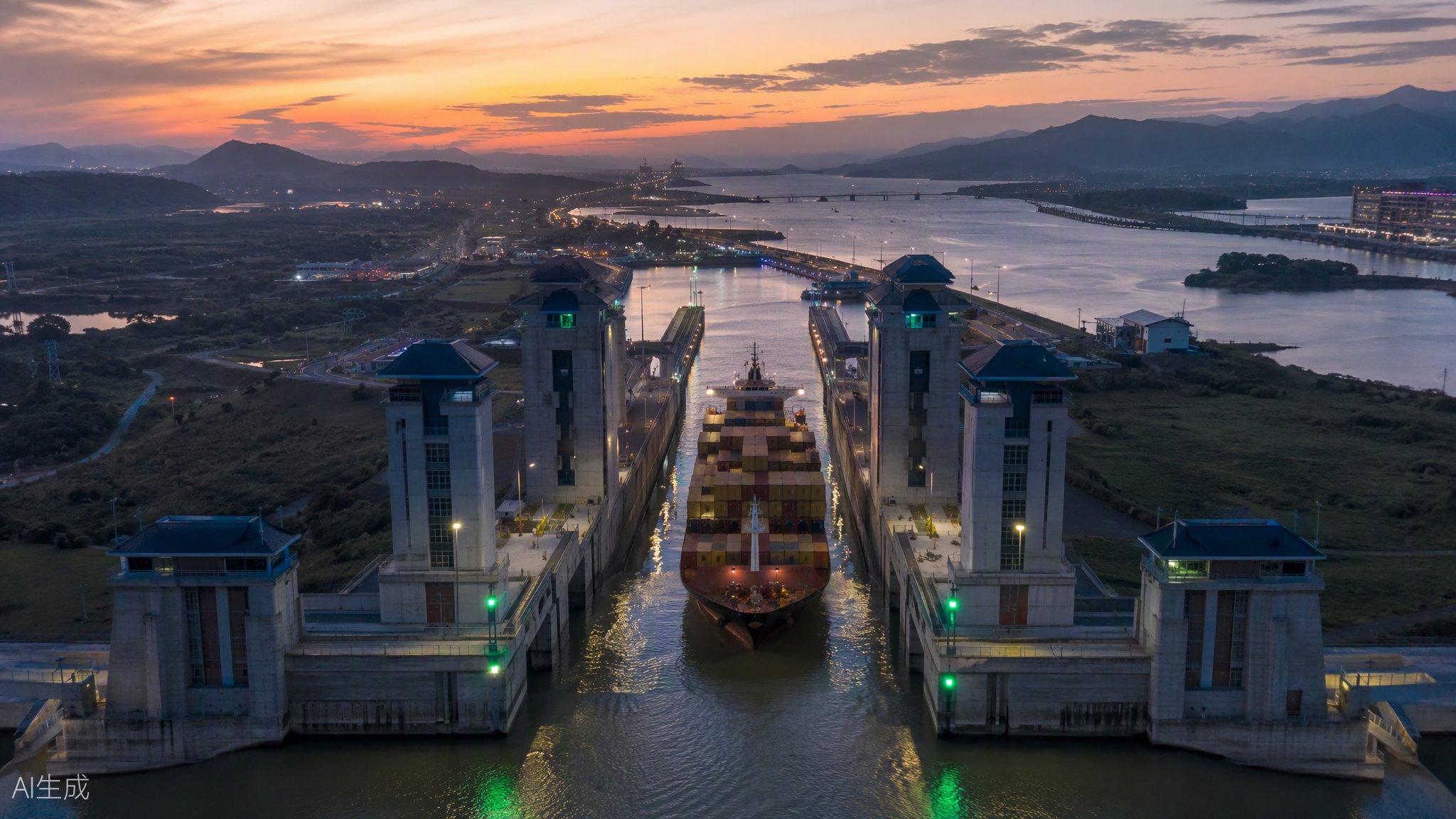
The three-lock staircase: Madao, Qishi and Qingnian lift vessels 65 m across the 134.2-km canal. From 1 Jan 2027 each passage is metered at RMB 1.0 per certificate gross ton — through 31 Dec 2026, still free.
1. The Document: What 533号 Actually Says#
Guangxi's Development and Reform Commission and Department of Transport jointly issued the trial lockage tariff in August 2026 (桂发改价费规〔2026〕533号), with three operative clauses that matter to shippers:
- Free opening window: from canal opening on 16 Sep 2026 until 24:00 on 31 Dec 2026, operating vessels transit all three locks free of charge.
- Trial rate: from 1 Jan 2027, RMB 1.0 per gross ton per lockage, metered on the vessel's certificate gross tonnage (登记总吨), applied at each of the three locks — Madao, Qishi, Qingnian — so a full canal transit accrues three charges.
- Trial horizon and review: the standard runs as a trial to 30 Sep 2031, after which a formal tariff is to be set; the authorities flagged annual review during the trial.
Two qualifiers from the 7 Sep 2026 press briefing are worth pinning to the wall. First, officials described the standard as "mid-range nationally" and reiterated that even with lockage added, full-corridor freight remains below comparable road and rail costs — the corridor's 18–30% saving estimate is stated to survive the fee. Second, the DRC explicitly invited the operator to differentiate below the cap: "encourage the operator to use 1.0 as the ceiling and float downward by contract." For volume shippers, that sentence is the single most commercially interesting line in the document.
The charging entity is Guangxi Pinglu Canal Construction Co., the canal group's construction arm, and exemption categories follow national and autonomous-region rules as published.
2. The Arithmetic: What It Costs a Real Shipment#
The published formula — certificate GT × RMB 1.0 × number of locks — looks abstract until you run one vessel through it (our arithmetic from the published parameters):
| Vessel profile | GT (cert.) | Per lockage | Full transit (3 locks) |
|---|---|---|---|
| Laden 5,000-t river–sea vessel | ≈2,500 | ≈RMB 2,500 | ≈RMB 7,500 |
| 3,000-t vessel | ≈1,500 | ≈RMB 1,500 | ≈RMB 4,500 |
| 1,000-t barge | ≈500 | ≈RMB 500 | ≈RMB 1,500 |
Now translate to cargo. On the corridor's reference barge load of ~100 40HQ-equivalent boxes, RMB 7,500 spreads to under RMB 75 per container for the full transit — single-digit percentages of even the most conservative corridor saving (18% on a typical Nanning–Qinzhou–ASEAN routing). For bulk cargo the fee reads ≈RMB 1.5 per tonne of freight carried on a 5,000-t vessel — again, arithmetic from the formula, but a useful planning placeholder until operator invoices start circulating.
The structural read: the tariff is priced to be invisible. A RMB 543M/year cost base recovered over 362.7M tonnes of annual lockage volume implies the DRC deliberately set the rate near the marginal-cost floor rather than full cost recovery — consistent with the 7 Sep messaging that the canal is being run as a trade-infrastructure play, not a toll road.
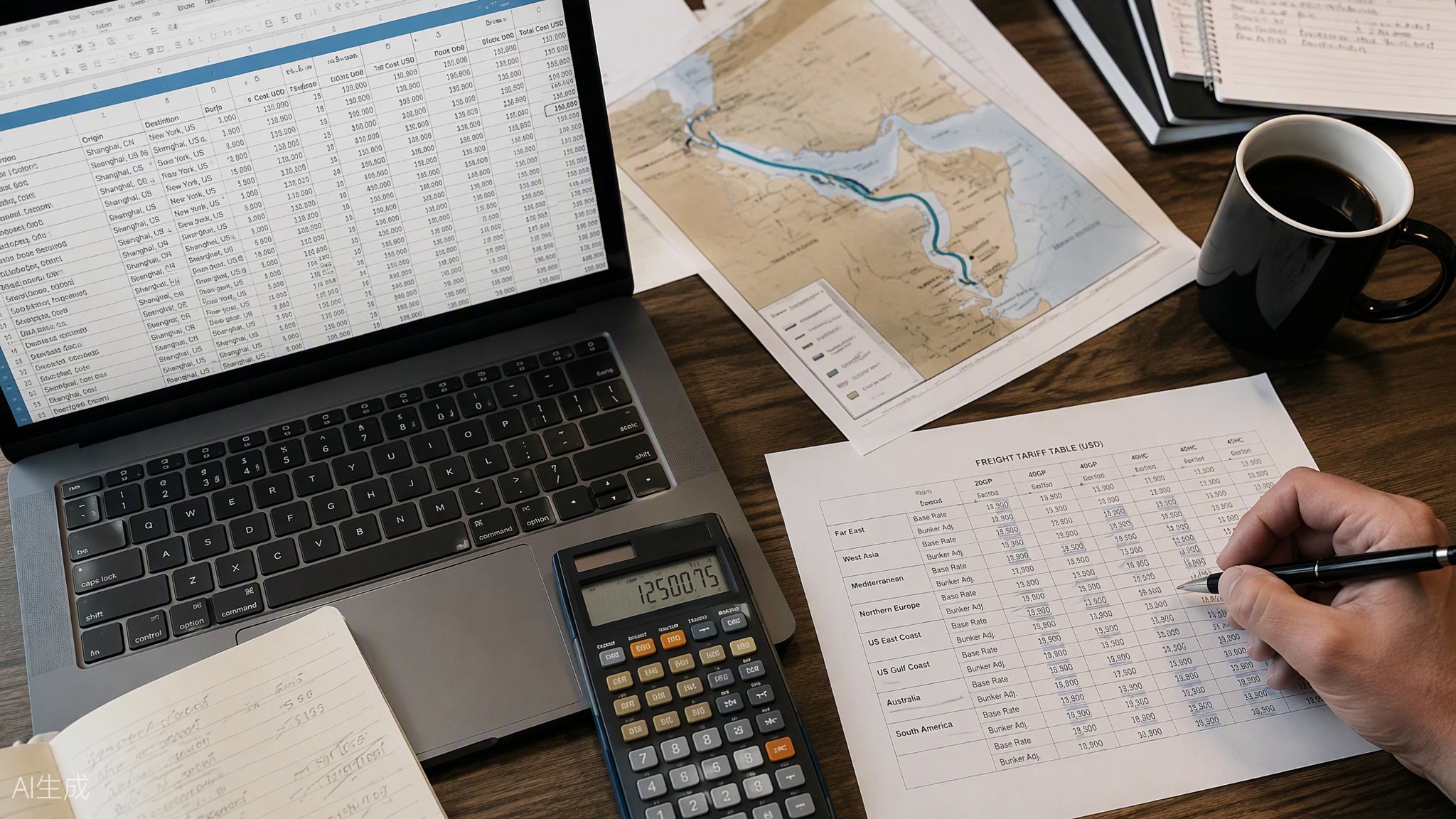
Planning desk view: certificate gross tonnage × RMB 1.0 × three locks. The calculator on this site now prices the corridor with the trial tariff as a line item — free through year-end, ~RMB 75/40HQ-equivalent after.
3. How It Compares: Neighboring Provinces and the Two Options#
At the 7 Sep 2026 hearing briefing, officials published the benchmark table: the neighboring-province lockage average is ≈RMB 1.22, against two proposed options of RMB 1.0 and RMB 1.2 per GT per lockage. Guangxi chose the lower one.
| Reference point | RMB/GT·lockage |
|---|---|
| Pinglu Canal trial rate (chosen) | 1.0 |
| Pinglu Canal alternative option | 1.2 |
| Neighboring-province average | ≈1.22 |
Against that backdrop, three competitive implications follow. First, Guangxi is underpricing the regional benchmark by ~18% at the headline rate — before any contractual discounting below the cap. Second, for captains weighing the Pearl River detour, the canal's toll now has a number, and the corridor saving estimate was published to be net of it. Third, the trial-to-2031 structure means the rate is a known unknown with a date: 2027 quotes can carry the trial figure as a firm line item, with a review event to watch at each anniversary.
One operational note for planning: the lockage meter counts certificate gross tonnage, not cargo weight — the same vessel pays the same fee laden or in ballast. That flatness favors larger, better-utilized vessels, which is presumably the intended utilization signal.
4. The Free Window: What to Do Before 1 Jan 2027#
The free window is not a gimmick; it is a 3.5-month pricing event that overlaps Q4 peak season and the run-up to CNY 2027 shipping. Practical checklist:
- Pull eligible Q4 cargo forward. Any shipment that can physically move before 31 Dec 2026 skips the fee entirely. On a 5,000-t-vessel transit that's ≈RMB 7,500 saved per passage — small in percentage terms, but it compounds across a November–December program, and it arrives exactly when CNY fruit and seasonal bookings are being locked.
- Use the window to benchmark. Zero-fee transits produce clean invoices: corridor cost without lockage. That baseline is exactly what you need to audit the 2027 line item when it appears.
- Negotiate the discount clause now. The DRC's "1.0 as ceiling, discount by contract" invitation means volume shippers should be floating lockage-linked terms in Q4 rate discussions — the operator has political cover to move below the cap and a brand-new customer book to win.
- Update your 2027 quote templates. From 1 Jan, any corridor quote should carry lockage as a visible line: certificate GT × RMB 1.0 × locks transited. Burying it inside a "canal surcharge" hands the narrative to whoever writes the invoice.
- Expect the audit trail. Exemptions follow national and autonomous-region rules; if your cargo category believes it qualifies, verify the category now rather than at the lock gate.
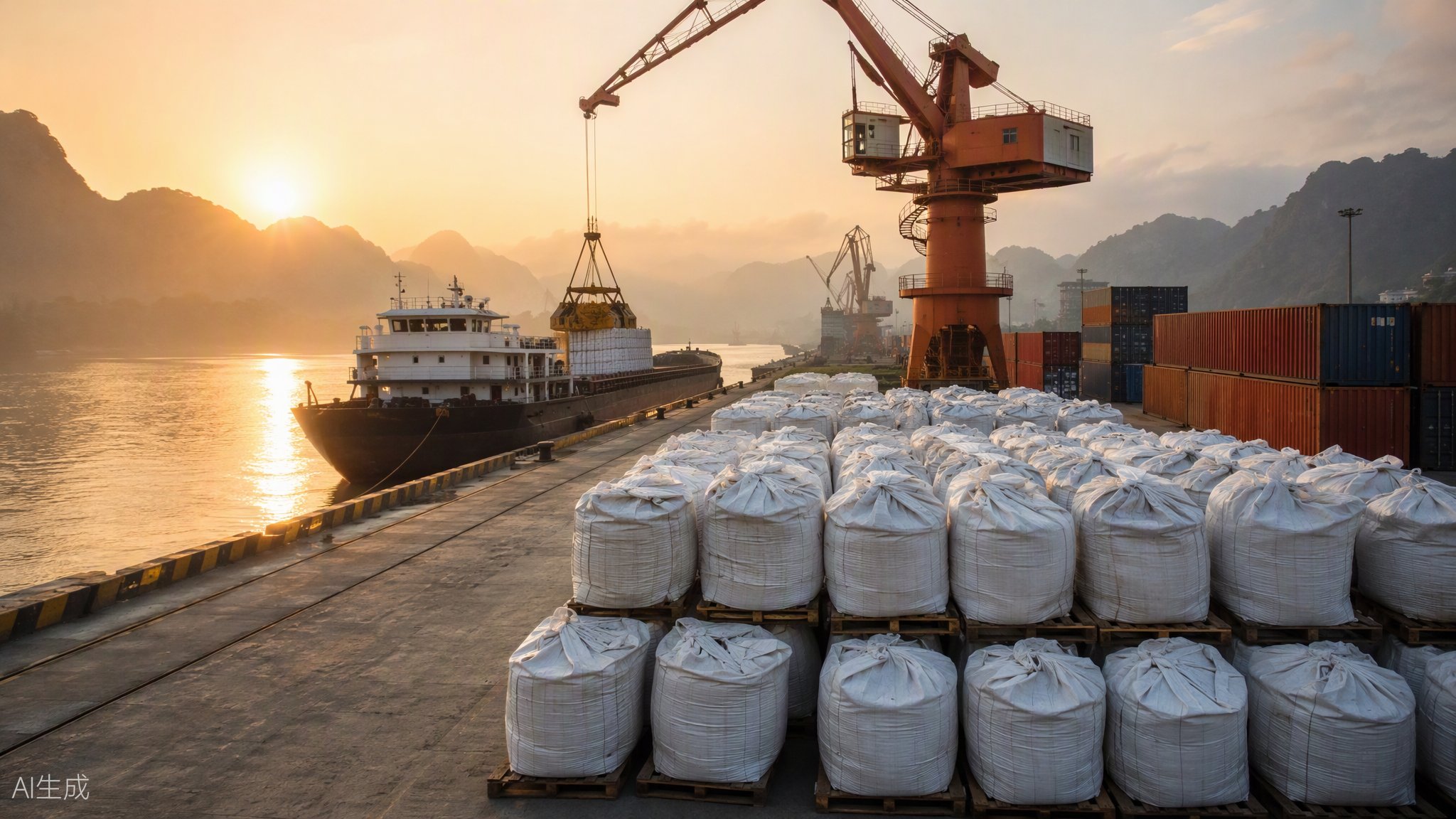
Corridor cargo staged for the free-window push: Chongzuo/Fusui-origin sugar and food-ingredient containers moving to Qinzhou before 31 Dec 2026 skip the lockage meter entirely.
FAQ#
Is the Pinglu Canal free to transit right now?#
Yes — from opening on 16 Sep 2026 until 24:00 on 31 Dec 2026, operating vessels pay no lockage at all three locks. The RMB 1.0/GT trial rate starts 1 Jan 2027.
How much will a full transit cost from 2027?#
Metered on certificate gross tonnage: ≈RMB 2,500 per lockage for a 5,000-t-class laden vessel (≈2,500 GT), ≈RMB 7,500 for all three locks — under RMB 75 per 40HQ-equivalent on a reference barge load. Varies with actual certificate GT (our arithmetic from the published formula).
Can the operator charge more than RMB 1.0?#
The document sets 1.0 as the trial standard, and official guidance frames it as a ceiling — operators are encouraged to differentiate and discount below it by contract. Above-cap charging is not the published direction.
Does lockage change the canal vs road/rail decision?#
Per the official briefing, no: officials stated corridor freight with lockage included remains below comparable road and rail costs. The corridor's published saving estimate (18–30%) is stated to survive the fee.
What happens after 2031?#
The 1.0 rate is a trial standard valid to 30 Sep 2031; a formal tariff follows, with reviews during the trial. Long-dated contracts should reference the trial period explicitly.
Where do I check the numbers for my specific vessel?#
Run the corridor in the cost simulator — lockage is priced as a visible line item alongside barge, handling and sea legs — and verify certificate GT with your carrier before booking.
Methodology & Data Sources#
Tariff parameters are from the published Guangxi document and the official 7 Sep 2026 hearing briefing; corridor context figures are from this site's prior canal coverage and are cross-linked below. Vessel-level fee estimates are our arithmetic from the published formula (certificate GT × RMB 1.0 × locks) and are labeled as such; no unsourced freight rates are published per this site's sourcing rules.
- Trial lockage tariff RMB 1.0/GT/lockage from 1 Jan 2027; free window to 31 Dec 2026 24:00; trial to 30 Sep 2031; charging entity Guangxi Pinglu Canal Construction Co. — 桂发改价费规S〔2026〕533号 (Guangxi DRC & Dept. of Transport), Aug 2026
- Three-lock cost base RMB 543M/year; average lockage volume 362.7M t/year; unit cost RMB 1.50/t·lockage; hearing options 1.0 vs 1.2; neighboring-province average ≈1.22 — Guangxi DRC hearing briefing (statements of 林安仁, DRC second-level inspector), 7 Sep 2026
- Rate positioned "mid-range nationally"; corridor freight with lockage still below road/rail; encouragement to discount below cap — Guangxi government press conferenceS, 7 Sep 2026 (statements of 李恒昌, canal group deputy GM)
- Canal dimensions 134.2 km, 65 m lift across three locks; single-chamber capacity 6 × 5,000-t vessels; transit 70–80 min; queue target ≤3 h — Canal operatorB disclosures, Sep 2026
- Corridor saving estimate 18–30% vs road/rail; ≈560 km shorter than Pearl River detour — Guangxi government press conference, Sep 2026; see route explainer
- Early-operations throughput and lock-cycle cadence (7–8 lockages/day vs ~20 design) — 30-day operations audit, Oct 2026
Get a Tailored Logistics Assessment#
Run your own numbers in the cost simulator — lockage included as a line item, free through 31 Dec 2026 — or apply to be listed in the verified supplier directory. Reference values only; not a formal quote.