Public Beta · Reference parameters captured Oct 2026. Freight rates are planning estimates, not a formal quote — verify at booking. Spotted a discrepancy? Tell us — this page exists to be challenged.
Key Numbers (Malaysia Lane)#
| Metric | Reference value |
|---|---|
| Port Klang throughput 2025 | 15,138,772 TEU, world #10, +3.4% y/y (Lloyd's List 2026 ranking) |
| Johor complex (PTP + Pasir Gudang, combined) | 15,110,050 TEU, world #11 |
| Malaysia national throughput 2025 | ≈ 33.07M TEU; government 2035 capacity target 100M TEU |
| Singapore hub (comparison) | 44.66M TEU in 2025, +8.6%, world #2; 322M GT vessel arrivals; 56.77M t bunker sales (MPA) |
| Qinzhou → Malaysia direct routes | 14 routes to Malaysian ports (port group, Apr 2026) |
| Kuantan direct service | Weekly ×3; sea transit 3–4 days (China Daily); port group cites <3 days after optimization |
| Cold-chain premium route | Kuantan–Beibu Gulf, opened 11 Apr 2025 |
| China–Malaysia trade 2025 | RM 541.54 bn, 17.7% of Malaysia's trade; China remains Malaysia's largest partner |
| Canal-to-Klang proof case | First "single bill" multimodal export pledge financing: Nanning → canal → Qinzhou → Port Klang (Sep 2026) |
| Sea transit tiers (industry guide) | South China → West Malaysia direct 4–6 days (premium lines ~3 days); Beibu Gulf → East Malaysia (Kuching/Bintulu/KK) fastest ~6 days |
Malaysia is the fifth ASEAN market with a dedicated lane analysis on this site — after Vietnam (Haiphong cost breakdown), Thailand (CNY fruit lane, Laem Chabang auto/machinery), Indonesia (Jakarta 40HQ) and Brunei (Muara dual-hub). The map of canal-connected ASEAN keeps filling in.
1. The Structural Question: Transshipment vs Direct#
For two decades the default answer for Malaysia-bound cargo from Southwest China was: truck or rail to a South China port, sail to Singapore, transship. Singapore's scale justifies it — 44.66M TEU in 2025, +8.6%, second only to Shanghai, with 322M gross tonnes of vessel arrivals and 56.77M tonnes of bunker sales. Hub economies of density are real, and for cargo with no time pressure and no cold chain, a Singapore relay can still price competitively.
But the transshipment model carries three structural costs that a direct service deletes:
- Time: every relay adds 2–5 days of port dwell and feeder scheduling — invisible on a rate sheet, very visible on a shelf-life or production-line calendar.
- Handling layers: each transshipment is an extra lift, an extra document chain, and an extra damage/theft window. In the canal corridor specifically, the 30-day audit confirmed 11 river–sea berths at Qinzhou that remove the barge-to-shore-crane shuttle for certified 5,000-t vessels — the same "fewer touches" logic that makes direct Malaysia services attractive (operations review).
- Concentration risk: a hub outage or congestion cycle (Q4 peak, weather) propagates to every feeder. Direct loops fail independently.
The direct Beibu Gulf alternative is no longer aspirational. Qinzhou–Malaysia connectivity has reached 14 container routes, the Kuantan "Two Countries, Twin Parks" service runs weekly ×3 at 3–4 days, and on 11 Apr 2025 the partners added a cold-chain premium route between Kuantan and the Beibu Gulf — the first Malaysia service explicitly engineered for perishables.
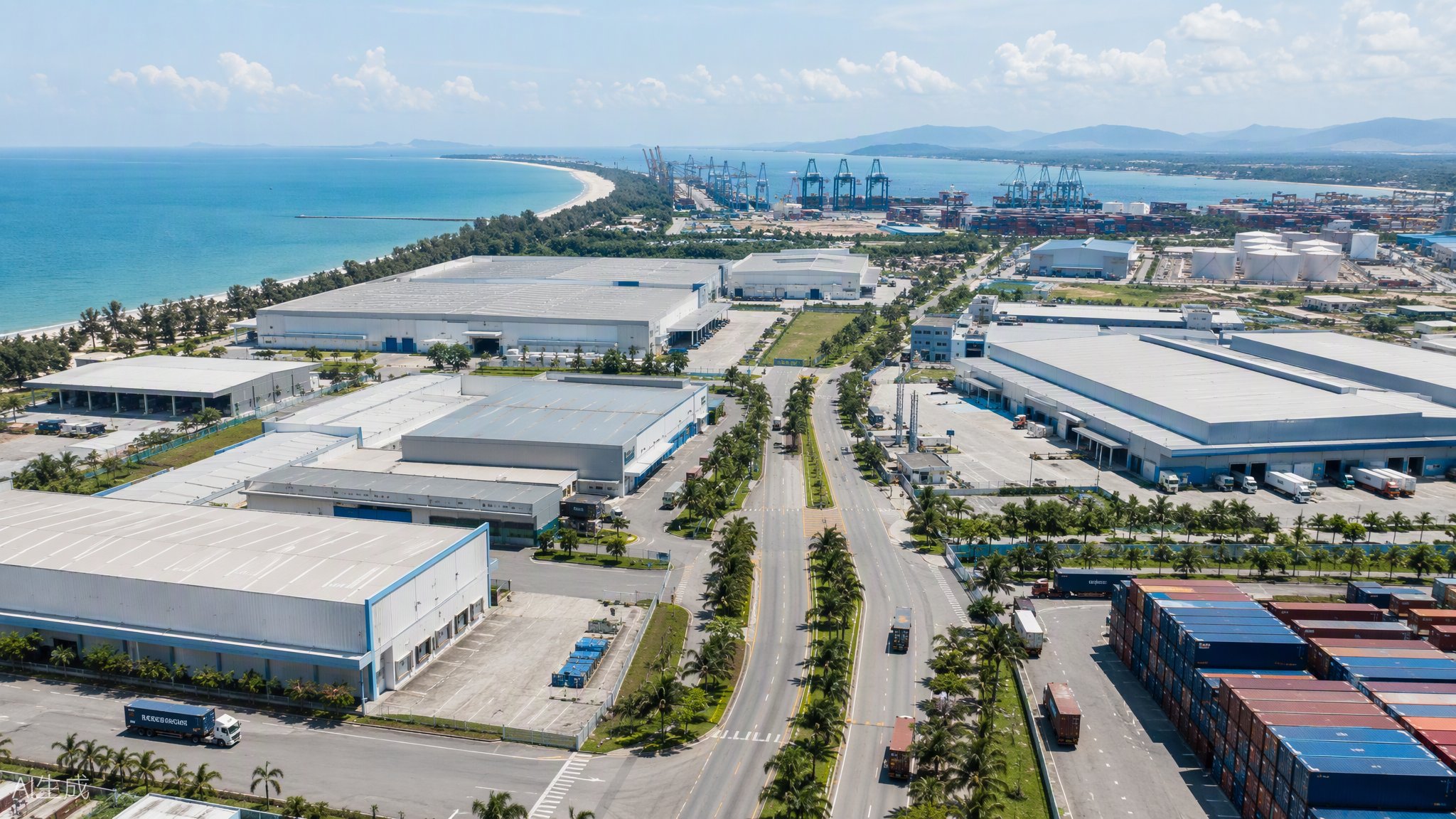
The "Two Countries, Twin Parks" template: the China–Malaysia Qinzhou Industrial Park and Malaysia's Kuantan park anchor the lane institutionally — the direct loop and cold-chain route both grew out of this framework.
2. Port Klang vs Kuantan vs Johor: Which Gateway, Which Cargo#
Malaysia is unusual in Southeast Asia: it offers three credible gateways, each with a different center of gravity. Choosing wrong is the most common planning error on this lane.
| Gateway | 2025 scale | Strengths | Watch-outs | Best fit |
|---|---|---|---|---|
| Port Klang (Selangor) | 15.14M TEU, world #10 | Deepest connectivity to Peninsular West Coast (Klang Valley industry, KL consumption), full FTZ/free-commercial-zone ecosystem, proven canal link (first single-bill financing case) | Congestion cycles at Northport/Southpoint peaks; highest THC tier of the three | General cargo, FMCG, industrial inputs into central Malaysia |
| Kuantan (Pahang, East Coast) | Smaller; "Twin Parks" node | Weekly ×3 direct loop from Qinzhou at 3–4 days; dedicated cold-chain premium route (Apr 2025); gateway to East Coast and ECER corridor | Fewer sailings — misses matter; thinner forwarder ecosystem | Perishables, palm-oil derivatives, project cargo for the East Coast |
| Johor (PTP + Pasir Gudang) | 15.11M TEU combined, world #11 | Adjacent to Singapore without Singapore costs; booming transshipment role; Pasir Gudang already in the canal's growing network — first agri sea-rail shipment rode Pasir Gudang → Qinzhou → Chongqing → Tashkent (Oct 2026), with Jan–Aug volumes near 4,000 TEU (+78%) | Dual-port split (PTP vs Pasir Gudang) complicates bookings; overland leg to central Malaysia adds 4–6 h | Singapore-adjacent manufacturing, transshipment plays, southbound distribution |
Throughput: Lloyd's List One Hundred Ports 2026 (2025 data). Scale figures are observed volumes, not forecasts.
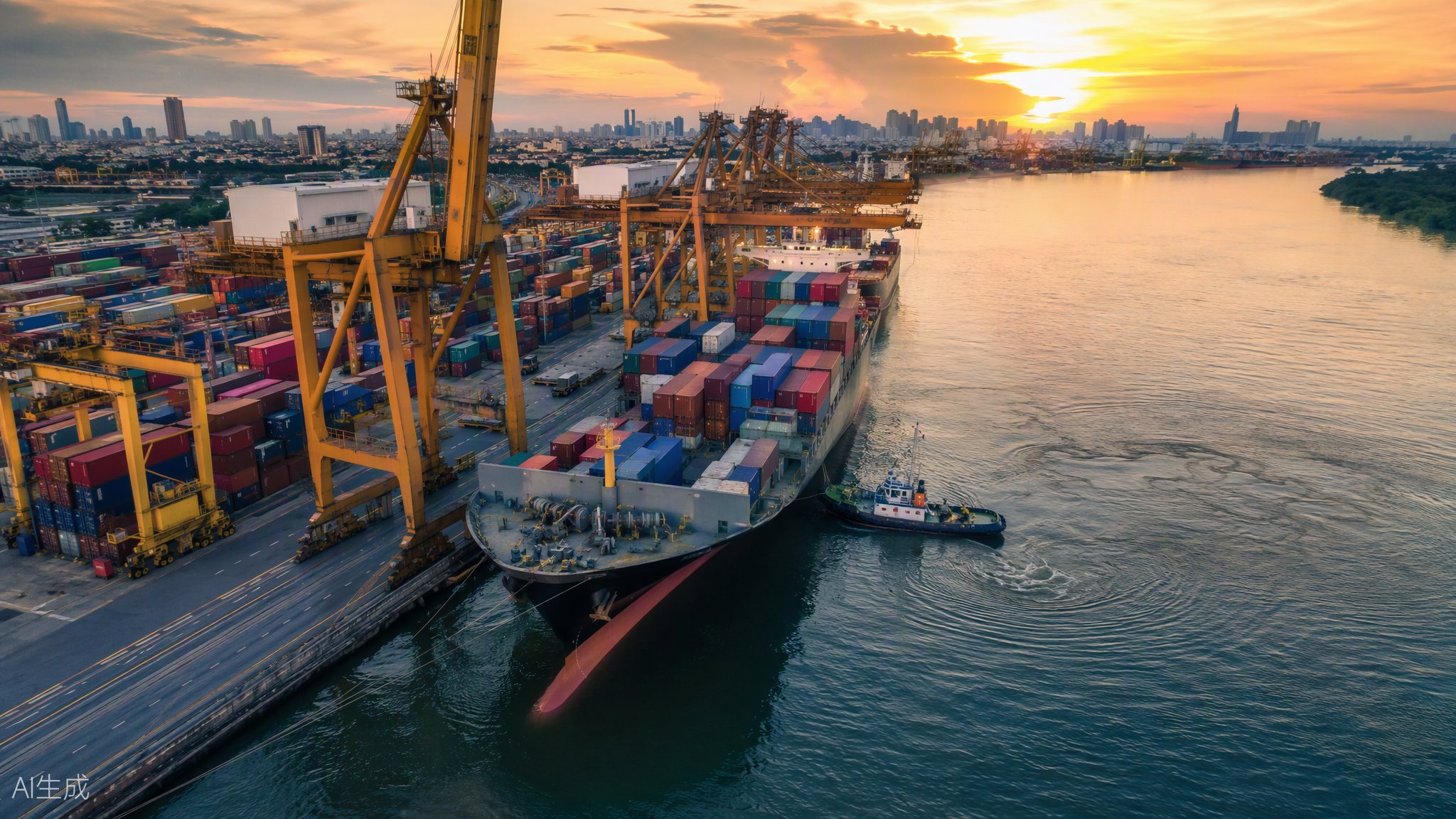
Port Klang at working scale: 15.14M TEU in 2025, world #10 — the anchor gateway for central-Malaysia distribution from the canal corridor.
3. The Canal Connection: Proven, Not Projected#
The most persuasive evidence that this lane works is already a completed transaction. In September 2026, Guangxi's first multimodal "single bill" export movable-asset pledge-financing shipment moved instant lotus-root vermicelli from Hechi's Dahu county: Nanning Port → Pinglu Canal → Qinzhou → Port Klang. The financing structure — pledged against the in-transit goods under one through bill — only works because the corridor's timing and documentation are predictable enough for a bank to price. "Cargo still on the waterway, money already in the account" is the operational definition of corridor maturity.
The return direction is filling in too: on 4 Oct 2026, the first agricultural sea-rail intermodal shipment from Pasir Gudang moved via Qinzhou to Chongqing and onward to Tashkent — Malaysia-origin cargo joining the canal corridor's westbound rail links, with Jan–Aug 2026 sea-rail volumes already near 4,000 TEU (+78% y/y).
And the institutional plumbing keeps deepening. At the 7th China–Malaysia Port Alliance joint meeting (May 2026), the two sides logged RM 541.54 bn of 2025 bilateral trade (17.7% of Malaysia's total; China remains the largest partner) and watched COSCO Shipping, SITC, Westports and MMC sign a shipping-connectivity cooperation MOU. For buyers, the practical read: more direct loops, denser schedules, and better interline protection on this lane over the next 24 months.
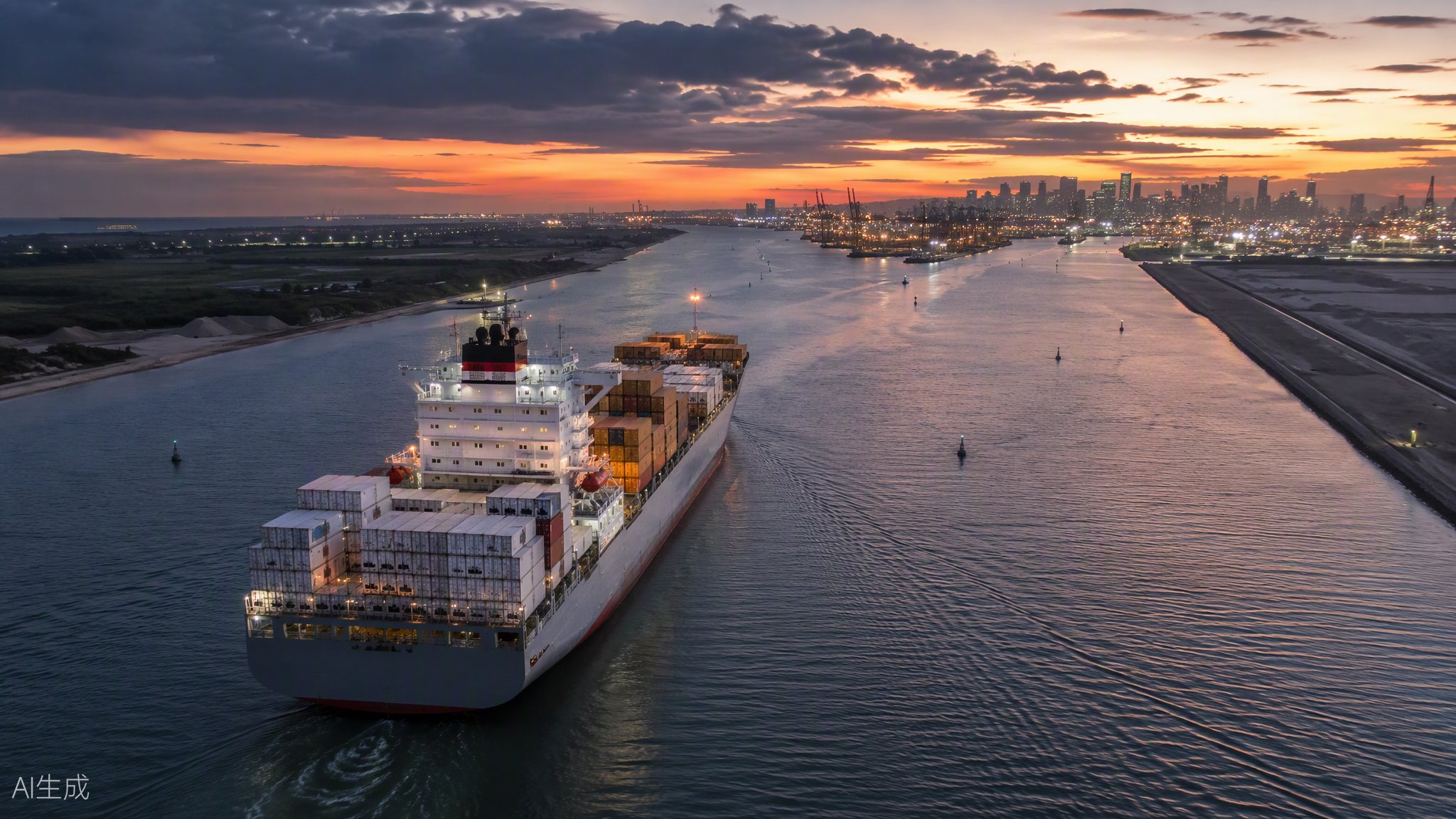
The corridor in one frame: inland cargo rides the canal to Qinzhou, then a direct loop to Port Klang — the route Guangxi's first single-bill pledge-financing shipment proved in Sep 2026.
4. Decision Framework: When to Choose Which Path#
Choose direct Beibu Gulf (Qinzhou → Kuantan / Port Klang) when:
- Cargo is perishable or season-bound (the Kuantan cold-chain premium route exists precisely for this);
- You're shipping from the canal basin — Nanning, Liuzhou, Baise — where the canal already removed the 560-km Pearl River detour (route explainer);
- Schedule certainty matters more than last-dollar rate (weekly ×3 fixed loops vs feeder-dependent relays).
Accept Singapore transshipment when:
- Origin is the Pearl River Delta or cargo is already consolidated there;
- Destination is East Malaysia (Kuching, Bintulu, Kota Kinabalu) — direct Beibu Gulf services quote fastest ~6 days but with thinner frequency;
- You're price-topping on dry, non-urgent boxes where hub density wins.
Re-evaluate quarterly. The lane is adding sailings (14 routes and counting), and the cost simulator on this site now treats Malaysia as a standard corridor option alongside Thailand and Indonesia (run your numbers).
Tariff note: most China-origin goods enter Malaysia at preferential rates under RCEP / the China–ASEAN FTA with a valid Form E — origin discipline matters; see the rules-of-origin checklist.
FAQ#
How many direct sailings link Qinzhou and Malaysia?#
The Kuantan "Two Countries, Twin Parks" loop sails weekly ×3 (sea transit 3–4 days; the port group cites under 3 days after optimization). Across all Malaysian ports, Qinzhou operates 14 routes, and the 2026 port-alliance MOU signals more capacity coming.
Is Port Klang or Kuantan better for fresh produce?#
Kuantan, on the current network: the dedicated cold-chain premium route (opened 11 Apr 2025) and 3-day-class transit are built for perishables. Port Klang wins on distribution reach into the Klang Valley and on forwarder depth.
Does the Pinglu Canal actually reach Malaysia today?#
Yes — as a completed commercial case, not a plan: the Sep 2026 single-bill pledge-financing shipment ran Nanning Port → canal → Qinzhou → Port Klang. Lockage is free through 31 Dec 2026; the 2027 trial rate (RMB 1.0/GT/lockage) is noise-level per container.
What about East Malaysia?#
Beibu Gulf → East Malaysia (Kuching/Bintulu/KK) quotes fastest ~6 days in industry guides, but frequency is thinner than West-Malaysia loops. For now most East-Malaysia planners still route via Singapore or West-Malaysia feeders — revisit as direct frequency adds sailings.
Methodology & Data Sources#
Port rankings and national throughputs are observed 2025 volumes from published league tables and official port-authority releases; trade values are official government figures; lane parameters are cross-checked against carrier and port-group statements. Freight-rate ranges are excluded where no auditable source exists — per this site's sourcing rules, no unsourced dollar rates are published. Planning arithmetic is labeled where used.
- Port Klang 15,138,772 TEU (world #10, +3.4%); Johor (PTP+Pasir Gudang) 15,110,050 TEU (world #11) — Lloyd's List One Hundred Ports 2026, published Jul 2026
- Singapore 2025: 44.66M TEU (+8.6%), 322M GT arrivals, 56.77M t bunkers — Maritime & Port Authority of Singapore (MPA) annual statistics, 13–14 Jan 2026
- Malaysia 2035 target of 100M TEU national port capacity — Malaysian Minister of Transport Anthony Loke, Oct 2026 (via Kuehne+Nagel market note)
- Kuantan direct service: weekly ×3, 3–4 days sea transit; pre-direct-line transshipment via Singapore/Klang — China DailyA (Guangxi), 31 Jan 2026
- Transit compressed under 3 days; Kuantan–Beibu Gulf cold-chain premium route opened 11 Apr 2025; 14 Qinzhou–Malaysia routes — China–Malaysia Qinzhou Industrial Park Group, 3 Apr 2026
- China–Malaysia 2025 trade RM 541.54 bn (17.7% of Malaysia's trade); 7th Port Alliance joint meeting; COSCO/SITC/Westports/MMC connectivity MOU — China Ports & Harbours Association (7th China–Malaysia Port Alliance meeting report), 25 May 2026
- First multimodal "single bill" export pledge-financing shipment (Dahu lotus-root vermicelli): Nanning Port → Pinglu Canal → Qinzhou → Port Klang — China Water Transport News, 21 Sep 2026 (via SohuB); Wanlian supply-chain finance report, 17 Sep 2026
- Pasir Gudang → Qinzhou → Chongqing → Tashkent first agri sea-rail shipment (4 Oct 2026); Jan–Aug sea-rail ≈4,000 TEU (+78%) — public sea-rail intermodal reporting, Oct 2026
- Transit tiers: South China → West Malaysia 4–6 days (premium ~3 days); Beibu Gulf → East Malaysia fastest ~6 days — freight-forwarder lane guide, 4 Jul 2026 (industry tier; re-verify at booking)
- Canal lockage free through 31 Dec 2026; RMB 1.0/GT/lockage from 1 Jan 2027 — 桂发改价费规S〔2026〕533号, 14 Aug 2026; see also the 30-day operations audit
Get a Tailored Logistics Assessment#
Run your own numbers in the cost simulator — or apply to be listed in the verified supplier directory. Reference values only; not a formal quote.