Public Beta · Data as of 24 Oct 2026. This article deliberately separates confirmed facts from strategic reading. Spotted a discrepancy? Tell us — this page exists to be challenged.
What Happened#
On 23 October 2026, Beibu Gulf Port Group (chairman Hu Huaping, GM Ma Zhengguo) hosted Brunei's Ministry of Finance (minister-in-charge Dato Lau Guangming — 拿督刘光明) at the Beibu Gulf Shipping Center in Nanning. The agenda: upgrading port logistics, industrial investment, regional resource integration and environmental-project cooperation. Both sides reviewed the operating results of the Muara Port project to date and agreed to jointly build Muara into a dual hub serving BIMP-EAGA and the New International Land-Sea Trade Corridor. The visit closed with governance milestones: Muara Port Co.'s 2026 third board meeting and annual shareholders' meeting, which adopted the company's new five-year plan.
Two macro tailwinds were explicitly cited: the China–ASEAN FTA 3.0 upgrade protocol taking effect, and the Pinglu Canal's opening in September 2026.
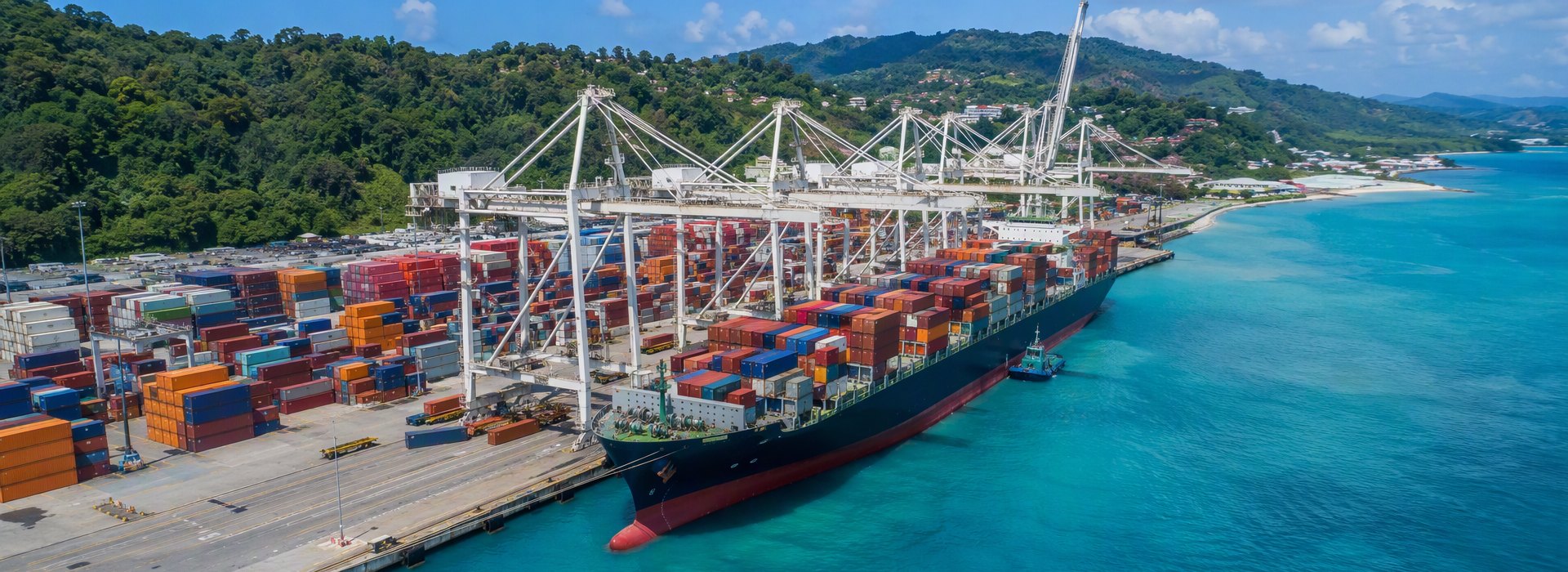
Muara, Brunei's deep-water gateway: now formally inside the Pinglu Canal-era corridor map.
Why This Corner of the Map Matters#
Brunei is the smallest and least-covered market on the China–ASEAN shipping map — which is precisely why it is interesting. Three structural facts:
- Import dependence: domestic production in food, building materials and consumer goods is limited; imports arrive by sea, and cost sensitivity on freight is high relative to cargo value.
- BIMP-EAGA adjacency: Muara sits inside the East ASEAN Growth Area, giving it a natural transshipment role for the eastern Malaysia (Sabah/Sarawak) and Indonesian Kalimantan hinterland.
- Corridor timing: with the canal open, a Southwest-China export box can now reach Qinzhou by barge (560+ km shorter inland leg than the old Pearl-River-Delta routing) — and Qinzhou's ASEAN network counted 23 ASEAN routes at the automated terminal alone as of mid-October 2026, on top of 39 Vietnam routes group-wide. Extending that network eastward to Brunei is a network-logic move, not a leap.
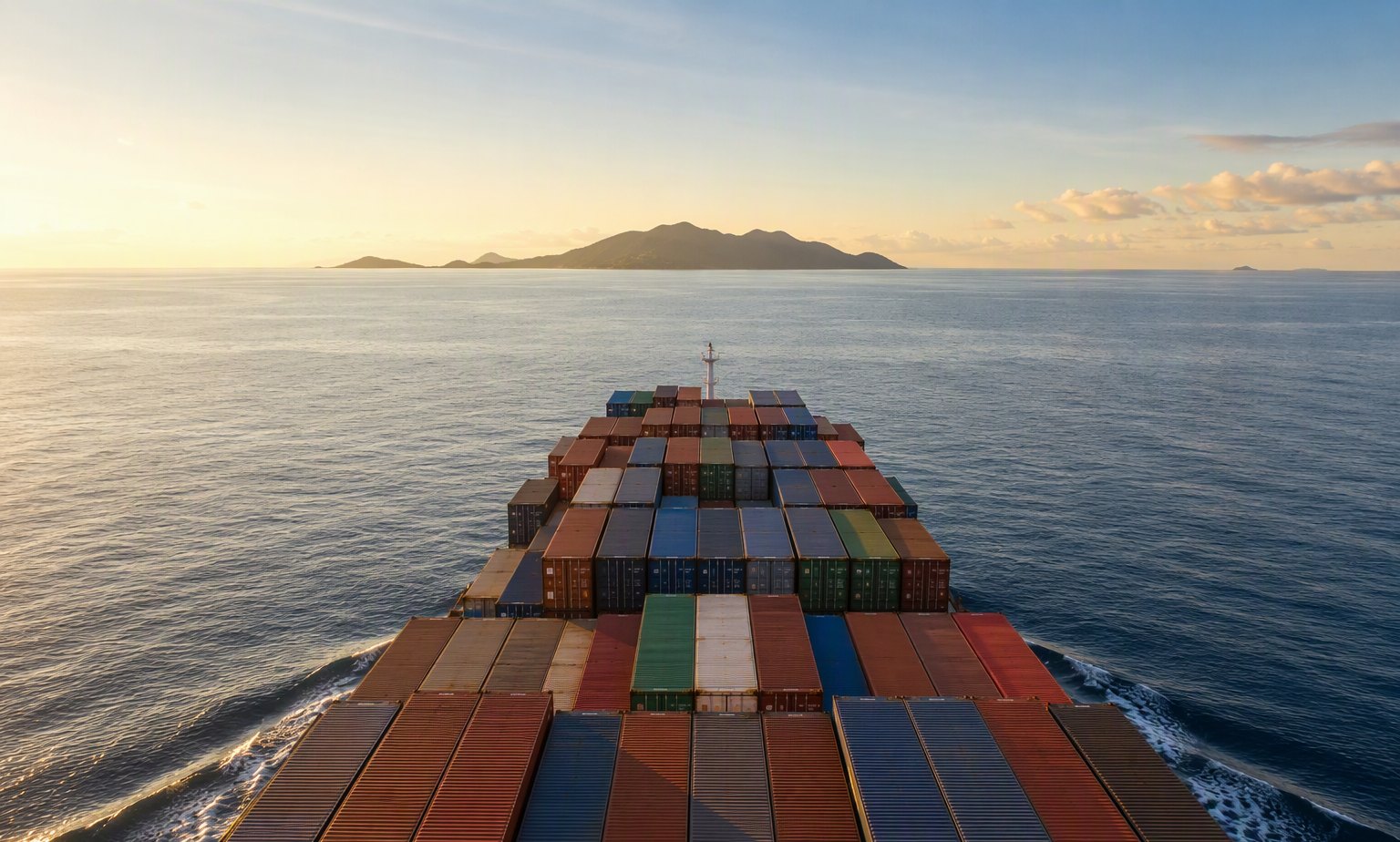
The network logic: canal → Qinzhou → South China Sea lanes → Muara. One river-sea chain, no Pearl River Delta detour.
The Dual-Hub Reading (Analysis, Not Fact)#
If the five-year plan executes, the plausible shape is:
- Outbound from Southwest China: machinery, building materials, consumer goods and new-energy products (Guangxi's battery belt included) moving canal → Qinzhou → Muara, with Muara as the BIMP-EAGA distribution point.
- Inbound to China: Brunei's LNG-linked industrial output and regional specialty cargoes finding a consolidated river-sea path into the Nanning basin.
- Green cooperation: the explicitly mentioned environmental projects align with Brunei's low-carbon positioning and Guangxi's new-energy export push.
What was not disclosed: new route frequencies, container-volume targets, terminal-investment figures or timelines. Treat all of the above as the strategic direction the framework points to — not as booked services.
What to Watch Through 2027#
- Route announcements: the first concrete Qinzhou–Muara (or Beibu Gulf–Muara) sailing schedules will be the plan's first measurable output.
- Cargo-mix signals: look for named categories (building materials, food trade, new-energy equipment) in follow-on port-group releases.
- Five-year plan details: if capital works at Muara are disclosed (berths, yard, equipment), the transshipment ambition becomes quantifiable.
- FTA 3.0 tariff schedules: Brunei-relevant tariff lines under the upgraded protocol determine how much of the freight saving shippers actually keep.
Methodology & Data Sources#
Facts are limited to the 23 Oct 2026 meeting record and previously verified corridor data; strategic interpretation is labeled as such throughout.
- Beibu Gulf Port GroupB–Brunei Ministry of Finance talks (23 Oct 2026); dual-hub positioning for BIMP-EAGA + New International Land-Sea Trade Corridor; Muara board meeting #3 and shareholders' meeting; new five-year plan adopted — Beibu Gulf Port Group via Sina, 24 Oct 2026
- Timing context: China–ASEAN FTA 3.0 upgrade protocol; Pinglu Canal opened 16 Sep 2026 — same source
- Corridor backdrop: 23 ASEAN routes at Qinzhou automated terminal (29 foreign-trade of 43 total); 39 Vietnam routes group-wide; 129k TEU Jan–Aug to Vietnam (+52% y/y) — CLS.cnA field reporting, 16 Oct 2026; People's Weekly via SohuB, Oct 2026
- Canal economics: 560+ km shorter inland leg; logistics cost −18–30% (official projection) — China News ServiceA, 14 Oct 2026; see our first-30-day operations review
Get a Tailored Logistics Assessment#
Run your own numbers in the cost simulator — or apply to be listed in the verified supplier directory. Reference values only; not a formal quote.