Public Beta · Cluster data as of 24 Oct 2026. Company figures are operator statements; demand and capacity figures are official-policy references. Not quotes. Spotted a discrepancy? Tell us — this page exists to be challenged.
The Cluster in Numbers#
| Metric | Value |
|---|---|
| Guangxi battery capacity (installed/formed) | ~150 GWh |
| Regional separator demand | ~3 bn m²/yr (local market alone) |
| New local capacity | 1 bn m²/yr lithium/sodium separator project — first 4.2 m biaxial line in stable production (Oct 2026) |
| Product range | 9–40 μm, full mainstream spec series (consumer, EV, storage) |
| Cluster radius | BYD Nanning, Ningfu, Gotion and peers within 250–300 km |
| Inbound logistics change | Raw materials via Guangzhou → via Beibu Gulf + Pinglu Canal from ID/MY; EU inputs by same water route |
| Policy frame | Separator named a key chain-link in Guangxi's Aug-2025 industrial plan; ASEAN-facing new-energy materials cluster in the Nov-2025 critical-metals plan |
| Outbound | Engagement completed with electronics customers in HCMC, Bình Dương, northern Vietnam; shipping via Beibu Gulf Port |
1. The Missing Link, Now Filled#
For a region assembling one of China's densest battery-industry clusters, one input was conspicuously absent: separator film. Until this month, every square meter of the ~3 bn m² that Guangxi's cell makers consume annually arrived from Guangdong, Jiangsu or Hunan — long lead times, high cross-province logistics cost, and no local response capability when production lines needed respeccing.
The new plant at Liujing — the industrial park beside the Pinglu Canal's river-side hub — closes that gap with Guangxi's first 4.2 m-width biaxial stretching line (plus the region's first 1.9 m uniaxial line), covering 9–40 μm specs for consumer, power and storage applications. The core technology is in-house: micro/nano calcium-carbonate modification that tunes pore structure, thermal stability and electrolyte wetting. The technology won a Guangxi Science & Technology first prize, and the maker is on the province's "Double Hundred, Double New" cultivation list.
Scale context matters: 1 bn m²/yr planned local capacity covers roughly a third of regional demand. The separator import dependency shrinks — it does not disappear.
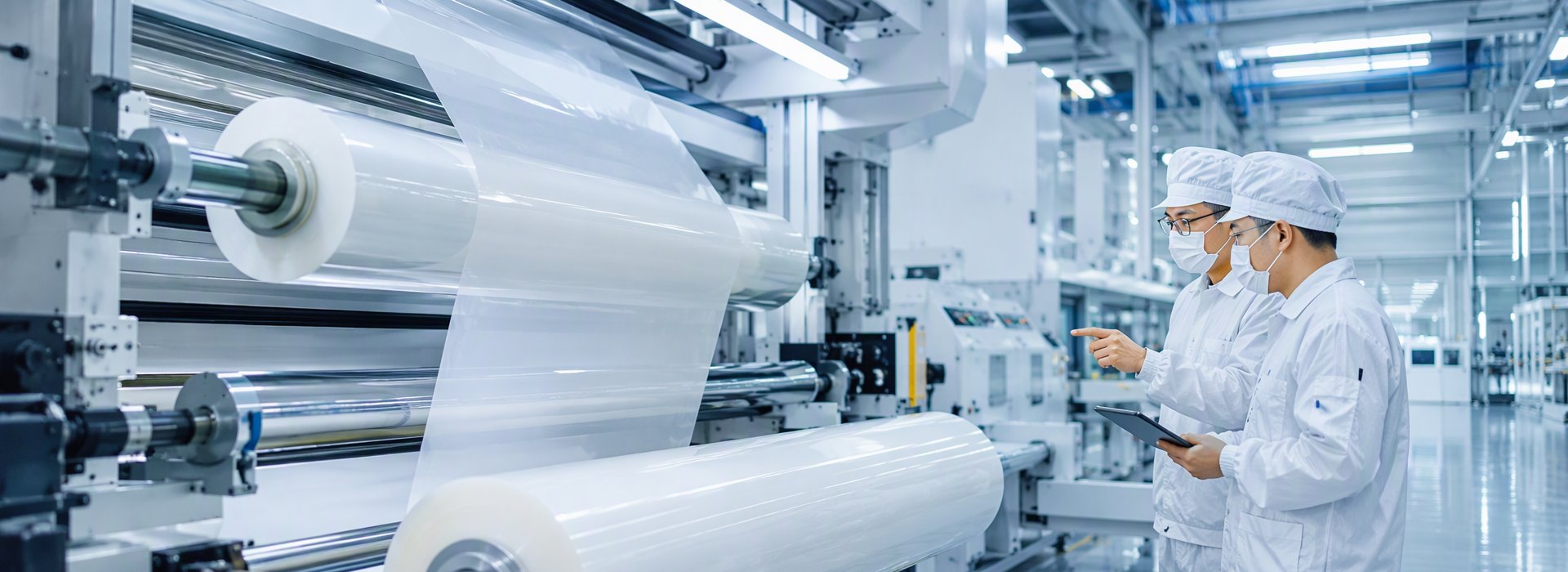
Biaxial separator production: the film every lithium and sodium cell needs, now made beside the Pinglu Canal instead of three provinces away.
2. Why the Canal Matters to a Film Factory#
Separator production is input-heavy: boehmite, PVDF, stearic acid and specialty additives move in bulk. Traditionally these reached Nanning via Guangzhou Port — the long coastal detour in reverse. With the canal open, the sourcing map flipped: feedstocks now arrive from Indonesia and Malaysia directly into Beibu Gulf Port, then barge up the Pinglu Canal to the Liujing factory gate. EU-sourced high-end inputs use the same water route. Company statements describe comprehensive logistics cost as "significantly lower," and the pattern is structural — the 560+ km detour deletion the canal offers applies to inbound raw materials just as much as to outbound finished goods.
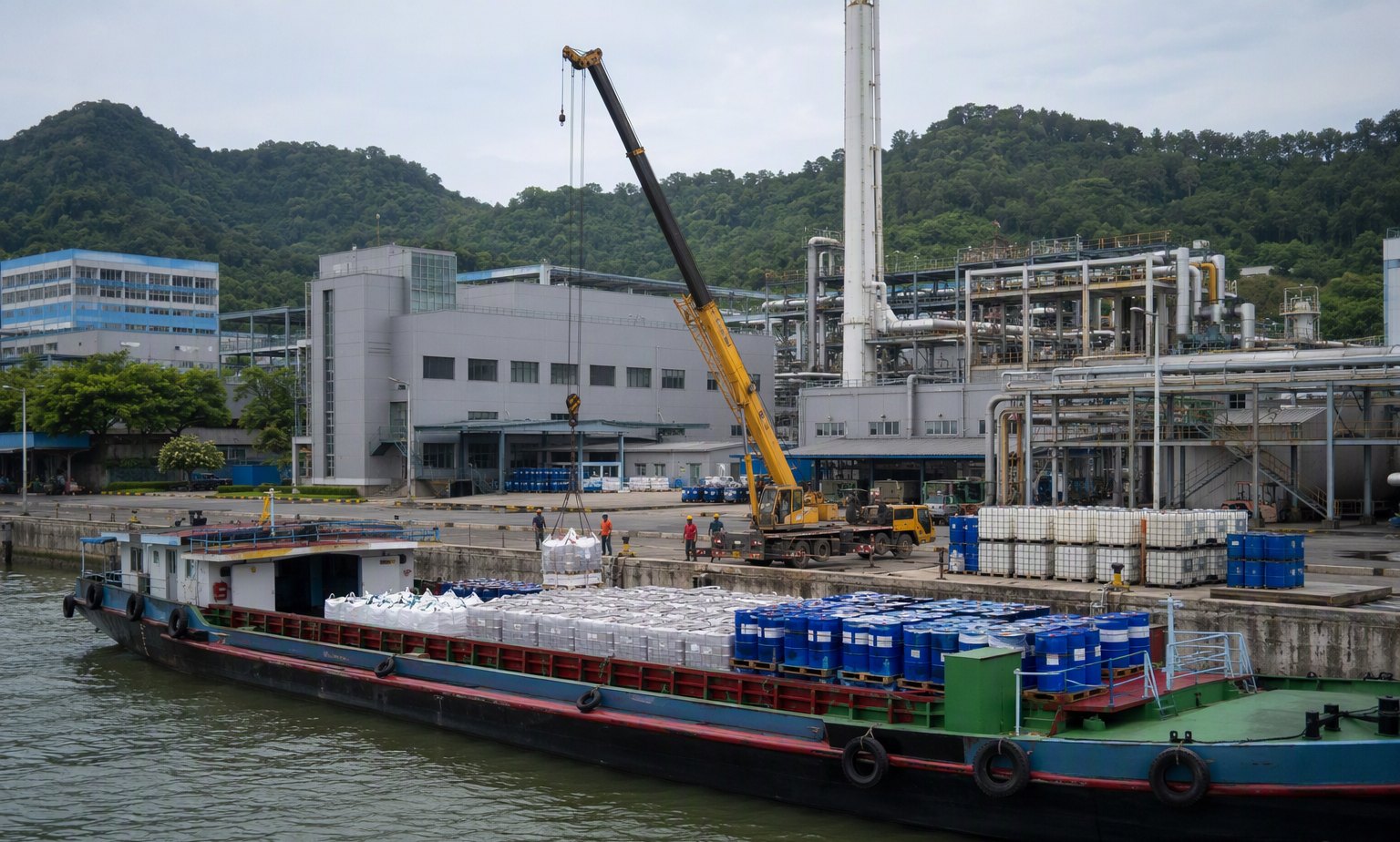
Inbound by water: separator feedstocks from Southeast Asia now reach the factory via Beibu Gulf Port and the canal — no Guangzhou detour.
3. The ASEAN Play#
Location is the strategy. Within 250–300 km of the plant sit BYD's Nanning base, Ningfu, Gotion and other cell makers — same-day delivery, one-hour response, no buffer warehouses needed downstream. Looking outward, the maker has completed preliminary engagement with electronics-industry customers in Ho Chi Minh City, Bình Dương and northern Vietnam, with finished separator positioned to ship out through Beibu Gulf Port. Guangxi's policy frame points the same direction: the region's Aug-2025 chain-strengthening plan named separator a key link, and the Nov-2025 critical-metals plan targets an ASEAN-facing new-energy materials cluster built on overseas nickel-cobalt-lithium import plus deep processing.
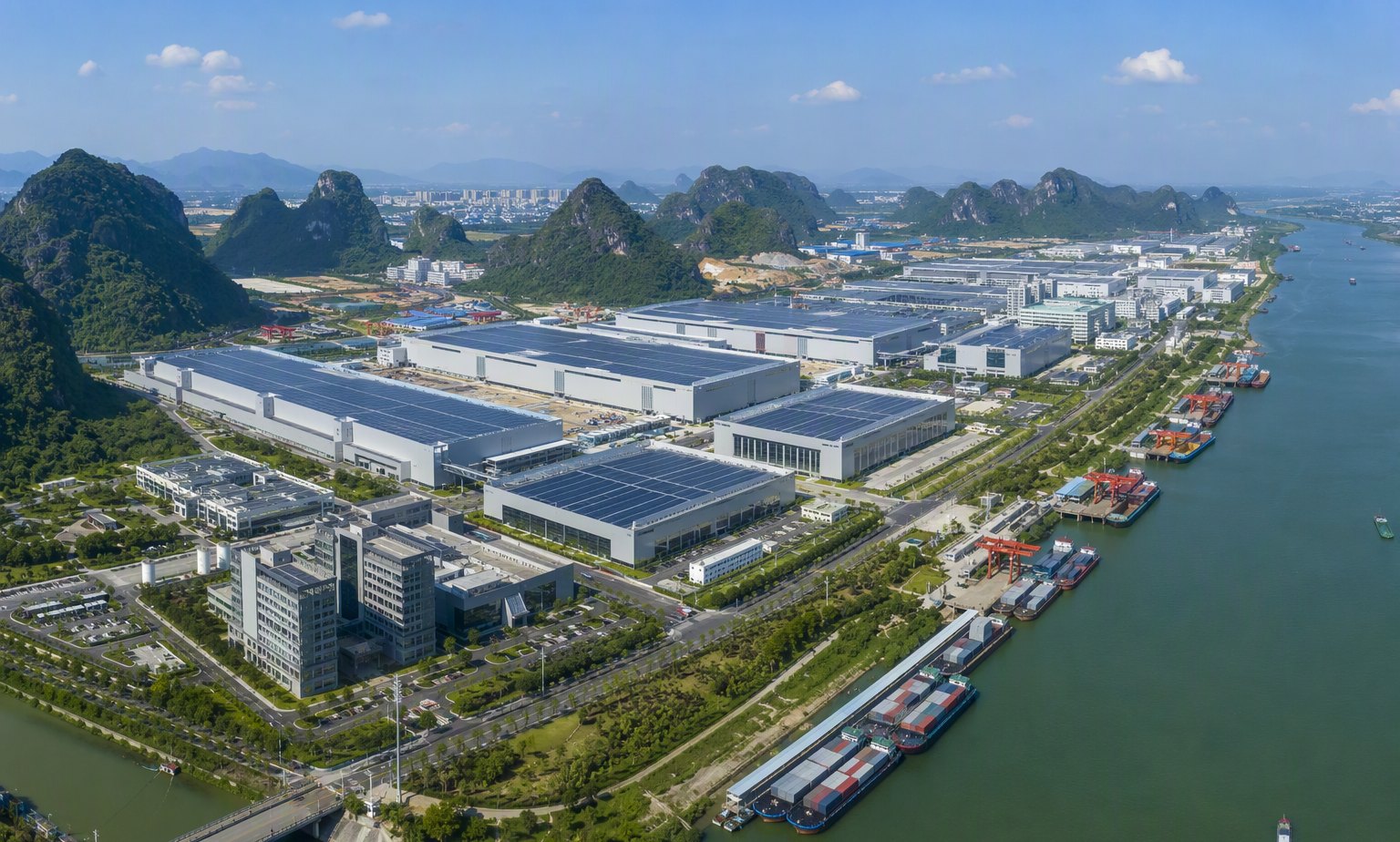
The battery belt's geography: cell plants inland, the canal and Beibu Gulf Port as the shipping spine, Vietnam electronics customers across the water.
4. What Buyers Should Watch#
- Capacity reality: ~1 bn m²/yr local versus ~3 bn m²/yr demand — Guangxi separator stays import-dependent near-term. Secure dual sourcing; treat local supply as a growing second lane, not a replacement.
- New-entrant risk: the producer is a first-scale local player; qualify early but stage volume commitments as lines prove out yield and consistency.
- Canal routing for your own inputs: if you buy battery materials into or out of Southwest China, re-quote with canal routings — the same Guangzhou-detour deletion applies to your supply chain, not just this plant's.
- RCEP documentation: separator and materials trade into Vietnam rides on clean origin paperwork; the tariff benefit only lands when Form E/RCEP claims are airtight.
- Policy tailwind: expect follow-on separator and materials capacity announcements along the canal belt through 2027 — this is the first project, not the last.
Methodology & Data Sources#
Cluster and company figures are drawn from official-policy documents and a joint media report (Taiwan.cn / Guangxi Taiwan Affairs Office). Capacity, demand and logistics statements are operator or policy references, not audited figures.
- Guangxi first 4.2 m biaxial lithium/sodium separator line in stable production; micro/nano calcium-carbonate core technology; Guangxi S&T first prize; "Double Hundred, Double New" list — Taiwan.cn joint report, 22 Oct 2026
- ~150 GWh regional battery capacity; ~3 bn m²/yr local separator demand; prior full reliance on Guangdong/Jiangsu/Hunan supply — Taiwan.cn joint report, 22 Oct 2026; Aug-2025 Guangxi chain-strengthening plan
- 1 bn m²/yr project, 1.9 m uniaxial + 4.2 m biaxial lines (Guangxi firsts), 9–40 μm specs — Taiwan.cn joint report, 22 Oct 2026
- BYD Nanning, Ningfu, Gotion within 250–300 km; same-day delivery, one-hour response; no downstream buffer warehousing — company GM statement, Taiwan.cn, 22 Oct 2026
- Raw materials (boehmite/PVDF/stearic acid) previously via Guangzhou; now Indonesia/Malaysia via Beibu Gulf + Pinglu Canal; EU inputs via same route; "significantly lower" comprehensive logistics cost — Taiwan.cn, 22 Oct 2026
- Preliminary engagement with customers in HCMC, Bình Dương, northern Vietnam; outbound via Beibu Gulf Port; ASEAN-facing new-energy materials cluster (Nov-2025 critical-metals plan) — Taiwan.cn, 22 Oct 2026
- Canal context (opened 16 Sep 2026; 560+ km shorter) — see our first-30-day operations review
Get a Tailored Logistics Assessment#
Run your own numbers in the cost simulator — or apply to be listed in the verified supplier directory. Reference values only; not a formal quote.