Public Beta · Reference parameters captured Oct–Nov 2026. Cost-saving figures are company statements from a published interview; rates are planning context, not quotes — verify at booking. Spotted a discrepancy? Tell us — this page exists to be challenged.
Key Numbers (Baise Aluminum Wheel Corridor)#
| Metric | Reference value |
|---|---|
| Inbound freight saving | ≈30% per tonne (canal barge vs rail/road), coal & alumina legs — company statement |
| Annual logistics saving | Tens of millions of RMB for one plant — company statement |
| Plant capacity | 10 million aluminum alloy wheels/year; 14–22 inch, multi-brand passenger fitment |
| Current export path | Riding Geely vehicles to Philippines, Myanmar, Laos, Cambodia |
| Project status | Guangxi "双百双新" industrial project; Southwest China's wheel & aluminum light-weighting R&D base |
| Canal role | Qinzhou → canal → Baise Port direct waterway for bulk raw-material inbound |
| Trade-policy lever | RCEP tariff preference behind the independent-export pivot |
| Next product line | EV lightweight structural parts, integrated die-casting (十五五 focus) |
| City-level ambition | Baise building an ASEAN-facing advanced "pan-aluminum parts" manufacturing base |
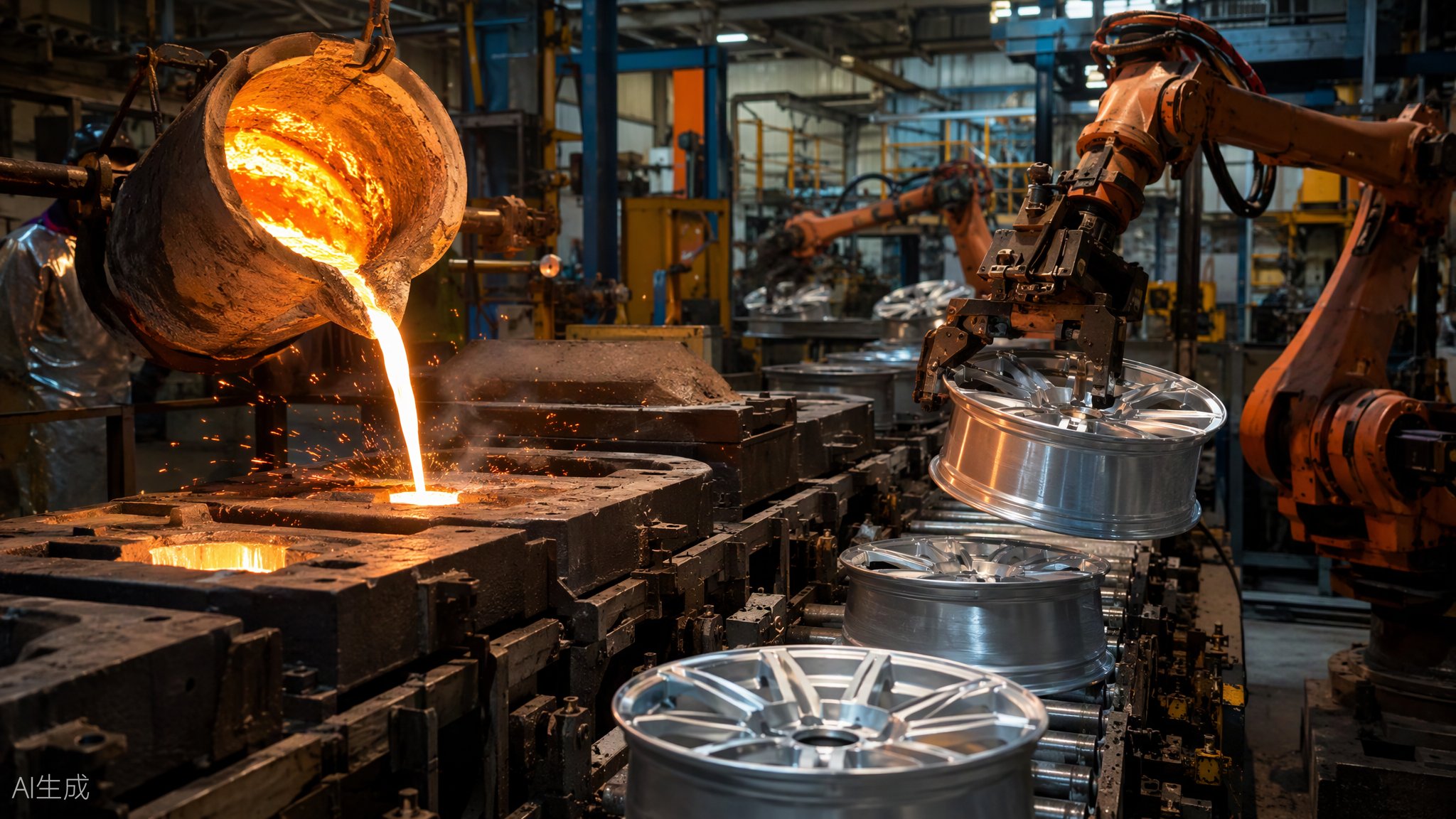
The 10-million-wheel line at Báikuàng New Materials: melting, low-pressure casting, heat treatment, machining and coating in one flow. The canal feeds its furnaces; the corridor is now its export ramp.
1. The Inbound Problem the Canal Solved#
Baise sits on one of China's richest aluminum resource bases — and, until recently, one of its worst logistics positions: a deep-inland border city where bulk raw materials moved almost entirely by road and rail. For a smelting-and-casting operation, logistics cost was the binding constraint on competitiveness.
The Pinglu Canal inverted that position. Bulk coal and alumina now come from Qinzhou Port up the canal directly to Baise Port. The company's logistics lead, Su Yonghui, states the arithmetic plainly: water freight is now clearly below rail and road, ≈30% cheaper per tonne, and the plant's comprehensive logistics cost falls by tens of millions of yuan a year. No subsidies required — that is the corridor's base-rate geometry doing the work, the same ≈560-km-shortcut logic that underpins the canal's published 18–30% corridor saving (route explainer).
Two structural details make the case instructive rather than anecdotal. First, the saving shows up on the inbound bulk leg, not the export leg — the canal monetizes immediately for heavy industry, before any export contract changes. Second, the company didn't merely book cheaper freight: it consolidated end-to-end logistics contracting, integrating road-rail-sea multimodal resources from overseas bulk import through in-plant molten-aluminum transfer and yard dispatch. The canal is the trunk; the trunk only pays because everything upstream and downstream was re-planned around it.
2. The Outbound Pivot: From Vehicle配套 to Independent ASEAN Export#
Today most of the plant's wheels leave as vehicle kits — exported riding Geely vehicles into the Philippines, Myanmar, Laos and Cambodia. The next stage, now explicitly signaled by deputy GM Fu Juntao, is a channel play: using the corridor's convenience plus RCEP tariff preference to move from "component of a vehicle export" to independent brand export — selling customized aluminum components directly to ASEAN local OEMs and aftermarkets, and evaluating a localized ASEAN service center to shift from product export to local capacity and service.
For buyers on the demand side, this is the meaningful signal. A 10-million-wheel-capacity Southwest plant that can quote RCEP-preferential, canal-freighted aluminum components is a different supplier from a captive Geely配套 line: direct OEM fitment programs, aftermarket distribution, and localization partnerships all become negotiable. The corridor made Baise a supplier; RCEP makes it an exporter.
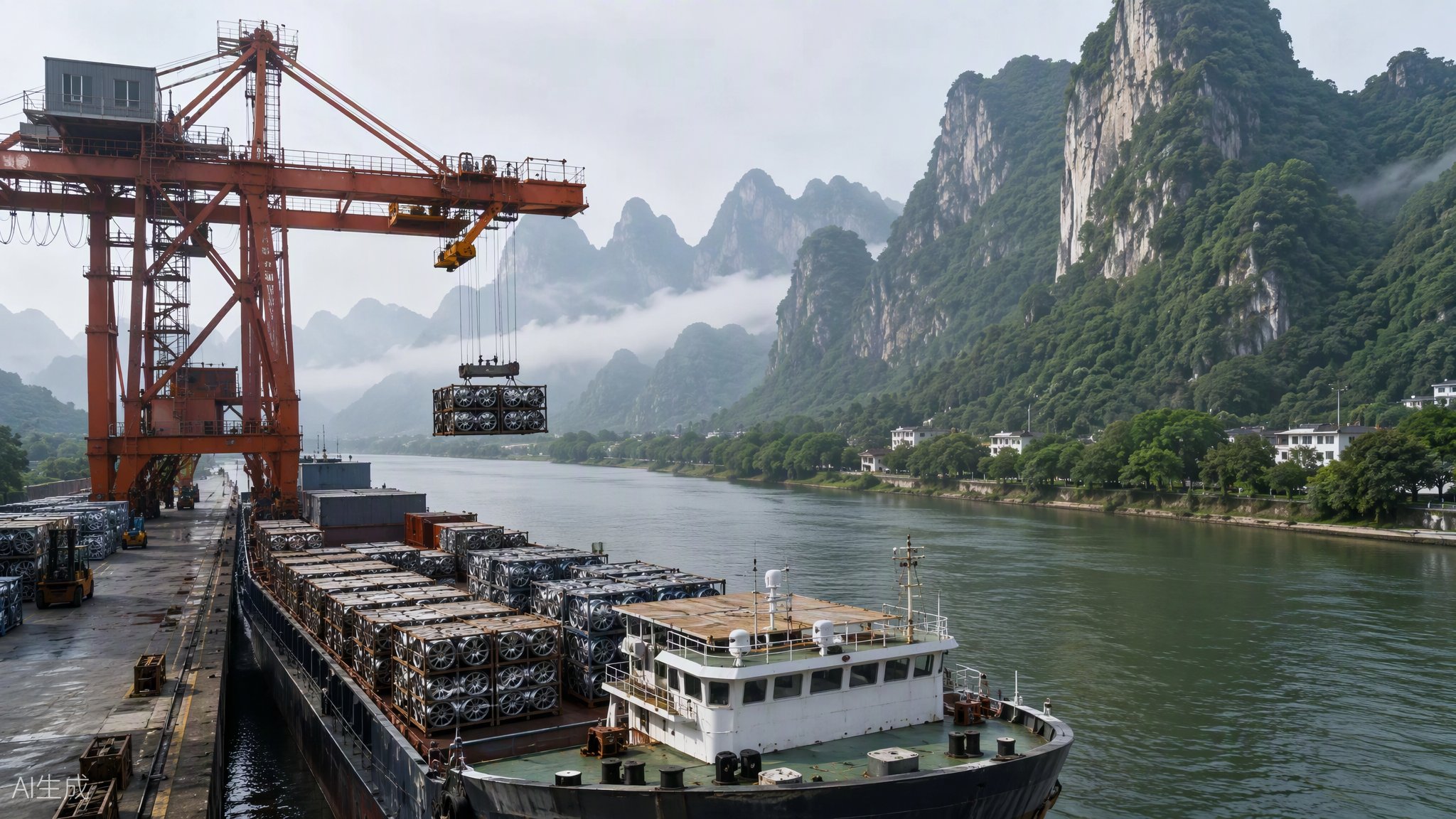
The corridor geometry that pays: Qinzhou sea port → Pinglu Canal → Baise Port. Bulk in by barge at ≈30% cheaper freight; finished wheels back out the same way — the same waterway, run in both directions.
3. Green Aluminum and the Carbon-Specification Moat#
Baise's second advantage is energy. The plant's aluminum is produced on the region's green power base and positioned as "绿电铝" — green-energy aluminum conforming to international carbon standards. That matters commercially: as global OEMs and EU-bound supply chains tighten embodied-carbon specifications, low-carbon primary aluminum and derivative components become a qualifying spec rather than a marketing label. A wheel is precisely the kind of part where aluminum content is high and carbon accounting is visible.
The stated product roadmap doubles down on this: new-energy vehicle lightweight structural parts and integrated die-casting components are the 十五五 focus, with university and supply-chain partners on high-performance alloys. Each of those product classes is heavier, more urgent, and more canal-dependent than the last — integrated die-cast parts especially are high-volume, weight-sensitive components where barge economics dominate.
4. What This Means for Shippers and Buyers#
- For Southwest-China sourcing: Baise is now a credible direct source for aluminum wheels and lightweight components, not merely a raw-material hinterland. Add it to the industrial-base map alongside the corridor's other verified cases (industrial use-cases, battery-materials belt, industrial bases sourcing map).
- For ASEAN importers: expect direct quotes for RCEP-preferential aluminum components ex-Baise with canal freight embedded — and ask about the localized service-center timeline when negotiating after-sales terms.
- For corridor planners: the inbound-bulk-leg saving is the template. Any bulk-input plant in the canal basin (metals, building materials, chemicals) should re-run its inbound model first — that is where the canal's 30%-class saving is most reliably captured.
- For 2027 budgeting: canal lockage from 1 Jan 2027 adds a small metered fee (certificate GT × RMB 1.0 × three locks — noise-level for bulk, but it belongs in the quote template) (lockage guide).
- Run the corridor numbers: the cost simulator prices the corridor with Baise-origin and aluminum-cargo parameters, and the verified supplier directory is where counterparties get audited.
FAQ#
How much does the canal actually save for a Baise industrial shipper?#
Per the company's published statement: ≈30% per tonne on the coal/alumina inbound legs versus road and rail, compounding to tens of millions of yuan per year at this plant's volumes. Treat as a single-plant reference point until more operator invoices circulate.
Can ASEAN buyers source Baise wheels directly today?#
The capability exists (10-million-unit capacity, multi-brand 14–22 inch fitment); the commercial pivot to independent export is signaled by the plant's management as the strategic direction, with RCEP preference as the lever. Expect direct-quote programs to broaden through 2027.
Does RCEP actually cut tariffs on aluminum auto parts?#
Aluminum wheels and components generally enter ASEAN at preferential rates under RCEP / the China–ASEAN FTA with valid origin documentation — the same Form E discipline covered in the rules-of-origin checklist.
What about the lockage fee from 2027?#
Metered at RMB 1.0 per certificate gross ton per lockage, three locks on a full transit — a planning-level line item, immaterial at bulk tonnage (see the 2027 lockage guide).
Methodology & Data Sources#
Cost-saving and strategy figures are company statements from a published on-site interview during the Western Land–Sea New Corridor media tour; corridor geometry and lockage parameters are cross-linked to prior site coverage. No unsourced market prices are published per this site's sourcing rules; single-party statements are labeled as such.
- Canal freight saving ≈30%/t on coal & alumina inbound; comprehensive logistics saving tens of millions of RMB/year — China News ServiceA, corridor media-tour interview with Su Yonghui (Geely-Báikuàng logistics lead), 29 Oct 2026
- 10-million-wheel capacity; 14–22 inch coverage; domestic vehicle-base supply; exports with Geely vehicles to the Philippines, Myanmar, Laos, Cambodia — China News Service, 29 Oct 2026
- Independent-brand export pivot; direct ASEAN OEM/aftermarket customization; ASEAN localized service center under evaluation — China News Service, interview with Fu Juntao (deputy GM), 29 Oct 2026
- End-to-end logistics contracting across road-rail-sea; green-energy aluminum ("绿电铝") to international carbon standards — China News Service, 29 Oct 2026
- EV lightweight structural parts & integrated die-casting as 十五五 focus; Baise ASEAN-facing "pan-aluminum parts" base ambition — China News Service, 29 Oct 2026
- Corridor context: ≈560 km shorter than Pearl River detour; 18–30% corridor saving estimate; lockage RMB 1.0/GT from 1 Jan 2027 — see route explainer and lockage guide
Get a Tailored Logistics Assessment#
Run the Baise corridor in the cost simulator — aluminum cargo type included — or apply to be listed in the verified supplier directory. Reference values only; not a formal quote.