Public Beta · Reference parameters captured Nov 2026. Operator assessments are from a 每日经济新闻 field investigation (17 Nov 2026); official figures are from the Guangxi People's Congress research report (中新网, 17 Nov 2026). Estimates are labelled as such throughout. Not a quote — verify before booking. Spotted a discrepancy? Tell us — this page exists to be challenged.
Key Numbers (60-Day Ledger)#
| Item | Reference value |
|---|---|
| Operator verdict | "Above expectations" (Canal Group, 17 Nov 2026) |
| Cargo split (Guangxi flows) | Downstream : upstream ≈ 7:3 |
| Economic tipping point | ~Wuzhou–Guigang line; Nanning/ASEAN early-phase drop possibly 20%+ (expert estimate, support period) |
| Container vs bulk handling | Foreign-trade boxes 500+ yuan/box vs bulk 20–30 yuan/ton |
| Lockage fee | 1 yuan/gross ton·passage, trial period to 2031-09-30; mid-range nationally, water still below road/rail after stacking |
| Dispatch platform (to 11-10) | 25,758 registered users · 8,031 bound vessels · 70,288 lock passages · 901/day average |
| Passenger service | 4 routes · 545 sailings · 69,000 trips |
| Economic-zone signings | 194 new projects over 50 million yuan each (Jan–Sep) |
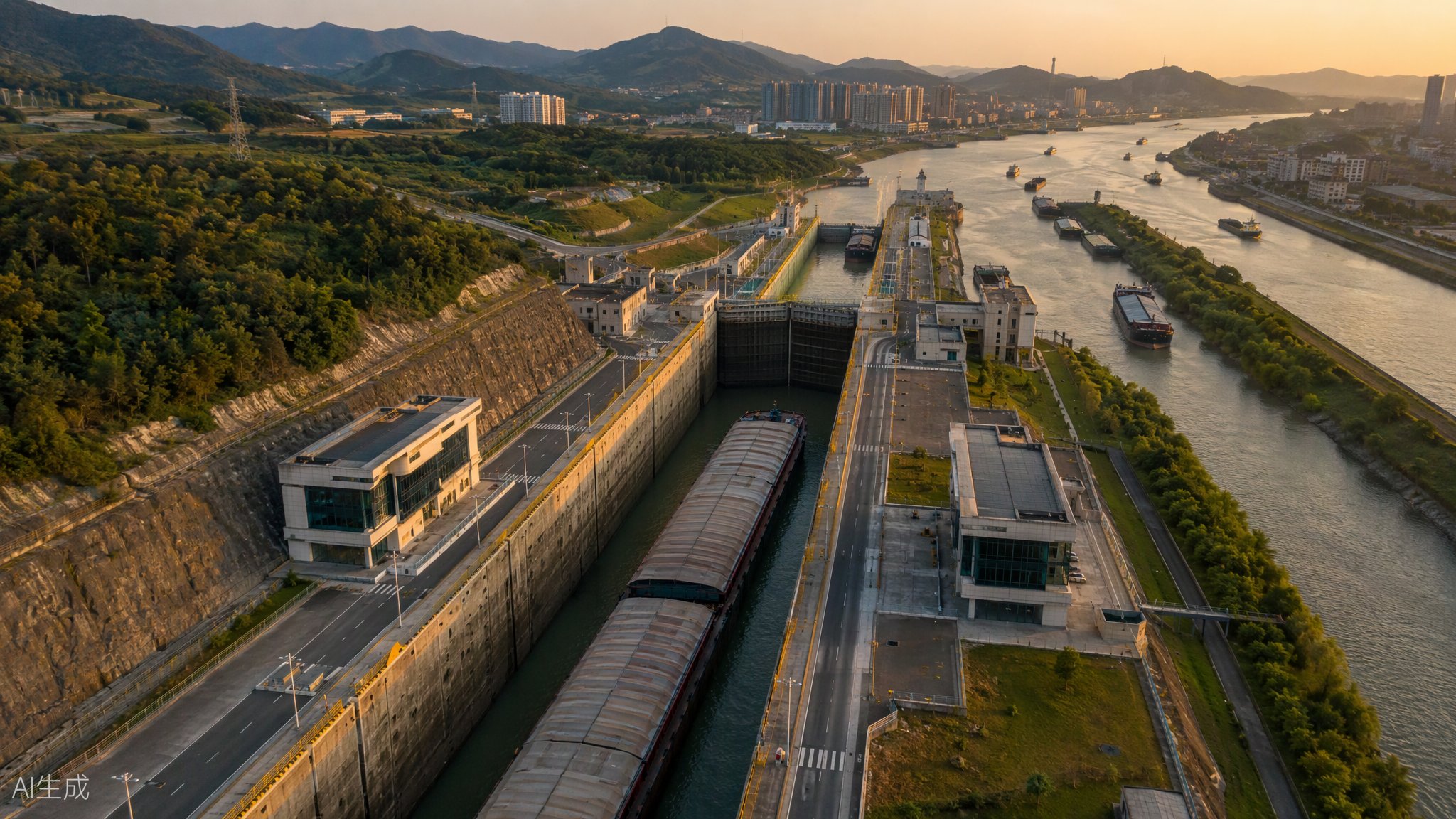
Sixty days in: the lock chamber is the canal's cash register and its heartbeat. 901 passages a day means the digital dispatch system is now the de facto air-traffic control of Guangxi's southwest waterway.
1. The Verdict from Inside the Control Room#
Two months after first vessel, the operator's own ledger reads better than planned. In a 每日经济新闻 field investigation published 17 November, Jiang Yi — deputy director of the investment development department at the Canal Group — assessed first-phase operations as "higher than expected." The corridor that moved its first million tonnes in month one has now settled into a steady rhythm, and the numbers behind the verdict are worth reading closely, because they describe not just a canal but a freight-market negotiation in progress.
2. The 7:3 Split: A Canal Calibrated by What Already Moves#
The most honest number in the ledger is the cargo split. Guangxi-origin flows on the canal run roughly seven-tenths downstream against three-tenths upstream. The downstream tonnage is dominated by mining stone and building materials — but here's the friction: much of that stone still defaults to the old eastbound route down the Xijiang to the Pearl River Delta, where established buyer networks and return-cargo economics keep the habit alive. The upstream third is more decisive: coal and ore moving into Guangxi's steel mills and power plants, where the canal is already the rational default.
This is normal for inland waterways. New corridors don't flip freight markets in a quarter; they price their way in, lane by lane. The operator's own reading — better than expected despite the 7:3 — implies the upside cases (containers, ASEAN-bound cargo) are tracking ahead of the base plan even while bulk stone hedges its bets.
3. The Wuzhou Tipping Point: Where the Canal Wins#
Expert estimates cited in the investigation place the economic-distance tipping point near the Wuzhou–Guigang section of the Xijiang trunk. Above that line — cargo originating in the eastern Guangxi/Greater Pearl River catchment — routing through the Beibu Gulf starts to beat the traditional eastbound path. For Nanning and points west, plus ASEAN-bound flows, the same estimates put early-phase comprehensive cost reductions possibly above 20% during the policy-support period. Treat these as expert-caliber estimates, not quotes: they describe direction, and the cost-simulation baseline exists precisely so shippers can test their own lane against their own cargo profile.
The structural support underneath is the lockage-fee regime: 1 yuan per gross ton per passage, trial-running to 30 September 2031, described as mid-range against national inland-waterway comparators — and even after stacking, water still prices below road and rail. The full fee mechanics are mapped in the 2027 lockage-fee guide.
4. Boxes vs Bulk: Why the Canal's Margin Story Is Contained#
Strip the ledger to unit economics and the strategic bet becomes visible. Foreign-trade container handling runs 500+ yuan per box; bulk cargo moves at 20–30 yuan per ton. The canal's revenue quality, its ability to fund the next phase of infrastructure, and its claim on high-value ASEAN trade all live on the container side. Everything in the current build program points that way: river-sea direct-standard vessel designs (5,000-ton-class, Nanning/Guigang to Hainan, Vietnam, Thailand, Malaysia) are in development; the fleet is shifting from a 2,000-ton average toward 5,000-ton vessels with diesel giving way to pure-electric, methanol, hydrogen and LNG powertrains; and the Canal Group has taken a stake in a Nanning new-energy shipbuilding base expected to have construction capability by year-end.
5. The Transshipment Bottleneck: Where the Money Leaks#
The investigation's sharpest finding is the one that costs shippers most today: river-sea transshipment at Qinzhou Bay remains the corridor's biggest friction point, with mandatory cargo transfer between river barges and ocean feeders. The fixes are on the table and in motion: second and third lock lines at the Datengxia hub have entered pre-construction work — the single most consequential capacity item on the Xijiang trunk — and a direct canal-to-Fangchenggang channel is under feasibility study with a 3–4 year horizon. Neither is a next-quarter fix; both define the corridor's capacity ceiling through 2030. Lane-level context on the upstream trunk: Wuzhou–Chishui–Ho Chi Minh route for the eastern feeder, and the Nanning aluminum-cluster outlook for what upstream industrial cargo looks like when it commits to the water.
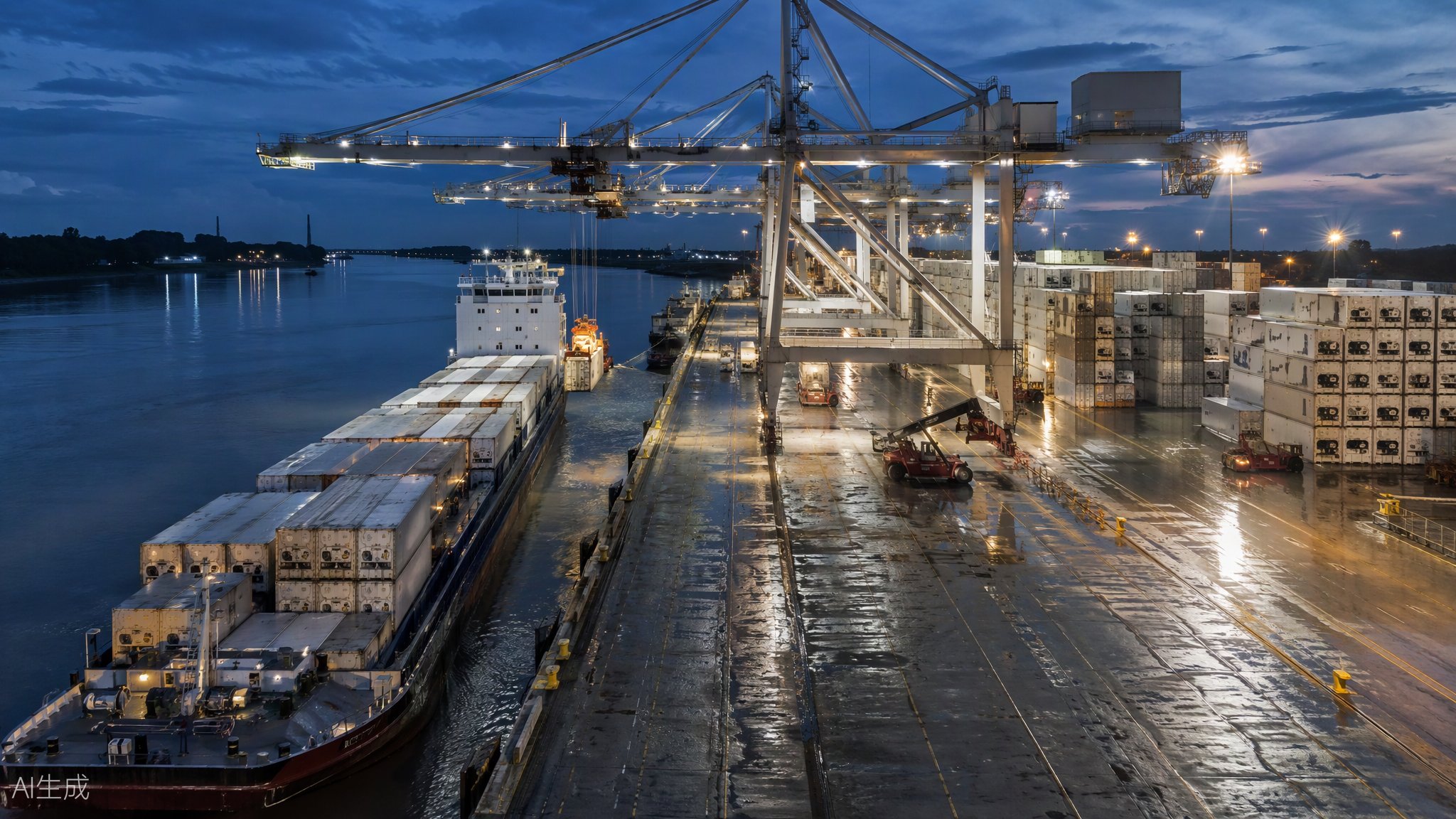
The bottleneck and the fix in one frame: every box that moves from river barge to feeder without leaving the quay is margin recovered. Mandatory transshipment at Qinzhou Bay is the corridor's most expensive friction point today.
6. The Official Ledger: What the Inspection Found#
Parallel to the operator's story, the Guangxi People's Congress research report (carried by 中新网 on 17 November, data to 10 November) gives the corridor's digital and public-service nervous system its first official audit:
- Smart dispatch platform: 25,758 registered users, 8,031 bound vessels, 70,288 cumulative dispatched passages, averaging 901 passages per day across the first sixty days.
- Passenger service already live: four routes, 545 scheduled sailings, 69,000 passenger trips — a dimension most freight coverage misses.
- Problem list: connecting infrastructure gaps, cargo-source organization (the sales problem, not the engineering one), and a shortage of compound talent who can run both waterway operations and modern logistics.
- Six recommendations issued, aimed at the connecting roads, the cargo-base build-out, and workforce development.
Read together — operator interview plus official inspection — the 60-day ledger says: engineering delivered, digital layer absorbed the load, and the remaining constraints are commercial (cargo organization) and institutional (transshipment, feeder networks), not civil.
7. The Industrial Halo: 194 Projects Deep#
The canal's economic-zone ledger is the long-game number: 194 newly signed projects worth over 50 million yuan each between January and September, ahead of the first anniversary of operations. Each signed project is a future cargo profile — and the mix (industrial materials, energy, equipment) is what turns a 7:3 bulk-heavy ledger into a container story over the medium term.
FAQ#
Is the canal hitting its traffic targets?#
Operator assessment is "above expectations" at the 60-day mark. The 7:3 downstream/upstream split is a cargo-structure observation, not a volume shortfall — upstream coal and ore are already committed flows.
Should my cargo switch now, or wait?#
Model your specific lane. The tipping-point logic favors Nanning/Guigang-and-west origins and ASEAN-bound containers today; eastern Xijiang origins (above Wuzhou) depend on the support-period pricing and feeder frequency. Run your numbers in the cost simulator.
What's the biggest risk to the corridor's promise?#
Transshipment friction at Qinzhou Bay until direct-standard vessels and expanded trunk capacity (Datengxia second/third lines) come online. The Fangchenggang direct-channel study is a 3–4 year horizon item.
How long does the current lockage-fee regime last?#
The 1 yuan/gross ton·passage trial runs to 30 September 2031. Even stacked, water remains priced below road and rail on comparable lanes. Details: 2027 lockage-fee guide.
Methodology & Data Sources#
Operator verdict, 7:3 cargo split, tipping-point estimates, container/bulk handling economics, fleet and shipbuilding programs, the 194-project figure, transshipment bottleneck, Fangchenggang channel study and Datengxia pre-construction status are from 每日经济新闻's field investigation published 17 November 2026. Dispatch-platform, passenger-service, problem-list and recommendation figures are from the Guangxi People's Congress research report as carried by 中新网 on 17 November 2026 (data to 10 November). Expert estimates are labelled as such; this page is trade-context analysis, not a freight quote.
- "Better than expected" assessment; 7:3 downstream/upstream split; Wuzhou–Guigang tipping point and 20%+ early-phase estimates (expert caliber, support period); 500+ yuan/box vs 20–30 yuan/ton handling; 194 projects Jan–Sep; Qinzhou Bay transshipment bottleneck; Datengxia II/III pre-construction; direct-standard vessel program; Nanning shipbuilding base stake — 每日经济新闻, 17 Nov 2026
- 25,758 users / 8,031 vessels / 70,288 passages / 901 per day; 4 routes, 545 sailings, 69,000 trips; three problem areas and six recommendations — Guangxi People's Congress research report, 中新网A, 17 Nov 2026 (data to 10 Nov)
- Lockage-fee trial to 2031-09-30 and stacking comparison — corridor reference; see 2027 lockage-fee guide
- Corridor context: first-million-tonnes ledger, 30-day audit baseline, Wuzhou–HCM lane
Get a Tailored Logistics Assessment#
Model your lane against the 60-day ledger's actual cost structure in the cost simulator, or apply to be listed in the verified supplier directory. Reference values only; not a formal quote.