Public Beta · Reference parameters captured Nov 2026. Protocol content is from the Ministry of Commerce's official Q&A (16 Nov 2026); trade statistics are MOOC figures. This page is trade-context analysis, not legal advice. Spotted a discrepancy? Tell us — this page exists to be challenged.
Key Numbers (FTA 3.0 Ledger)#
| Item | Reference value |
|---|---|
| Entry into force | 1 Dec 2026 (announced Manila, 16 Nov 2026) |
| Negotiation arc | Launched 2022 · talks completed May 2025 · signed Oct 2025 |
| Build-up | FTA process opened 2002; 1.0 completed 2010 (>90% zero tariff); 2.0 signed 2015, fully effective 2019 |
| Trade scale | China–ASEAN trade >US$1 trillion in 2025, 18× the 2002 level |
| Partnership streak | China ASEAN's top partner 17 straight years; ASEAN China's top partner 6 straight years |
| Digital economy | Highest-standard rules either side has concluded; e-single-window, e-invoice, e-payment, e-BL cooperation |
| Green economy | 8 priority areas: green trade/investment, circular economy, sustainable finance, green tech/standards, sustainable energy |
| Standards | Mutual recognition of conformity assessment; priority: NEV, electronics/electrical |
| Customs | Smart customs, 24/7 "no closing, zero waiting" at smart ports |
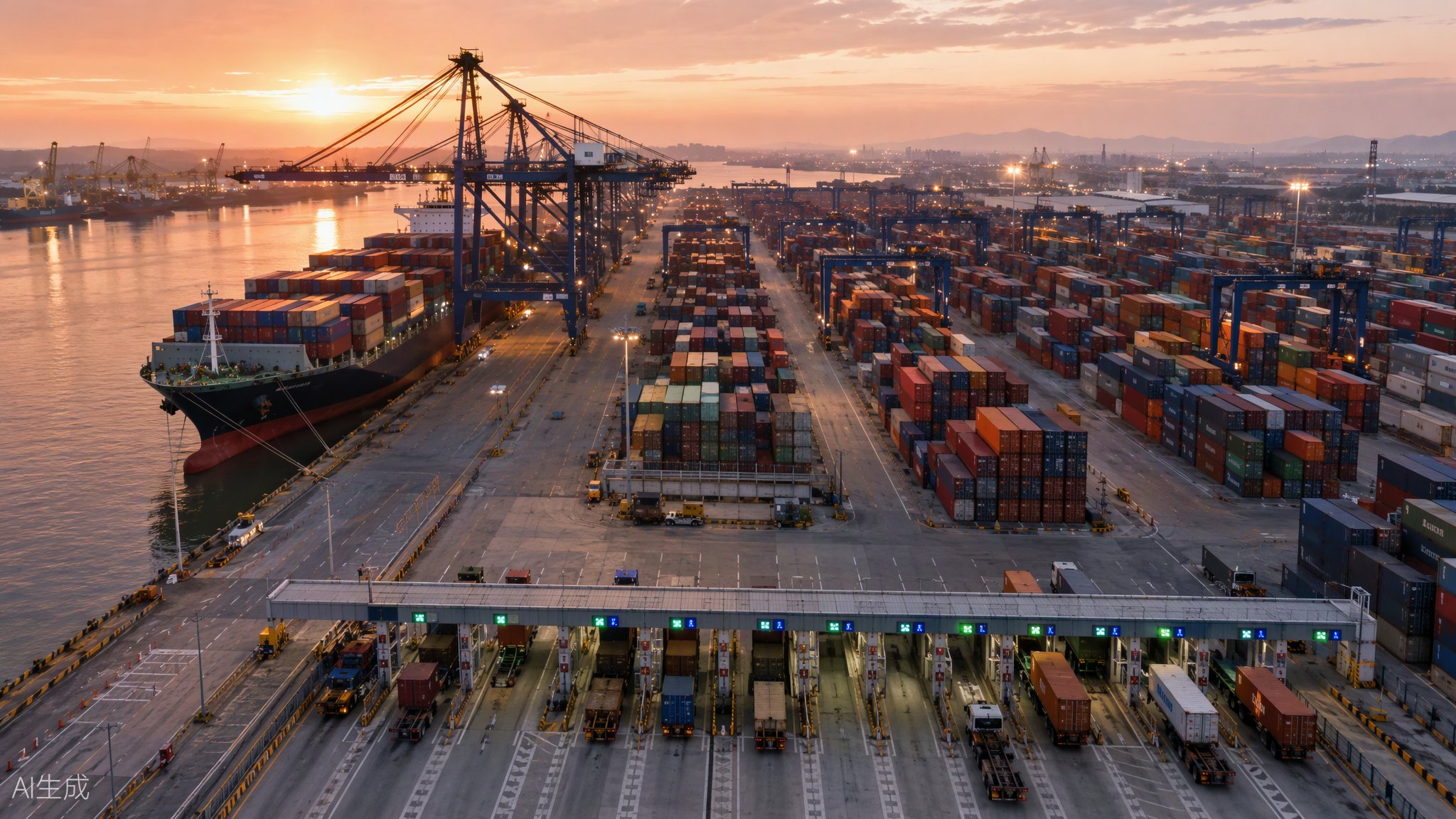
Rule convergence is the product: smart-gate lanes and e-documentation turn the border from a checkpoint into a data exchange. The FTA 3.0 supply-chain chapter writes that into treaty language for the first time.
1. What 3.0 Actually Changes (and What It Doesn't)#
The most common misreading of FTA 3.0 is expecting a new tariff schedule. There isn't one — and the omission is deliberate. Versions 1.0 (2010) and 2.0 (2019) already drove tariff treatment above 90% zero across the basket; 3.0, negotiated 2022–May 2025 and signed October 2025, moves from "market opening" to institutional co-building: digital economy, green economy, standards and technical regulations, supply-chain connectivity, competition, SMEs, SPS — the border-behind layer where time and money actually leak. The Ministry of Commerce frames it as a shift from "factor mobility" to "rule coordination," and for operational shippers that translates into three concrete files: fewer duplicate certifications, faster customs data exchange, and treaty-level language on multimodal logistics.
2. The Supply-Chain Chapter: Treaty Language for What This Corridor Does#
The standalone supply-chain chapter is a first for Chinese FTAs, and its commitments read like a description of the Pinglu corridor's product sheet: free flow of key products and services, digital-technology trade facilitation, resilient and connected regional supply chains, and — explicitly — multimodal transport, sustainable port development, and port productivity as tools to relieve logistics bottlenecks. For Guangxi–ASEAN shippers this matters twice over: the corridor's rail-sea and river-sea products are now treaty-aligned infrastructure rather than regional experiments, and joint-commitment language gives operators a reference when negotiating service levels. It also dovetails with the documented-cargo customs models (single declaration at origin) already live on the corridor — see the Form E/RCEP origin checklist for the preference layer underneath.
3. Standards Mutual Recognition: The NEV Angle#
For the corridor's fastest-growing cargo class, the standards chapter may be the single most valuable clause set. Where no international standard exists, the parties agree to consider each other's standards, to encourage recognition of conformity-assessment results, and to jointly develop conformity-assessment procedures, naming new-energy vehicles and electronic/electrical products as priority cooperation areas. In practice: a Liuzhou-built EV or battery component that has passed Chinese conformity assessment faces fewer duplicate tests to reach ASEAN markets, cutting both cost and time-to-shelf. Given the Liuzhou belt's ASEAN trajectory (EV-belt playbook, ASEAN vehicles +272.3%), this is the rules layer under the cargo layer.
4. Digital and Green: The Plumbing#
The digital chapter covers both hard connectivity (logistics, digital infrastructure) and soft plumbing — single windows, e-invoices, e-payment, electronic bills of lading — plus cooperation touching AI. The green chapter establishes an FTA-level framework with eight priority areas spanning green trade, green investment, circular economy, sustainable finance, green technology and standards, sustainable energy, and digital-green coordination, with named cooperation on NEVs and photovoltaics. Neither chapter writes a check for any single shipment; both lower the institutional friction that the corridor's physical investment (first-month ledger) already attacks from the infrastructure side.

5. The 90-Day Playbook for Shippers#
- Read the texts: the protocol's Chinese and English versions are published on China's FTA service portal now — compliance teams should map which chapters touch their lanes before 1 Dec.
- Audit certification duplication: if you test for both Chinese and ASEAN conformity, prepare a recognition dossier against the standards chapter's NEV/electronics priorities.
- Pre-load e-documentation: smart-port "one submission, one inspection, one release" rewards shippers whose invoice/declaration data is already digital — align with the corridor's single-declaration models.
- Contract language: reference FTA 3.0 rule-convergence clauses in 2027 logistics and distribution agreements; where disputes arise, treaty text is stronger than custom.
- Watch the committees: digital, green, standards and SME subcommittees under the FTA Joint Committee will produce implementation detail — the operational rules get written there.
FAQ#
Does FTA 3.0 cut my tariffs on 1 December?#
Not directly — tariff preference architecture was completed in 1.0/2.0. 3.0's gains are regulatory: certification, customs data, logistics and supply-chain rules. For tariff preference mechanics, use the Form E checklist.
Which shippers benefit fastest?#
NEV and electronics exporters (standards recognition priorities), regular container shippers through smart ports (customs data exchange), and anyone running multimodal chains (treaty backing for rail-sea/river-sea products).
Is the protocol in force for all ten ASEAN members at once?#
The announcement states entry into force on 1 Dec 2026; ratification status per member should be verified against the FTA portal for your specific trade lanes.
How does this interact with RCEP?#
RCEP and the China–ASEAN FTA run in parallel; 3.0 deepens the bilateral layer on top of RCEP's regional architecture. Counsel should confirm which instrument governs specific preference claims.
Methodology & Data Sources#
Effective date, negotiation history, chapter content (digital, green, standards, supply chain, customs), the 2025 trade figure, and partnership streaks are from the Ministry of Commerce's official Q&A published 16 November 2026. Corridor context cross-links to prior site coverage. No legal advice is provided; specific transactions should be reviewed with counsel.
- FTA 3.0 effective 1 Dec 2026; announced Manila 16 Nov; texts on FTA service portal; negotiation arc 2022–May 2025; signed Oct 2025 — Ministry of Commerce Q&A, 16 Nov 2026
- FTA history: 2002 launch, 1.0 2010 (>90% zero tariff), 2.0 2015/2019; trade >US$1T 2025 (18× 2002); 17-year partnership streak — same source
- Chapter specifics: supply-chain standalone chapter; standards recognition (NEV/electronics priority); smart customs "one submission, one inspection, one release"; 8 green priorities; digital soft connectivity including e-BL — same source
- Corridor context: origin-preference mechanics — Form E checklist; NEV cargo trajectory — EV-belt playbook; corridor benchmarks — first-month ledger
Get a Tailored Logistics Assessment#
Model your 2027 China–ASEAN lanes with rules-convergence assumptions in the cost simulator, or apply to be listed in the verified supplier directory. Reference values only; not a formal quote.