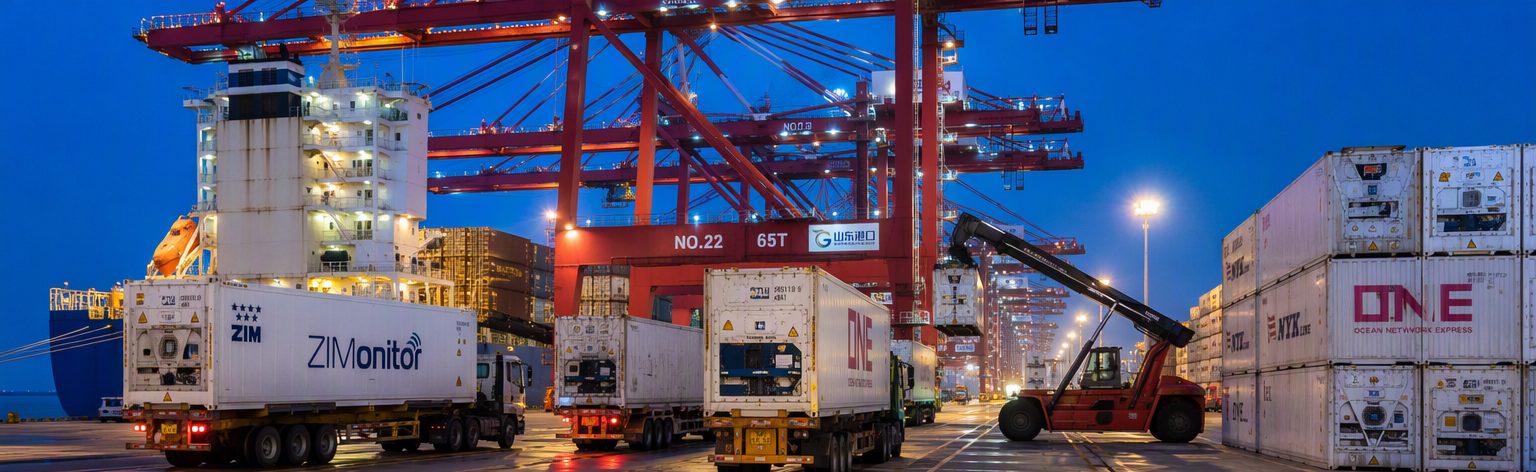
The Problem: Why Spring Festival Stresses the Cherry Supply Chain#
Chilean cherries are one of the most representative premium imported fruits in Southwest China's Spring Festival market. The supply chain has three defining traits:
- High value: a single container carries expensive cargo, sensitive to logistics cost, damage and price swings.
- Time-critical: the holiday consumption window is concentrated — arrival timing directly drives the sales rhythm.
- Cold-chain intensive: heat spikes, jolting and port dwell all raise the risk of soft fruit, browning and grade loss.
Under the legacy model, cherries are discharged at Nansha (Guangzhou), cleared, then trucked long-distance into the Southwest. It works in normal weeks — but at Spring Festival the weak links amplify: reefer truck rates rise, highway congestion stretches transit, extra handling adds damage risk, and importers must stock earlier, tying up more capital.
The Pinglu Canal adds a river-sea option. For cherry traders the point is not a faster ocean crossing — it is a more stable, controllable domestic leg for bulk holiday stocking.
The Two Routes#
Route A — Legacy: Nansha + long-haul road cold chain
San Antonio (Chile) → Pacific Ocean → Nansha Port → customs → long-distance reefer trucking → Chengdu / Chongqing / Kunming / Guiyang. Dense sailings and trader familiarity are its strengths; the festive road leg is its weakness.
Route B — Pinglu Canal: Qinzhou + canal + Nanning distribution
San Antonio → Pacific Ocean → Qinzhou Port → customs → river-sea reefer barge via the Pinglu Canal → Nanning Port → short-haul road distribution → Chengdu / Chongqing / Kunming / Guiyang. The shift converts part of the long road haul into inland river shipping.
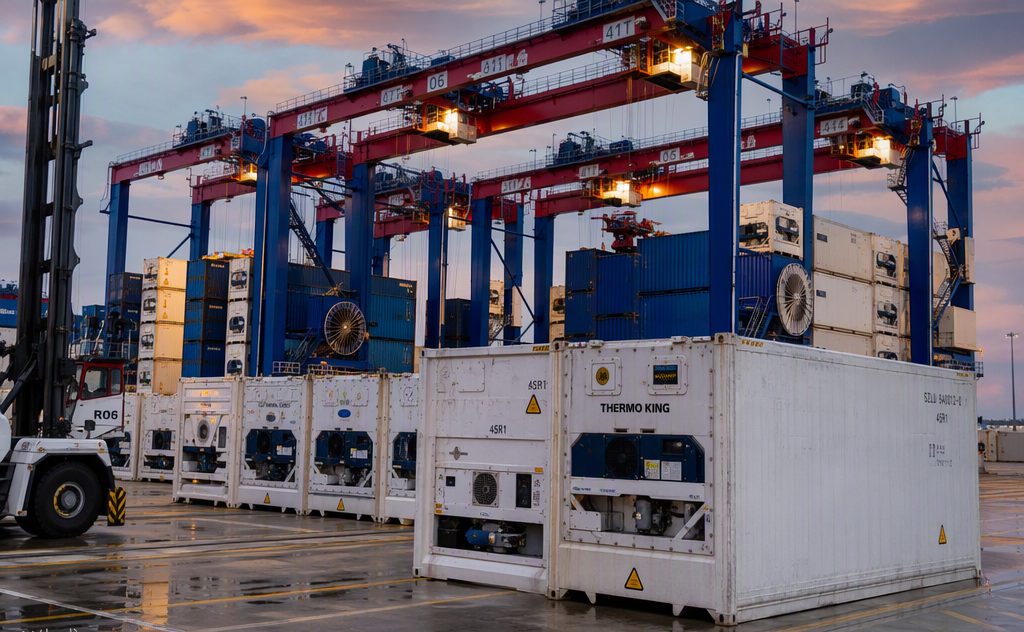 The route comparison: legacy routing leans on long-haul road haulage after Nansha, while the canal routing builds a river-sea chain through Qinzhou, the Pinglu Canal and Nanning.
Cost: 40RH Domestic-Leg Model#
Using one 40RH reefer box (~10 tonnes of cherries) as the unit:
Route A — festive-season cost components: Nansha terminal handling, road reefer freight, fuel surcharge, holiday trucking premium, local handling and drayage. Based on public cold-chain benchmarks and holiday history, Nansha→Chengdu direction runs:
CNY 13,800–16,500 per box
Route B — cost components: Qinzhou terminal handling, river reefer freight, canal lock tolls (public standard: CNY 1 per gross tonne per transit), Nanning terminal handling, and short-haul distribution to Southwest cities:
CNY 10,200–12,300 per box
| Route | Domestic-leg all-in cost |
|---|---|
| Legacy (Nansha + road) | CNY 13,800–16,500 / box |
| Pinglu Canal route | CNY 10,200–12,300 / box |
| Difference | Save ~CNY 3,000–4,200 / box |
Modeled reduction: approximately 22–26%.
The advantage comes from river shipping substituting for road haulage — not from cheaper port handling. It widens for full-container, high-volume, steady shippers.
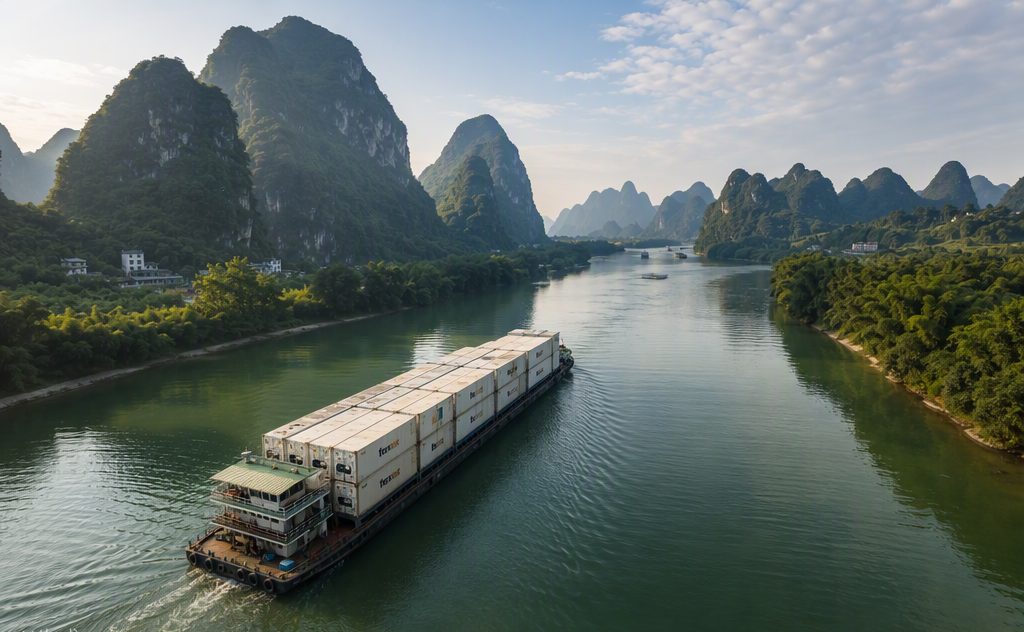 River-sea reefer barges replace part of the long-haul road leg — the core source of the 22–26% domestic cost advantage.
Transit: The Gain Is Domestic, Not Oceanic#
Ocean time is essentially fixed: San Antonio to Nansha runs ~22–23 days; to Qinzhou ~22–24 days. The canal cannot shorten the Pacific crossing — what matters is what happens after discharge.
| Route | Domestic-leg time | Notes |
|---|---|---|
| Legacy route | 4–6 days, up to 7 when congested | Depends on road capacity and holiday traffic |
| Pinglu Canal route | 2.5–3.5 days | ~2 days Qinzhou→Nanning, ~1 day Nanning→Southwest |
| Difference | Save 2–3 days | Less road dwell, less festive uncertainty |
For cherries, the value of time is really the value of stability. Long dwell on a reefer truck shortens shelf life and raises soft-fruit and browning risk — and downgraded fruit sells at a discount. The canal route reduces festive road uncertainty so arrival timing becomes more controllable.
Damage: Where High-Value Fruit Really Feels Logistics#
Baseline sea-freight cherry damage runs 4–5%. Festive long-haul road transport, with jolting, waiting and cold-chain interruption risk, pushes it higher.
| Route | Forecast damage rate |
|---|---|
| Legacy route | ~5–7% |
| Pinglu Canal route | ~3–4% |
| Difference | ~2 percentage points lower |
Two points look small — but cherries carry high value. Per-box math at Spring Festival wholesale (~CNY 28/kg for 2J fruit, 10 tonnes per 40RH):
- Legacy loss at ~6%: ~CNY 16,800
- Canal-route loss at ~3.5%: ~CNY 9,800
- Damage savings: ~CNY 7,000 per box
Combined with freight savings, a single box could gain CNY 10,000+ in modeled upside. High-value fruit must be evaluated on freight, arrival time, cold-chain stability, damage rate and grade retention together — not on freight alone.
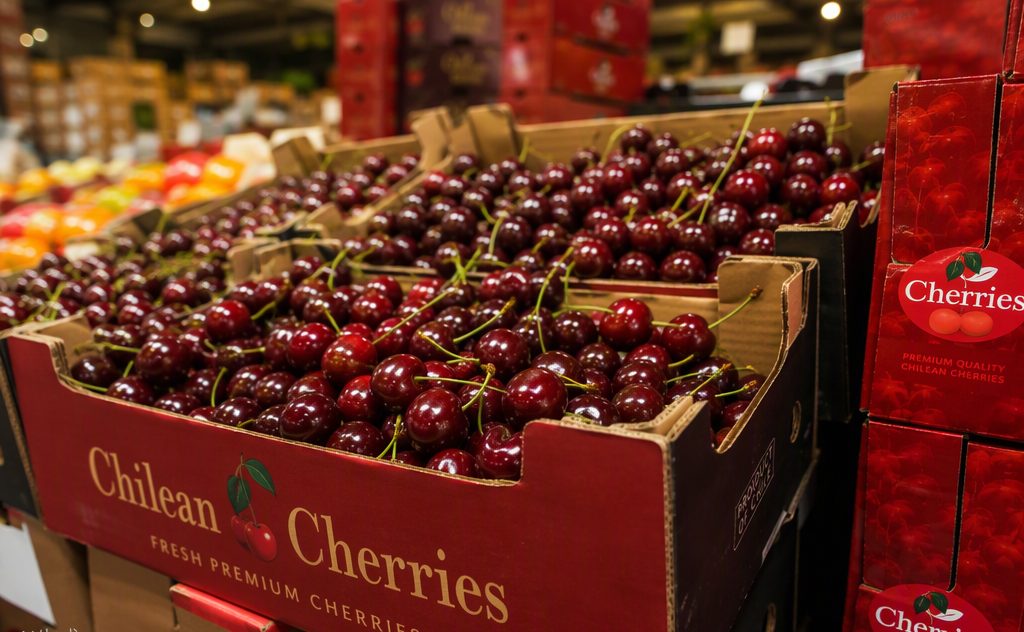 Grade retention is money: a 2-point damage-rate improvement is worth roughly CNY 7,000 per box at holiday wholesale prices.
Who Should Evaluate the Canal Route for 2027?#
Best fit
- Full-container, high-volume importers — river-sea scale effects need volume.
- Traders stocking intensively ahead of the holiday, who want a second corridor beside road.
- Businesses distributing into Chengdu, Chongqing, Guiyang and Kunming — Qinzhou→canal→Nanning is the more direct path, with short-haul final delivery.
Poor fit
- Very small lots or extreme urgency — air freight or border land transport may serve better.
- Cargo destined mainly for the Pearl River Delta — direct distribution from Nansha is more economical.
Risk Notes for the 2027 Window#
The canal is newly commercial; the holiday will be its first real test. Watch five variables:
- Qinzhou reefer sailing frequency: if holiday sailings are sparse, flexibility suffers — book early, don't rely on last-minute slots.
- Perishable customs clearance: cherries are inspection-sensitive; holiday inspection queues could offset canal time savings.
- Dry-season draft and lock scheduling: January–February is Guangxi's dry season; planned navigability should hold, but festive lock scheduling is still a variable.
- Port cold-chain capacity: reefer plug supply, yards, handling and IT systems must absorb the holiday peak.
- Market price volatility: Chilean output, export rhythm, domestic demand and substitutes all move price — cheaper logistics does not automatically mean higher margin.
Bottom Line#
For Spring Festival 2027, the Pinglu Canal's impact on Chilean cherries entering the Southwest shows up in three ways: domestic-leg cost down ~22–26%; transit 2–3 days more stable; damage more controllable via smoother, fully containerized cold chain. It should not be judged as "always better" — treat it as a second corridor, and model it against your volumes, arrival targets, markets and budget.
If you import cherries to the Southwest for the holiday, submit your origin port, box type, cargo and destination — we will produce a reference routing plan.
Head to the cost simulator to compare routes.
Scenario forecast based on public canal parameters, cold-chain industry benchmarks and festive historical patterns. All figures are modeled estimates — not operating history, freight quotations or booking commitments. Actual costs and transit times vary with carrier capacity, fuel, port congestion, customs policy, weather, dry-season draft and market supply-demand; confirm live details with carriers, forwarders and customs.