The Old Problem: Getting Tropical Fruit into the Southwest for New Year#
Southwest China is one of the largest consumption and distribution markets for ASEAN fruit in the country. In 2025, Guangxi ports cleared 2.89 million tonnes of ASEAN fruit — more than one third of China's total, meaning roughly one of every two imported durians passes through Guangxi. Yunnan ports imported 910,000 tonnes in the first eight months of 2026 alone, worth CNY 16.22 billion.
Traditionally, two routes moved this fruit inland:
- Land border crossings (Pingxiang, Tianbao): fast for small lots, but in the 1–2 months before Spring Festival, reefer trucking capacity tightens and rates rise 15–20%. Border congestion pushes fresh-fruit losses to 15–20%, with extreme cases near 30%.
- Ocean relay via the Pearl River Delta: fruit from Haiphong or Laem Chabang is discharged at Guangzhou or Shekou, then barged up the West River against the current — 5–7 days all-in, with a legacy all-in cost of USD 1,760–2,260 per 40HQ and repeated handling that drives cold-chain losses higher.
The real pain points for fresh-fruit traders: festival-season trucking premiums with no guaranteed capacity; shelf life eaten by long transits; and consolidated (LCL) options too limited for small and mid-size importers.
The New Corridor: Haiphong / Laem Chabang → Qinzhou → Pinglu Canal → Nanning#
Using the September 2026 calibrated channel data from PingluCanal.org, the direct waterway from Nanning to Qinzhou runs 45–60 hours with no Pearl River Delta detour. For reefer 40HQ fruit boxes, the source-to-Haiphong integrated cost lands at USD 1,010–1,410 per box.
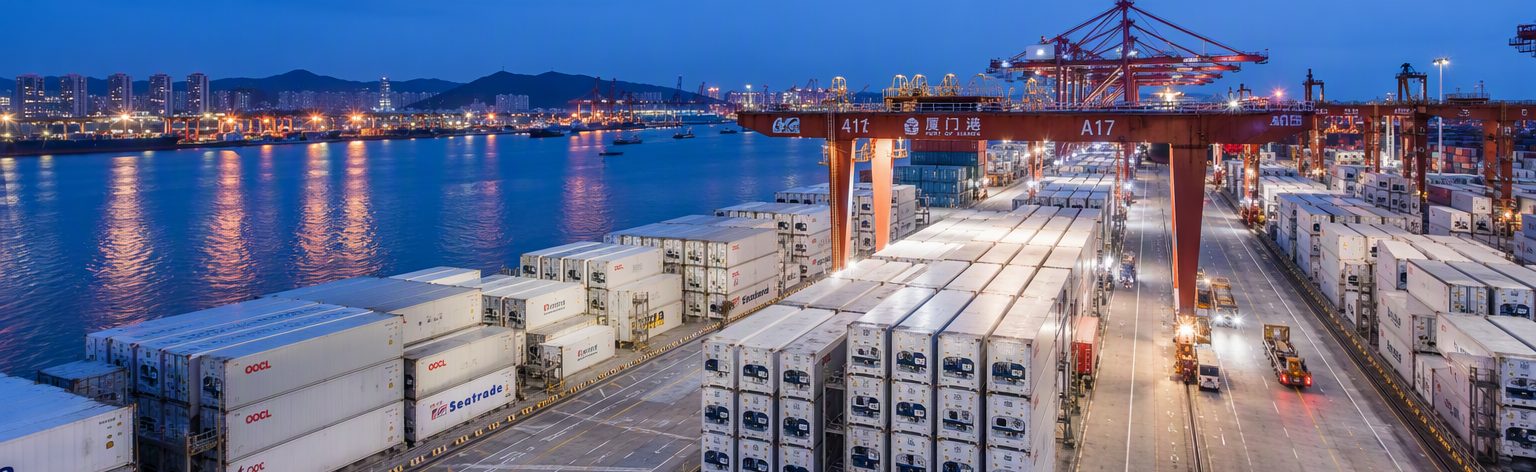 Reefer capacity at Beibu Gulf terminals: the cold-chain gateway for ASEAN fruit entering the Southwest via the Pinglu Canal.
| Comparison | Legacy PRD relay | Pinglu Canal river-sea route |
|---|---|---|
| Inland detour | +560 km | 0 (direct) |
| Door-to-port transit | 5–7 days | 2.5–3.5 days |
| All-in cost, 40HQ FCL | USD 1,760–2,260 | USD 1,010–1,410 |
| Reefer slot allocation | Ad hoc | ~25% of slots reserved for reefers on select sailings |
| Typical inland discharge | Guigang, Wuzhou (upstream) | Nanning, Guigang (downstream to Beibu Gulf) |
| Typical loss rate (ASEAN fresh fruit) | 15–20% | Target under 5% |
Source: PingluCanal.org September 2026 simulation. Actual results vary with fuel, port congestion and seasonal draft limits; for commercial evaluation only — not a freight quotation.
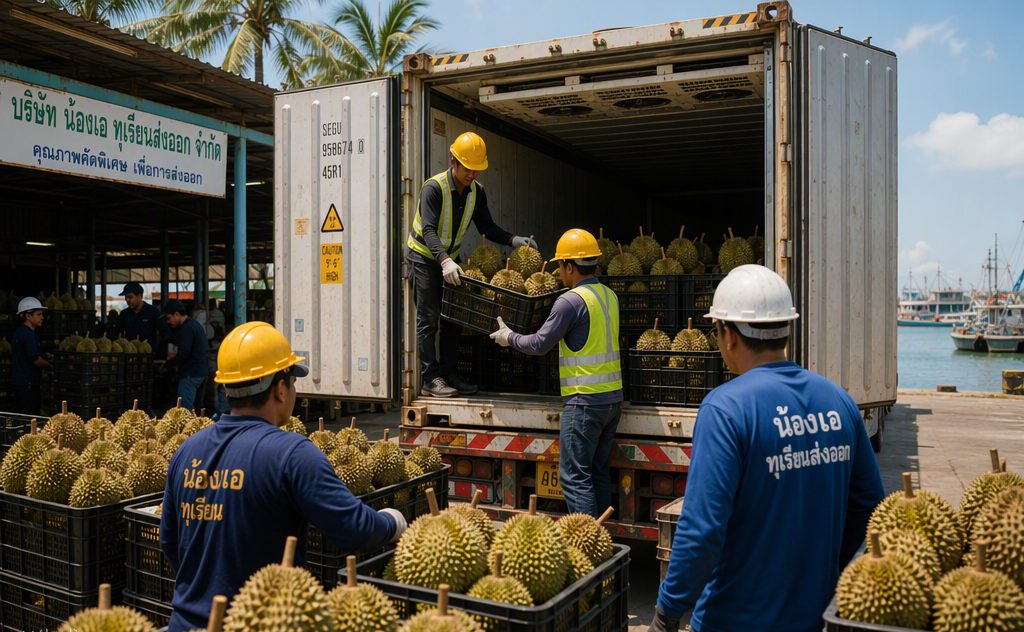 From Laem Chabang and Haiphong, reefer boxes move directly to Qinzhou, where a green-channel declaration clears fruit ahead of arrival.
Two structural changes matter most for the festive season:
- Reefer capacity expands: a single 5,000-DWT vessel carries roughly 200 TEU — the equivalent of over a hundred reefer trucks. Select sailings now allocate 25% of capacity to refrigerated boxes, matching Mekong Delta and Thai fruit export programs.
- LCL consolidation becomes viable: Nanning hub offers cargo consolidation, so small buyers no longer need to commit a full container — lowering the entry barrier for county-level distributors.
Quantitative Forecast for the 2027 Spring Festival Window#
These are scenario projections built on historical port data plus canal capacity ramp-up — not official statistics.
1) Import volume: ocean-side channel gains, total supply +25–35% (Jan–Feb window)#
- Incremental volume through the Pinglu Canal and Beibu Gulf route will concentrate in durian, mangosteen, jackfruit and longan.
- Qinzhou's monthly fruit imports in the pre-holiday stocking month could exceed 15,000 tonnes; Nanning's outward distribution to Sichuan-Chongqing, Yunnan and Guizhou is forecast up more than 20% year on year.
- Land crossings will not be replaced — but bulk festive stocking will partly shift to the river-sea corridor, relieving congestion at Pingxiang.
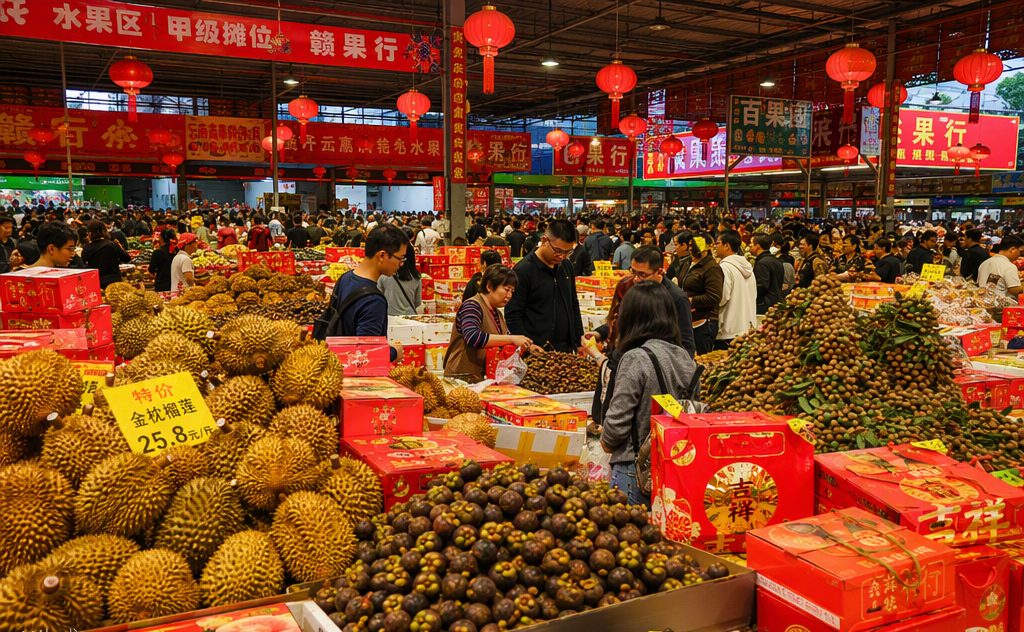
Festive-season stocking at a southwest China wholesale market: the demand the canal corridor is built to serve.
2) Cost pass-through to retail prices#
- Premium categories (durian, mangosteen — highly logistics-cost-sensitive): Southwest retail prices forecast 15–25% lower than last Spring Festival.
- Mass categories (dragon fruit, longan): forecast 8–12% lower.
- The precondition: cold-yard capacity, RCEP Form E clearance efficiency and lock scheduling must not congest. A reefer plug shortage at the terminal would partly offset the gains.
3) How trade operations change#
- Shorter stocking cycles: legacy mode required booking 15–20 days ahead; the canal corridor compresses harvest-to-shelf to 4–5 days, cutting the stocking cycle to 7–10 days and reducing inventory and over-ripening risk.
- Better gift-box supply: closer-to-festival multi-variety gift programs become feasible without deep pre-hoarding.
- Market down-tiering: lower landed cost lets ASEAN fruit reach third- and fourth-tier Southwest cities and county markets, not just provincial capitals.
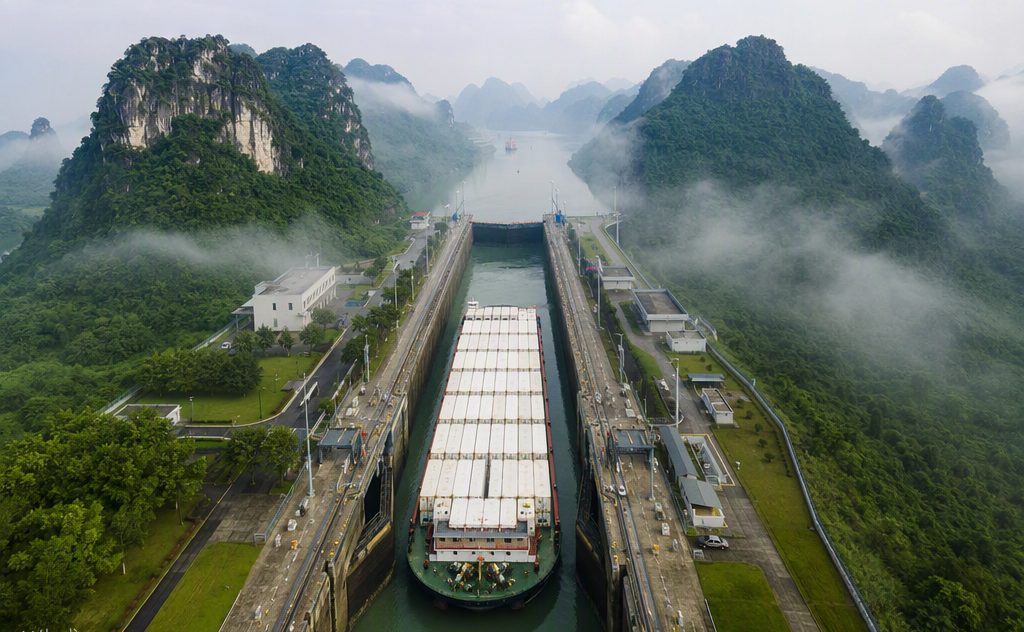 Reefer boxes ride the 134 km canal to Nanning, where fruit is distributed to Chengdu, Chongqing and Guiyang within 48 hours.
Constraints to Price In: Risk Notes for Importers#
The physical channel is open, but the festive outcome depends on conditions importers must budget for:
- Cold-chain infrastructure is still ramping: reefer yards and plug capacity at Qinzhou and Nanning are under expansion; a holiday volume spike could tighten short-term plug supply.
- First festive test for the three locks: Madou, Qishi and Qingniang locks face their first cargo peak; queuing would directly erode the transit advantage — build buffer time into bookings.
- Quarantine and customs coordination: RCEP Form E certificates and bilateral fruit inspection mutual-recognition must keep pace, or clearance delays will eat the sailing-time savings.
- Ocean-side volatility: the USD ranges above are baseline simulations; always confirm live rates with forwarders before committing cargo.
Practical advice: for festive fruit via the canal, lock reefer slots 4–6 weeks ahead, confirm terminal plug capacity, and pre-file customs declarations.
Who Should Use This Corridor — and Who Shouldn't#
✅ Good fit: volume importers of durian, mangosteen and longan supplying multiple Southwest cities; forwarders and traders seeking to avoid festive trucking premiums and border queues; platforms consolidating LCL for smaller distributors; steady exporters from Haiphong and Laem Chabang bound for Sichuan-Chongqing, Guizhou and inland Guangxi.
❌ Poor fit: very small lots or true 24-hour emergency orders — land-border trucking remains the better tool for urgent, small shipments.
FAQ#
Q1: Pinglu Canal versus the Pingxiang land crossing — which is better for ASEAN fruit?#
A: They complement rather than replace each other. Small, urgent lots favor land trucking. For bulk festive stocking where slot premiums and per-box cost matter, evaluate the Pinglu Canal river-sea reefer option first.
Q2: How long from Laem Chabang to Chengdu via the canal?#
A: Ocean leg plus Qinzhou handling plus the canal to Nanning runs about 2.5–3.5 days; Nanning to Chengdu by road is roughly 24 hours. Total ideal cycle: 4–5 days, plus customs and terminal buffer.
Q3: How much can a reefer 40HQ save?#
A: The baseline model shows USD 350–1,250 per box versus the legacy PRD relay, varying with fuel and peak-season slots. Use the cost simulator on this site to model your own volumes.
Q4: What's the biggest festive-season risk?#
A: Lock congestion, terminal reefer plug shortages, and inspection delays. Book early and confirm cold-chain resources at both ends.
Get a Tailored Logistics Assessment#
If you import ASEAN fresh fruit and are evaluating the Pinglu Canal for the 2027 Spring Festival window:
- Request the reefer 40HQ cost simulation worksheet that accompanies this analysis;
- Ask about Haiphong / Laem Chabang sailing windows and festive slot availability;
- Submit your origin port, box type, fruit category and destination for a reference routing plan.
Head to the cost simulator to run your own numbers.
Channel mileage, lock parameters and the base container cost model are calibrated from PingluCanal.org field data (September 2026); trade statistics cite public Guangxi and Yunnan port import data. Market figures are scenario projections and do not constitute booking or investment advice — confirm final terms with carriers, forwarders and customs.